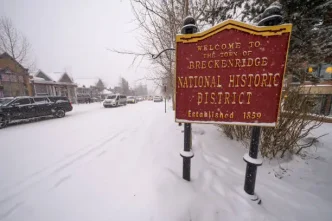
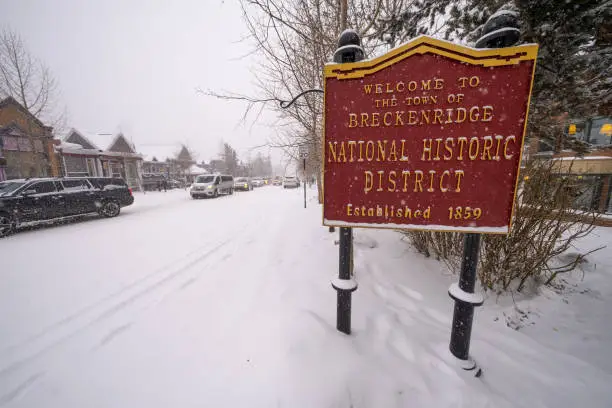
Breckenridge is a small town with an outsized amount of competition for local attention. Between year-round tourism, a dense concentration of service businesses, and a customer base that increasingly starts every purchase decision with a phone search, local visibility has become one of the most consequential — and most misunderstood — parts of running a small business there. A restaurant, ski shop, contractor, or medical practice can have a great reputation built over years and still lose new customers every week simply because it isn’t showing up when someone searches for what it offers.
This guide breaks down what local SEO actually involves for a town like Breckenridge, and what a small business owner can realistically do about it.
Why Local Search Behaves Differently in a Town Like Breckenridge
Local search results are shaped heavily by proximity, relevance, and prominence — three factors Google’s algorithm weighs specifically for location-based queries. In a resort town, this plays out in a distinctive way: search demand spikes seasonally, a large share of searchers are visitors rather than locals (meaning they have zero prior familiarity with any business in town), and the map pack — the panel of three local business listings shown with a map — often gets more attention than the standard list of website links below it.
That combination means a business’s Google Business Profile frequently matters more than its website for winning the first click. A visitor searching “ski rental near me” or “best breakfast in Breckenridge” is typically choosing from whatever the map pack shows them, based on proximity, star rating, review recency, and how complete the listing looks.
The Building Blocks of Local Visibility
A handful of factors consistently drive local search performance, and they apply whether the business is a lodge, a law office, or a landscaping company:
Google Business Profile completeness. Accurate categories, current hours (including seasonal hours, which matter enormously in a resort town), recent photos, and a filled-out services or products list all affect how a listing performs.
Consistent NAP data. A business’s name, address, and phone number need to match exactly across its website, its Google listing, and every directory it appears in — Yelp, TripAdvisor, local chamber of commerce sites, and industry-specific directories. Inconsistent information is one of the most common, and most fixable, reasons a listing underperforms.
Review volume and recency. Search engines treat a steady, recent stream of reviews as a signal that a business is active and trustworthy. A business with a large but stale review history often loses ground to a newer competitor with fewer but more recent reviews.
Location-specific website content. Generic “About Us” and “Services” pages tend to underperform pages built around the specific services offered in the specific area served — a page written for “ski rental in Breckenridge” outperforms a generic “ski rental services” page almost every time, because it more directly answers what the searcher typed.
What’s Changed Recently: AI Search and Local Discovery
The newest shift affecting small businesses is the rise of AI-generated search summaries. When someone asks an AI assistant for a recommendation — “best place to get gear serviced in Breckenridge,” for instance — the answer is drawn from whatever structured, trustworthy information the AI system can find. Businesses with thin or inconsistent online information are increasingly left out of these AI-generated answers entirely, even if they still rank reasonably well in traditional search. Local businesses that keep their Business Profile, reviews, and website content accurate and well-structured are the ones most likely to be included when a customer asks an AI tool for a local recommendation rather than typing a traditional search query.
A Practical Starting Checklist
For a business owner in Breckenridge looking to improve local visibility without overhauling everything at once, a reasonable starting point looks like this: claim and fully complete the Google Business Profile, including seasonal hours; audit name/address/phone consistency across the major directories the business appears on; set up a simple, repeatable process for asking recent customers for reviews; and build out one dedicated page for each core service rather than relying on a single general page to cover everything.
Many owners can make real progress on the first two items in an afternoon. The harder, ongoing part — building out service-specific content, maintaining structured data, and keeping pace with how AI-assisted search is reshaping local discovery — is where working with a specialist becomes worthwhile for businesses that don’t have the internal bandwidth to manage it themselves. A dedicated Local SEO Company in Breckenridge can typically handle the audit, cleanup, and ongoing maintenance work in a fraction of the time it would take a business owner juggling it alongside day-to-day operations.
The Bottom Line
Local visibility in a competitive, seasonal market like Breckenridge isn’t a one-time project — it’s an ongoing part of running the business, similar to managing staffing or inventory. Businesses that treat it that way tend to keep showing up in the map pack and in AI-generated recommendations alike; the ones that don’t tend to quietly lose new customers to competitors who do.