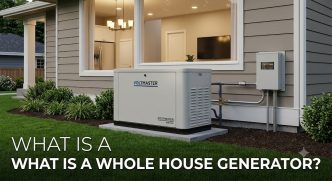
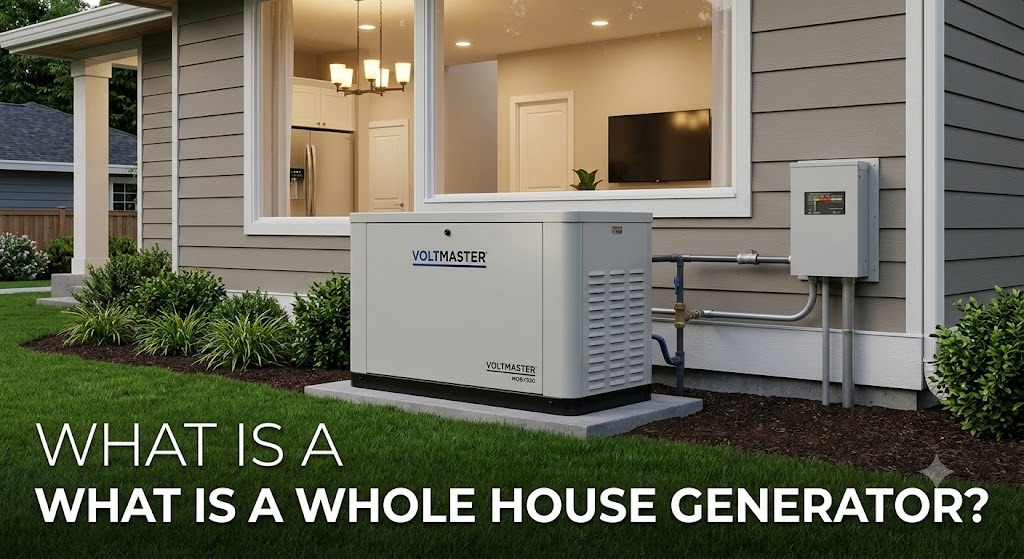
A whole-house generator is a permanent backup power system that keeps your home running when the utility grid goes down. It sits outside the house, connects to the electrical system, and starts without manual setup.
For homeowners facing storms, hurricanes, grid failures, or prolonged outages, this system can help maintain daily comfort and protect essential equipment. It can power lights, refrigeration, HVAC, security systems, sump pumps, internet equipment, and medical devices, depending on its capacity.
Whole House Generator Explained
A whole-house generator is different from a small portable unit. It is installed in one place and connects directly to your home through a transfer switch. This lets the system send power to selected circuits or, in larger setups, the full home.
The main purpose is simple: keep important systems working during an outage. That matters if you work from home, need air conditioning during hot weather, store food, use powered medical equipment, or want your home protected when you are away.
A licensed electrician can help decide whether your home needs full coverage or only selected critical circuits. At Grounded Electric, diagnostic visits typically cost $150-$300, and free quotes are available for most jobs, with clear recommendations before work begins.
How does a whole-house generator work?
The system operates via a connected process that begins when utility power fails. The automatic transfer switch detects the outage, disconnects the home from the utility line, and starts the generator.
Most systems use natural gas or propane. Some models may use diesel. Natural gas is common in homes with municipal gas lines. Propane works well for homes that need an on-site fuel tank.
The process usually follows these steps:
- The transfer switch senses the outage.
- The generator starts automatically.
- Power is routed to selected circuits or to the full panel.
- The system keeps running while fuel remains available.
- When grid power returns, the switch transfers power back to the home.
This setup reduces the need for manual startup, extension cords, gasoline storage, and outdoor refueling during bad weather.
Whole House vs Portable Generators
A portable generator can help during short outages, but it requires more hands-on work. You usually need to move it outdoors, add fuel, start it manually, and safely connect appliances or circuits.
A whole-house system offers more convenience and capacity, but it costs more and needs professional installation.
| Whole-house generator | Portable generator |
| Starts automatically during outages | Requires manual setup |
| Runs on natural gas or propane | Often runs on gasoline |
| Can support HVAC and major systems | Usually supports fewer devices |
| Permanently installed outside | Can be moved and stored |
| Higher upfront cost | Lower upfront cost |
The better choice depends on your budget, outage risk, and how much power your home needs.
Choosing the Right Size
Generator size depends on the systems you want to keep running. A smaller home that only needs lights, refrigeration, outlets, and a few essentials may not need the same capacity as a larger home with central air, electric appliances, a well pump, or pool equipment.
Common sizing ranges include:
- 7–10 kW: basic essentials, lights, outlets, and refrigeration.
- 10–15 kW: smaller homes with several important circuits.
- 12–20 kW: mid-sized homes with more appliance demand.
- 20–30+ kW: larger homes, HVAC, kitchen equipment, and broader coverage.
The right size should come from a load calculation, not a guess. A professional review from Grounded Electric can help match the generator to your panel, fuel source, and real household demand.
What is the cost of a whole-house generator?
The total cost of a whole-house generator varies for capacity, brand, fuel type, site conditions, electrical upgrades, and labor. For many homes, a Generac generator costs around $12,000 to $20,000, depending on the size of the house and the level of backup power needed.
Installation is a major part of the budget. It may include a concrete pad, fuel line work, electrical wiring, transfer switch setup, permits, inspection, and testing. Standard labor is often charged at about $200 per hour. Emergency calls depend on technician availability and start at $350.
Some homes also need panel or meter upgrades before a generator can be installed safely. Labor to upgrade an electrical panel or meter typically ranges from $1,000 to $2,500. Costs can rise when utility coordination or service line work is required.
Is It Worth It?
A whole-house generator makes the most sense when power loss creates real risk or major disruption. It is useful for homes in storm-prone areas, homes with medical equipment, families who need cooling or heating, and owners who want automatic protection when they are not home.
The best next step is not choosing the biggest unit. It is choosing the right coverage. Focus on your essential systems, fuel access, installation conditions, panel capacity, labor needs, and long-term maintenance.
A good system should solve the outage problem without overcomplicating your home or your budget.