For the longest time, people were stuck with two internet options: a fast, wired connection or a slower, wireless one.
However, with time, there were advancements in technology that opened up new avenues, and the lines have started to blur. Out of the many developments, 5G home internet is the kind of technology that stands out, since it gives you fast speeds and comes with a simple plug-and-play setup.
So, let’s explore 5G home internet and why it’s a great idea to get it for your home. Here’s everything you need to know.
Understanding 5G Home Internet
5G is the latest standard in cellular network technology, preceded by 4G LTE. The service was first released by telecom companies back in 2019, and just like the technologies before it, 3G and 4G LTE, it also works via radio frequencies for data transmission.
However, 5G has seen a significant improvement in increased bandwidth and reduced latency, which has led to lightning-fast downloads and uploads, coupled with improved connectivity and much greater reliability.
There are a couple of options for you to choose between, and if you wish to explore, you can take a look at the 5G internet providers in your area so that you can compare the pros and cons and choose one that’s best suited for your needs.
Now, let’s explore a couple more reasons why a 5G home internet service may be the perfect pick for you.
Manageable Physical Footprint
Compared to the technology before it, 5G networks use smaller transmitters, which makes them easy to move around. For instance, you can place them on buildings, in trees, and in other places where a wired connection isn’t practical.
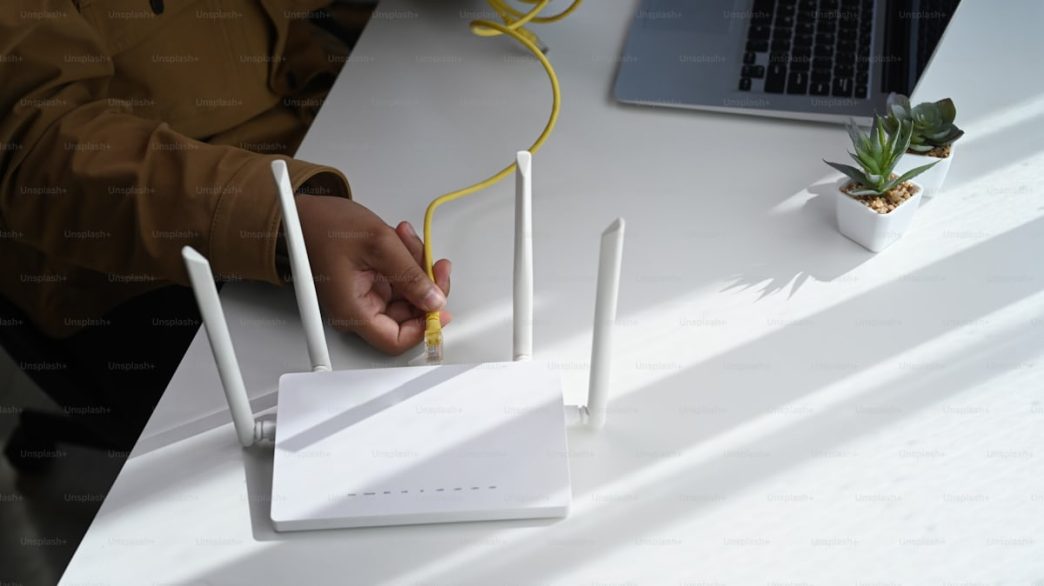
They also require less power to function, which makes them a very sustainable source of internet, giving you all the more reason to get a connection for yourself. Plus, the routers are plug-and-play, meaning that you can move them around anywhere without having to worry about rewiring.
Improved Bandwidth
5G internet services can cater to a wider range of frequencies as compared to their predecessors.
For instance, it can use frequencies from sub-1 GHz (low-band) to 24 GHz and even higher ranges (mmWave). This expands the overall capacity of the network and the throughput by allowing it to work over a much broader spectrum of bandwidth, which then allows it to increase the number of devices it can support at a time.
This is useful for people who want a solid internet connection with substantial bandwidth, enough to cater to the whole family without compromising on internet speeds.
Reduced Error Rates
5G home internet comes with a feature called the Adaptive Modulation and Coding (AMC) scheme, which is an advanced scheme to send data from Wi-Fi devices, and it is better than the Modulation Coding Scheme (MCS) that was used in 4G LTE and 3G technologies. The result of this is that the Block Error Rate (BER), usually used to measure errors in a network, is very low.
If the rate keeps increasing, the internet connection lowers its speed until the error frequency returns to normal. 5G networks typically trade speed for accuracy so that the BER is near zero at all times, ensuring that the internet connection is as smooth and reliable as possible.
Lower Latency
High latency or ping can be the bane of every internet user’s existence. Therefore, it is better to opt for an internet connection that comes with minimal latency, as is the case with fiber and cable internet connections.
However, you will be glad to know that the same is the case with 5G home internet services as well, since they feature lower latency as well. Its low latency gives you speeds that make activities such as downloading, uploading, and using cloud-based services ten times faster than on 3G and LTE connections.
In some cases, where 4G gave a latency of around 100ms, 5G networks can go down to sub-20ms, making it superfast!
So, if you can’t get a fiber or cable internet connection at home, then a 5G home internet service is a great alternative to choose.
Wide Availability
The problem with fiber internet is that it isn’t available everywhere, and while cable internet is a good alternative, the availability can vary as well.
However, with 5G home internet, you will likely find an internet connection wherever you go. That is because the internet connection pings off cell towers, which are available almost everywhere in the country.
This makes it possible for you to have an internet connection wherever you go.
So, these were some of the reasons why you should get a 5G home internet service for yourself, because it has a lot of pros that can work for you in the long run.