Twenty years separates a 2005 truck from its 2025 counterpart, but the engineering gap runs wider. Where older models relied on mechanical linkages and vacuum systems, current vehicles pack their engine bays with electronic control units, sensor networks, and processors that talk to each other thousands of times per second.
The shift happened gradually, then all at once. Emissions regulations tightened, safety standards expanded, and customers expected features that only sophisticated electronics could deliver.
The Digital Backbone of Today’s Vehicles
Most new cars and trucks contain 50 to 100 electronic control units managing everything from fuel injection to automatic emergency braking.
Building these systems requires components that meet automotive-grade specifications—temperature ranges from -40°C to 125°C, vibration resistance, electromagnetic compatibility, and failure rates measured in parts per billion.
Manufacturers depend on an electronics wholesale supplier that can source qualified parts, manage obsolescence, and handle the documentation trail for safety-critical components.
The modules communicate across multiple networks simultaneously. The engine controller sends data to the transmission, which adjusts shift points based on throttle position and road grade. Stability systems monitor wheel speeds 100 times per second.
Premium models now run over 100 million lines of software code—more than a Boeing 787. When something fails, a faulty $35 sensor can disable a $60,000 vehicle completely, putting it in limp mode even though the engine runs fine mechanically.
What Drove the Change
Three forces reshaped vehicle architecture. Federal safety mandates required electronic stability control, anti-lock braking systems, and airbag networks that respond in milliseconds.
Emissions standards pushed fuel management precision beyond what carburetors and mechanical injection could achieve.
Consumer demand added adaptive cruise control, lane-keeping assistance, and collision warning systems that need radar, cameras, and constant processing.
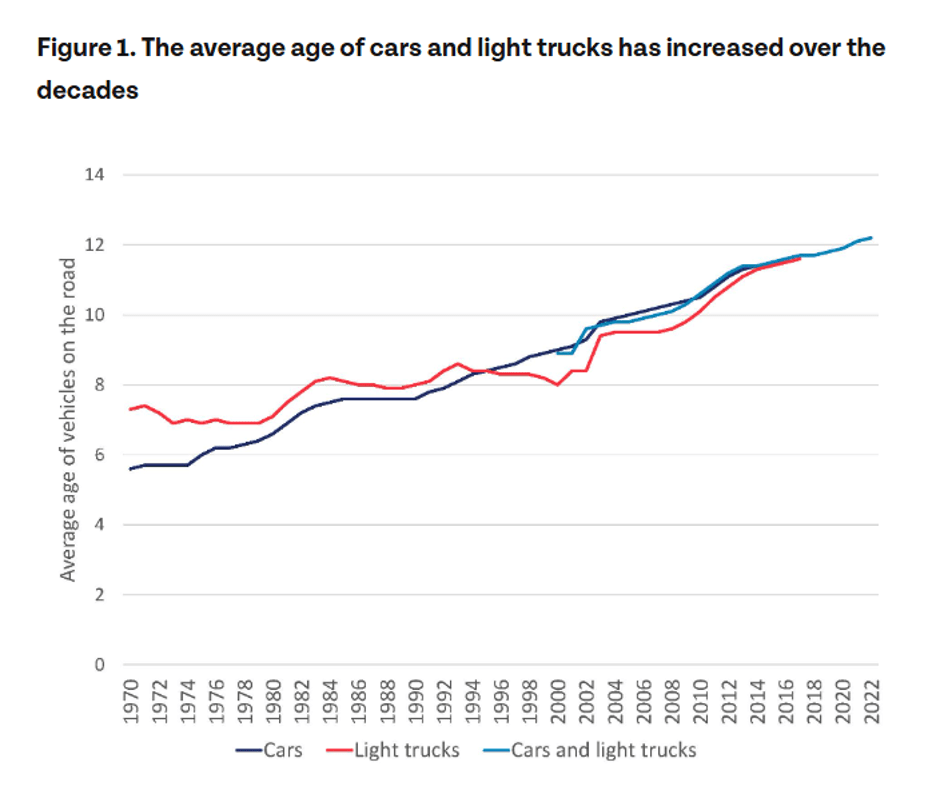
The results show in durability numbers. Cars last longer now than any previous generation. The average vehicle on U.S. roads hit 12.6 years old in 2024, compared to 9.6 years in 2002.
Electronic engine management prevents wear patterns that used to kill powertrains at 150,000 miles. Transmissions survive longer when computers adjust shift behavior based on fluid temperature and driving conditions.
Supply Chain Pressure Points
An automotive bill of materials lists hundreds of unique electronic components, each with specific qualifications.
Lead times stretch six to nine months for specialized semiconductors. Parts go obsolete faster than vehicle production cycles—a chip can reach end-of-life while the model using it still has three years left on the assembly line.
The 2021 chip shortage exposed the weak spots. Assembly plants shut down waiting for microcontrollers that cost a few bucks but needed months of testing to substitute. Automakers figured out that smart BOM management and procurement planning directly affects their ability to ship vehicles.
Electric Vehicles Multiply the Complexity
Battery electrics have fewer drivetrain moving parts but need 30-40% more electronic components, as Ford’s EV lineup demonstrates.
Battery management systems watch hundreds of individual cells, balancing charge rates and monitoring temperature gradients to maximize range and prevent thermal runaway. Power inverters flip 400-volt DC into three-phase AC for the motors, then reverse it during regenerative braking.
Charging infrastructure adds another electronics layer. Vehicles negotiate with charging stations over communication protocols, authenticate payment systems, monitor ground faults, and manage thermal limits across the battery pack. These functions need dedicated microprocessors, controller area network interfaces, and safety interlocks that gasoline vehicles never carried.
Impact on Repairs and Maintenance
Diagnostic work changed fundamentally. Troubleshooting a rough idle used to mean checking spark plugs, fuel pressure, and vacuum lines. Now it requires scanning fault codes across body, chassis, powertrain, and infotainment networks.
Software updates fix issues that would have needed hardware replacements in older vehicles, though modern audio and infotainment systems show how complex these integrated networks have become.
Independent shops struggle with proprietary scan tools and limited access to technical bulletins. Right-to-repair laws gained traction because vehicle complexity locked out mechanics without dealer equipment. A bad wheel speed sensor can kill traction control, stability management, and cruise control all at once, making parts availability critical.
The Road Ahead
Driver assistance features keep pushing component counts higher. More radar units, cameras, and lidar sensors feed processors handling split-second steering and braking decisions.
Autonomous systems need computing power current vehicles don’t carry, plus redundant backups when parts fail. Vehicle-to-vehicle communication requires 5G modems and security chips preventing remote attacks.
The real challenge is parts availability across 15-year vehicle lifespans. A 2026 model needs replacement components in 2041. Somebody has to stock those parts or engineer qualified substitutes.
Obsolescence became a major problem when manufacturers discontinued processors still used in production vehicles, forcing expensive mid-cycle redesigns.
Vehicles became computers on wheels. The shift delivered real gains—better fuel economy, fewer crashes, cleaner emissions. It also created dependencies on global electronics supply chains that earlier automotive generations never faced.