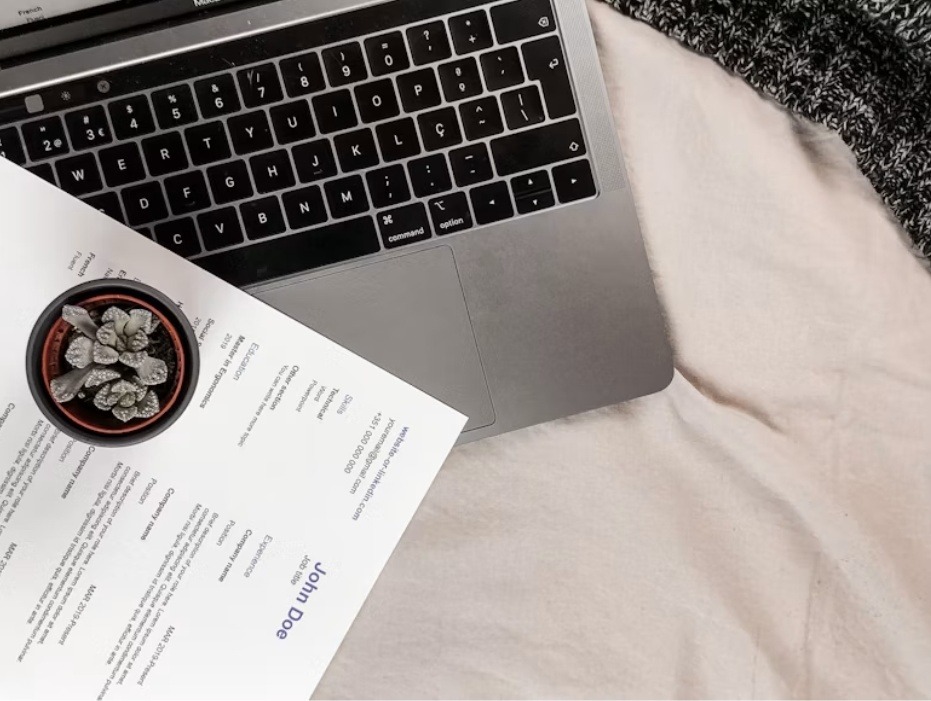
Want to land more interviews without spending your whole weekend tweaking a resume?
The dilemma most job applicants face. You spend hours crafting each bullet point… Only for it to be read in half a second by a computer and discarded.
Here’s how hiring works today. Before a human beings sees your application, a computer screens it first. And that computer is looking for one thing: keywords from the job description.
Resume keyword matching attempts to match terms exactly as they appear in a job description with those listed on your resume. Do it successfully and your resume gets to shore. Fail at it and no matter how qualified you are, your resume sinks.
The good news? AI has made this faster and easier than ever.
Here’s what’s coming up:
- Why Resume Keyword Matching Matters So Much
- How AI Speeds Up The Whole Process
- Building A Smarter Resume, Step By Step
Why Resume Keyword Matching Matters So Much
Most employers receive applications through SOFTWARE called an Applicant Tracking System (ATS), which scans your resume, grabs keywords, and ranks you against other applicants.
Why should you care so much? Because almost every large company uses one, and the statistics surrounding artificial intelligence hiring just keep growing. According to a recent poll of business executives, 83% of companies plan to use AI when reviewing resumes.
If your resume doesn’t contain keywords the system is searching for, you receive a lower ranking. The lower your ranking, the less chance a recruiter will ever see your name. You could be the most qualified applicant…and still be overlooked.
Which is why you should let an intelligent tool handle it for you. A good Claude-powered resume builder analyzes the job description, identifies important keywords, and helps you seamlessly integrate them into your resume. No guessing. No keyword cramming.
Here’s a simple way to think about it:
- The job posting is the test.
- The keywords are the answers.
Match the answers to the test, and you pass.
However there is one problem. You can’t just paste keywords wherever. They need to flow. It needs to sound like something a human would write. That’s where most people mess up.
How AI Speeds Up The Whole Process
Let’s be honest. Tailoring a resume for every single job is exhausting.
You read the posting. You compare it to your resume. You rewrite a few bullets. Then you repeat for next job. By #10 you’re burnt out.
AI transforms your resume. It compares your resume with the job posting. It highlights where you’re missing keywords. It offers suggestions to help you close the gaps. It even rewrites your weak bullet points into powerful, concise ones instantly.
And the results speak for themselves.
A massive study from the National Bureau of Economic Research discovered that AI assisted resumes led to a 7.8% increase in hires amongst close to 500,000 job seekers. That’s not micro. That’s significant. That’s an actual increase in candidates getting hired.
Why does it work so well? A few reasons:
- Speed — you can tailor a resume in minutes, not hours.
- Accuracy — the right keywords get matched to the right job.
- Clarity — vague descriptions become sharp, results-driven lines.
Fact: resumes that contain words/phrases from the job description are significantly more likely to be selected for human review. Keywords matter.
Speed isn’t the only benefit though. AI formatting cleans up your resume so it can be read correctly by the applicant tracking software. It removes the complicated fonts and awkward formatting that confuses the system. Plus, it highlights your strongest skills at the top of the page.
Building A Smarter Resume, Step By Step
Okay, but how do you practically leverage AI to create a standout resume? Let’s break it down.
Begin with the job description. Paste the job description of the position you desire. This will be your guide. All keywords will be found within that document.
Upload your job description. Paste your current resume into the builder. AI analyzes both to highlight what you’re missing.
Examine your keyword matches. Review the words provided by the tool. Do they truly apply to you? If so, incorporate them. If not, ignore them. Don’t lie about skills you don’t possess.
Make your bullets smaller. This is where AI can help you immensely. Change weak bullets like “in charge of sales” to impactful ones like “increased regional sales 22% in one year.” Use numbers and strong verbs.
Human element. Seriously. Recruiters will know within seconds if your resume sounds like it was generated by a robot. So once the AI does its thing, read it all out loud to confirm that it sounds like something you’d say, and include a few personal tidbits that no one else would know about.
This last step is where people fail. Keyword matching can get you through the software but there’s still a real live human that has the final decision and if your resume looks canned, a recruiter will toss it aside. You want to get through the robot AND wow the human.
Here’s a warning before you start. Don’t have the tool write your entire resume for you, then send it off without even looking over it once. Treat AI as your assistant, not your resume ghostwriter.
Strike that balance and you have a resume that can outsmart the software and appeal to the recruiter.
Bringing It All Together
Resume keyword matching used to be slow, tedious, and prone to error. Now let AI do the grunt work while you focus on what’s important: getting the job.
Let’s quickly recap the key points:
- Keyword searching software is typically used by most companies before your resume ever hits human eyes
- Matching those keywords decides whether you get noticed or ignored
- AI analyzes the posting, identifies gaps and repairs your bullets in seconds
- Keyword-rich resumes are far more likely to reach a real recruiter
- Always add your human touch so it doesn’t sound robotic
The job search is fiercer than ever. More candidates. More automation. More competition. You don’t have to battle it by yourself.
AI can help you with keyword matching. But YOU close. That’s the strategy.
That’s why next time you sit down to write a resume, don’t spend hours wondering what an applicant tracking software is looking for. Let AI discover the keywords and refine your draft. Your dream job is waiting, let’s ensure your resume sees it too.