For self-employed workers and small business owners who drive regularly for work, understanding the IRS mileage rate is only half the battle. The other half is actually building a system that captures your mileage accurately throughout the year, so the deduction you claim at tax time reflects reality and holds up to scrutiny. The good news is that the tech for doing this has gotten genuinely good – and the gap between using it and not using it is often measured in hundreds or thousands of dollars per year.
Why Mileage Tracking Is a Tech Problem Worth Solving
Manual mileage logs – the kind where you write down odometer readings in a notebook or enter trips into a spreadsheet – work in theory and fail in practice. The moment you have a busy week, a forgotten pen, or a few consecutive days where logging feels like too much overhead, the habit breaks. And unlike most tasks that can be reconstructed later, mileage records need to be contemporaneous to satisfy IRS requirements. You can’t reliably recreate trip logs from memory weeks after the fact.
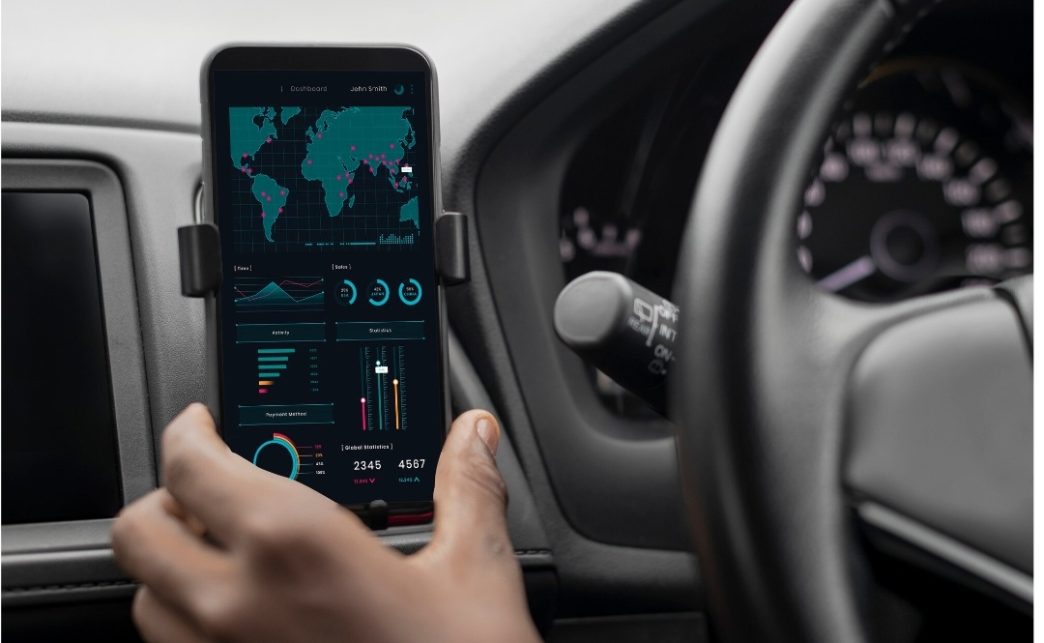
This is exactly the kind of problem that smartphone technology handles well. GPS is already running. Location data is already being collected. The challenge is applying it intelligently to produce a clean, audit-ready log without requiring active input for every drive.
Automatic Trip Detection – How It Works
The core feature in modern mileage apps is automatic trip detection. Using a combination of GPS, accelerometer data, and motion activity recognition, the app identifies when you’ve started driving and begins logging the route in the background. No opening the app, no tapping a button – it just captures the drive.
At the end of each trip, the app presents it for classification: business or personal. You swipe to categorize, optionally add a note about the purpose, and move on. The whole interaction takes a few seconds. If you drive frequently, you might spend five minutes a day reviewing and classifying. Over a year, that’s a comprehensive, GPS-backed mileage log you can export and attach to your tax return.
Key Features to Look For
Not all mileage apps are built equally, and the differences matter more than you might expect. Here’s what actually separates good tools from mediocre ones:
- Automatic detection accuracy – does it catch every drive, and does it avoid false positives like short car movements that aren’t actual trips?
- Classification speed – can you categorize a trip in one swipe, or does it require multiple taps and confirmations?
- IRS-compliant report export – does the report format include all the fields the IRS expects?
- Accounting software integration – does it connect to QuickBooks, FreshBooks, or your platform of choice?
- Team or multi-driver support – if you have employees or contractors who also drive, can their mileage be logged separately under one account?
- Background battery usage – a GPS app running all day needs to be optimized so it doesn’t drain your phone before noon.
The combination of accurate detection and easy classification is the most important factor. An app that catches 95% of trips with one-swipe categorization will produce a better annual log than a more feature-rich tool that requires manual input.
How the IRS Mileage Rate Gets Applied
Once you have your annual business mileage total, applying the standard rate is simple arithmetic. You multiply the total qualifying miles by the IRS rate for that tax year. The IRS adjusts the rate periodically – sometimes mid-year if fuel costs shift significantly – so it’s worth confirming the current rate before you calculate rather than assuming it’s the same as last year.
The resulting figure is your mileage deduction, which reduces your taxable income directly. For a self-employed person in a 22% federal tax bracket, a $5,000 mileage deduction translates to roughly $1,100 in federal tax savings, plus whatever state income tax applies. The actual expense method – tracking fuel, insurance, maintenance, and depreciation individually – sometimes produces a larger deduction, but for most people with a typical vehicle and moderate driving volume, the standard rate is competitive and far less work.
Integrating Mileage Data With the Rest of Your Financial Stack
Mileage is just one part of self-employment expense tracking, and the most practical setups treat it as a connected piece of a larger system rather than an isolated tool. The better mileage apps export reports in formats that accounting software can import directly – which means your mileage deduction feeds into your profit and loss statement without manual data entry.
For business owners who want a consolidated view of expenses, connecting mileage tracking to a broader expense management tool makes sense. You can see your vehicle costs alongside other business expenses, categorize everything consistently, and arrive at tax time with a complete record rather than piecing together data from multiple sources.
Using Mileage Data Year-Round, Not Just at Tax Time
The most sophisticated users of mileage tracking tools don’t just pull their annual log in April. They use running mileage totals as part of quarterly tax planning, ensuring their estimated payments reflect actual deductions rather than rough guesses. If your mileage is higher than expected in the first half of the year, that changes your quarterly estimated payment. If you’ve been driving less than usual, it adjusts in the other direction. Accurate data flowing through the year makes every estimate more precise.
What Mileage Apps Can’t Do
It’s worth being clear about the limits. A mileage tracker records where you drove and how far. It doesn’t automatically know whether a trip was for business. That classification is your responsibility, and it needs to be made honestly and contemporaneously. Using an app doesn’t make an inflated mileage claim legitimate – it just makes an accurate claim easier to document.
Some people ask whether they should use actual expenses instead of the standard rate once they have detailed vehicle cost records. The answer is: it depends. If you drive a vehicle with high operating costs or put on very high mileage, actual expenses might produce a larger deduction. But the calculation requires more record-keeping, and you need to commit to the method in the first year the vehicle is used for business. Most users find the standard rate simpler and sufficient.
Final Thoughts
Mileage tracking is one of those tasks where the right technology makes compliance genuinely easy and the wrong approach – or no approach – makes it a recurring source of missed deductions and documentation gaps. For self-employed workers and small business owners who drive regularly, an automatic mileage app is a straightforward investment with a clear return. Set it up at the start of the year, build the classification habit, and by the time you’re ready to file, the work is already done.