
Two years ago, the debate was whether AI could write a passing essay. Today the question is different: AI can clearly produce text, but is that text worth submitting? And if not, what’s the alternative?
Most students have tried both approaches at some point. AI feels fast and free. Professional writing services feel like a bigger commitment. But the decision comes down to more than cost – it comes down to what you actually need the output to do.
Where AI Falls Short for Academic Work
AI tools generate text based on patterns in training data. They don’t conduct original research, synthesize sources with genuine understanding, or produce the kind of argument that earns marks in a third-year seminar. The output is structurally plausible but analytically thin. Three specific problems come up consistently:
Detection. Tools like Turnitin AI Detection and GPTZero have improved substantially since 2023. Detection rates for unmodified AI-generated essays currently run between 85-92% across the tools universities commonly use. A student who submits AI output without significant revision is taking a risk that’s grown considerably more concrete.
Hallucinated citations. AI tools misrepresent sources, invent references that don’t exist, and produce confident-sounding claims that don’t hold up to scrutiny. For papers where factual accuracy and proper citation are graded, that’s a direct hit to your mark.
Depth. Academic writing at university level requires genuine engagement with sources – not a summary of what they say, but an argument about what they mean in context. AI produces the former consistently and the latter almost never.
What Professional Essay Services Actually Offer
Human writers bring something AI can’t replicate: subject expertise applied to a specific prompt. A writer with a background in law reads a legal studies prompt differently than a general language model does. They know what the markers are looking for, which arguments carry weight in that discipline, and how to structure a response that demonstrates understanding rather than pattern-matching.
Essays from reputable services pass AI detection at 97-99% rates. That gap – versus the 8-15% pass rate for raw AI output – reflects the difference between genuine human writing and generated text. Beyond detection, the quality difference is more significant: proper source integration, disciplinary voice, accurate citations, and the kind of analytical moves that actually earn marks.
The tradeoff is cost and turnaround. Professional services charge per page and per deadline urgency. The economics only work if you’re treating the output as something worth investing in.
Three Services Worth Knowing
Not all professional writing services operate the same way. The bidding model – where you post a requirement and writers compete for the job – tends to produce better matches than auto-assignment, because you can review profiles and select based on subject experience rather than availability. The three services below use this model or something close to it, and have enough review volume to give you a realistic picture of what to expect.
PapersOwl
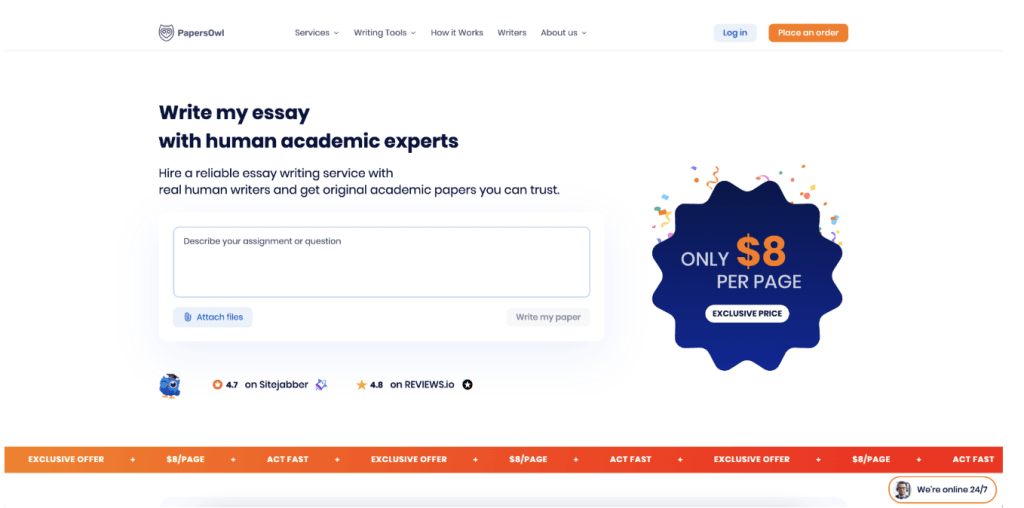
The bidding model that PapersOwl runs on is genuinely different from most services. You post a requirement, writers bid, and you choose based on their profiles, ratings, and proposed approach. That selection process means you can match a specific assignment to a writer who has demonstrable experience in that subject area. Students who have used the PapersOwl writing service consistently highlight the quality of the output and clear communication throughout the process. It holds a 4.7 rating on Sitejabber from nearly 5,200 reviews. The kind of volume that reflects consistent delivery rather than a curated sample.
The escrow payment model is worth noting separately. Funds release only after you approve the delivery, which means the financial risk sits with the writer to perform, not with you to hope they do.
EduBirdie
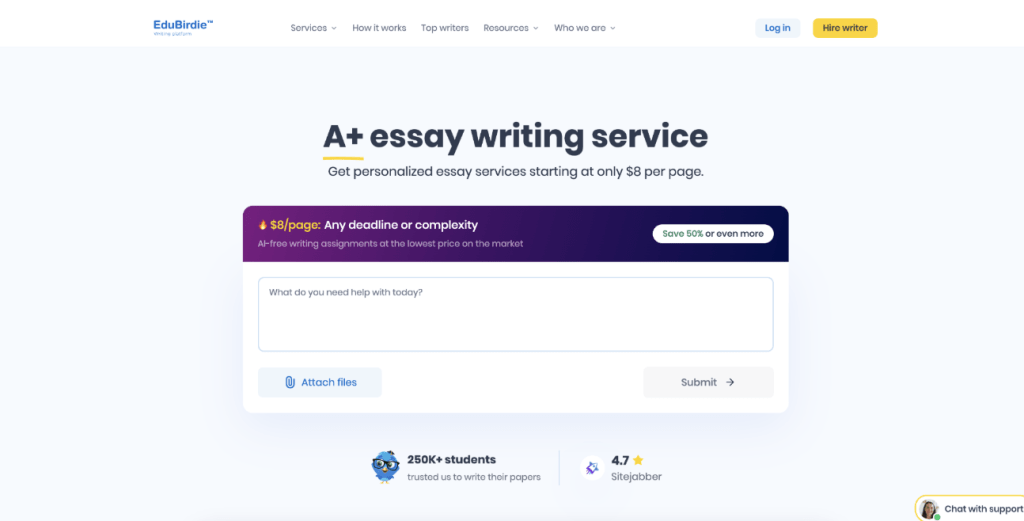
EduBirdie operates on a similar bidding structure with a large pool of writers. It’s one of the most widely reviewed services online, with consistent feedback around communication and delivery speed. Pricing scales with deadline urgency, which is standard across the category. The platform includes a plagiarism checker and allows direct messaging with your assigned writer throughout the process.
For most essay types and disciplines, it covers the job well. The writer pool is broad, which makes it a reliable default for standard assignments across the humanities and social sciences.
Writepaper
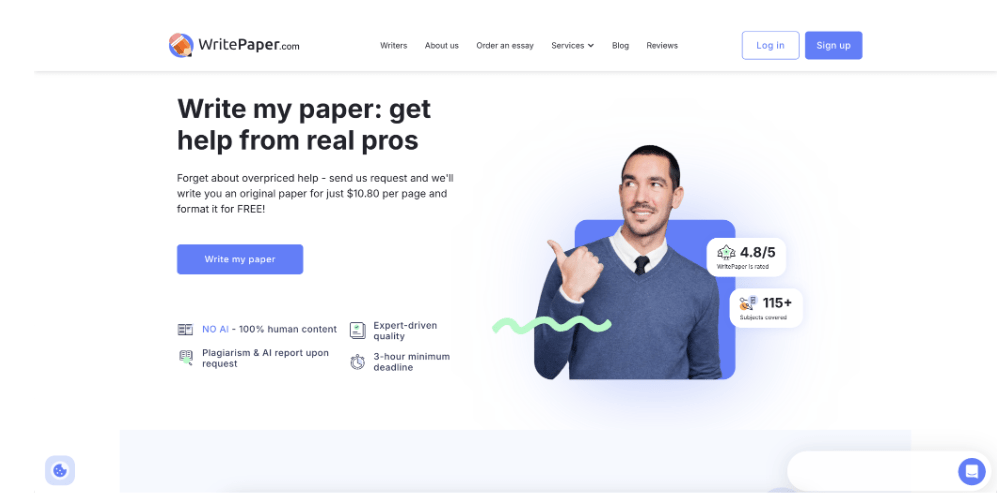
Writepaper focuses on technical and specialized assignments – STEM, legal analysis, economics. Writers are matched by subject area rather than general availability, which matters when the topic is narrow enough that a generalist approach produces shallow output.
Turnaround on rush orders runs slower than the larger platforms, so it works best when the deadline isn’t critical. For niche subjects with reasonable lead time, it’s a practical option.
When AI Is Actually Useful
The case against AI isn’t that it’s useless – it’s that it’s misused. There are legitimate roles for AI tools in a student workflow:
- Generating a first-draft outline to structure your own thinking
- Summarizing a long source to check whether it’s relevant before reading it fully
- Getting unstuck on a paragraph you’ll rewrite yourself
- Checking grammar and clarity on text you’ve already written
What AI doesn’t do well – what it consistently fails at – is producing finished work that meets academic quality standards. The students who use it effectively treat it as a drafting aid, not a submission generator.
| Factor | AI Tools | Professional Writers |
| Research depth | Surface-level | Subject-specific, genuine research |
| Detection risk | 85-92% detection rate | 97-99% pass rate |
| Citation accuracy | Frequently hallucinated | Verified and formatted correctly |
| Argument quality | Structurally plausible, thin | Substantive, graded-level analysis |
| Turnaround | Instant | Hours to days depending on deadline |
| Cost | Free to ~$20/month | Per-page pricing |
The Decision Framework
The choice between AI and a professional service depends on three factors: what the assignment is worth, how much time you have, and what level of risk you’re willing to accept.
For a low-stakes formative piece with a loose deadline, an AI-assisted draft you substantially revise yourself is a reasonable approach. For a high-stakes essay in a subject you’re not confident in, with a deadline that doesn’t allow for full rewriting – that’s when a professional writer earns the cost.
The students who get into trouble are the ones who treat AI output as finished work. The ones who get value from professional services are the ones who understand what they’re actually buying: not a shortcut, but a high-quality reference point that meets the standard they need to hit.