“Dubai runs on movement cargo in from Jebel Ali, e-commerce orders flying out across the Gulf, retail stock cycling through faster than most cities can blink. Behind every smooth operation, there is almost always a warehouse storage solution quietly doing the heavy lifting.”
Walk into almost any conversation with a logistics manager or a growing SME in Dubai and the topic of storage comes up within minutes. Space in this city is expensive, business volumes are unpredictable, and the pressure to keep operations lean while staying ready to scale is constant. Warehouse storage in Dubai is not simply about finding a place to put things. It is about choosing a facility, a partner, and a structure that can actually keep pace with how fast this city moves.
This post takes a practical, honest look at what the Dubai warehouse storage market looks like in 2026, what separates a good provider from a great one, and why so many businesses from solo entrepreneurs to mid-sized retailers are turning to flexible self storage models as a smarter alternative to traditional long-term warehouse leases.
Why Dubai Businesses Are Rethinking Their Storage Needs Right Now
The past three years have fundamentally changed how Dubai-based businesses think about space. Post-pandemic supply chain reshuffling, the continued growth of e-commerce through platforms like Noon and Namshi, and a surge in SME registrations under various free zone incentives have all collided to create an unusual situation: more goods moving through Dubai than ever before, but less appetite for locking into long-term, fixed-cost warehouse leases.
The result is a growing demand for warehouse storage solutions that are flexible, accessible, and transparent in pricing. Businesses want to pay for what they use. They want to scale their storage footprint up in peak season Ramadan, National Day, back-to-school and scale it back down without penalty clauses or complicated exit negotiations. Traditional 3PL providers and long-lease warehouses were not built for that kind of agility.
This is where the conversation around warehouse storage Dubai has shifted. It is no longer just about square footage. It is about access hours, unit types, climate control, security, and the ability to walk in with one month’s notice rather than eighteen.
What Makes Warehouse Storage in Dubai Different from Other Cities?
Dubai occupies a genuinely unusual position in global logistics. It is not just a city with a port, it is a city designed from its earliest planning stages to be a trade hub. That ambition has shaped everything from road infrastructure to free zone regulations to the temperature inside storage facilities.
There are a few things that make the Dubai storage market uniquely demanding compared to, say, London or Singapore.
The Climate Factor
Ambient temperatures outside a warehouse in Dubai can exceed 45°C in peak summer. Without proper climate control, electronics, pharmaceuticals, cosmetics, food products, and even cardboard packaging can be destroyed in days. This is not a minor operational footnote, it is a defining requirement of any serious storage facility here.
The Logistics Density Factor
Dubai’s location means goods are often in transit, not just stored. A warehouse that cannot offer flexible in-and-out access, proper shelving, and easy last-mile connectivity to Emirates Road or Sheikh Zayed Road is going to cost businesses time they simply do not have in this market.
There is also the regulatory dimension. Free zone businesses, for instance, have specific requirements around where goods can be stored and how inventory must be handled to maintain compliance with customs and import rules. A warehouse storage provider operating in Dubai needs to understand these nuances or the businesses using them will eventually pay the price during an audit or a customs dispute.
The Core Types of Warehouse Storage Solutions Available in Dubai
Not all warehouse storage is created equal, and the options available in Dubai span a genuinely wide range. Understanding the differences before committing is the kind of due diligence that saves businesses significant money and headaches down the line.
Shared Warehousing
In a shared warehousing arrangement, multiple businesses share the same facility and often the same workforce. Costs are split proportionally based on space used and services required. This model works well for businesses that have consistent but relatively modest inventory volumes and do not need dedicated, branded storage space. The downside is less control and occasional scheduling conflicts during peak periods when everyone needs the loading bay at the same time.
Dedicated Warehousing
A dedicated warehouse gives a single business exclusive use of the facility. The space, the staff, the processes all tailored entirely to that company’s operations. This is the right call for larger enterprises with complex inventory requirements, strict SLAs, or products that need specialized handling. It is also significantly more expensive and comes with the burden of managing a long-term lease in a market where per-square-foot costs in prime logistics corridors like Al Quoz or Jebel Ali can be steep.
Self Storage Units for Business Use
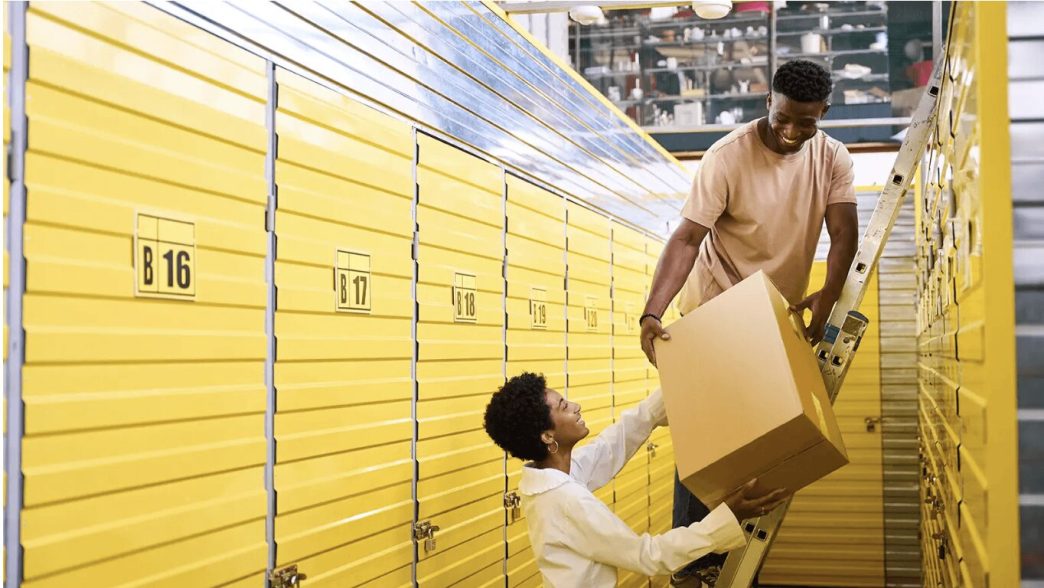
This is the category that has seen the most growth in Dubai over the past five years, and for good reason. Self storage units, the kind offered by providers like E Self Storage UAE bridge the gap between renting a full warehouse and keeping inventory in a spare office corner. Businesses can rent units ranging from a few cubic metres up to large ground-floor spaces, pay monthly, access their goods at any time, and avoid the overhead of a full warehouse operation. For e-commerce businesses, contractors, retailers managing seasonal stock, and even corporate clients managing document archives or equipment, this model makes both financial and operational sense.
How Do You Know Which Warehouse Storage Option Is Right for You?
The answer sits almost entirely in your numbers and your timeline. Before you call a single storage provider, it is worth spending an hour answering four honest questions about your own business.
- How much inventory do you actually move per month, and how dramatically does that volume swing between your busiest and quietest periods?
- Do you need staff on site to handle goods, or can you manage pick-and-pack yourself with occasional access?
- What is the nature of your inventory does it require climate control, specialised racking, or fragile-goods handling?
- How long are you planning to use the storage? Is this a six-month bridge solution or a multi-year operational setup?
- What is your realistic monthly budget, and have you factored in all the hidden costs of a traditional warehouse lease including fit-out, utilities, and staffing?
If you are a small business, a startup, or a retailer managing seasonal peaks, the answer almost always points toward a flexible self storage arrangement first. You can always scale into a dedicated space later when your volumes and cash flow justify it. Going the other direction, signing a two-year warehouse lease and then trying to reduce your footprint is far more painful.
Key Features to Look for in a Dubai Warehouse Storage Provider
Dubai has no shortage of storage options advertising themselves as “secure” and “flexible”. The gap between marketing language and operational reality can be significant. When evaluating a provider, these are the specifics that actually matter.
- 24/7 access: Dubai business does not stop at 5pm, and neither should your ability to retrieve or drop off stock
- Climate-controlled units: a non-negotiable for electronics, textiles, food, cosmetics, pharmaceuticals, and documents
- CCTV and access-controlled entry: both facility-wide and at individual unit level
- Transparent, monthly pricing with no hidden charges for access, handling, or administration
- Flexible unit sizes: the ability to move to a larger or smaller unit as your needs change without breaking a long contract
- Loading bay access and forklift availability for businesses dealing with palletised goods
- Insurance options: either bundled or clearly explained so you can arrange your own
- A facility that is clean, dry, and properly maintained: this sounds basic but it is where many budget providers fall short
Pay particular attention to access hours. Some Dubai storage facilities advertise themselves as accessible but only during business hours with a receptionist present. That is a limitation that sounds minor until you need to retrieve an urgent shipment at 9pm on a Sunday.
The Real Cost of Poor Warehousing What Businesses Often Overlook
There is a tendency among small and medium businesses in Dubai to evaluate storage options purely on the monthly rate per square metre. It is an understandable shortcut, but it frequently leads to decisions that cost far more in the long run. The true cost of poor warehouse storage shows up in places that do not appear on a storage invoice.
Damaged inventory from inadequate climate control. Lost stock from poor organisation or insufficient security. Hours wasted by staff driving across Dubai to an inconveniently located facility. Contract penalties when business volumes change and you are locked into a lease that no longer fits. These are the costs that rarely get calculated when businesses chase the cheapest rate per square foot and they are the costs that can quietly erode margins over an entire financial year.
There is also the less tangible cost of time. A warehouse storage facility that is disorganised, understaffed, or located 45 minutes from your main operations is not saving you money it is charging you in hours instead of dirhams. When evaluating any storage solution in Dubai, factor in access time, administrative burden, and the reliability of the facility’s operations as seriously as you factor in the monthly fee.
Are Short-Term Warehouse Storage Solutions Worth It in Dubai?
Short-term storage is one of the most consistently underutilised tools in the Dubai business toolkit. The assumption is that it costs more per month than a long lease which is sometimes true on a per-square-metre basis but that framing ignores the flexibility premium you are buying.
Consider a retailer launching a product for the Eid al-Fitr gifting season. They need three times their normal storage capacity for six weeks. Signing a twelve-month warehouse lease to cover that peak is financially absurd. Renting additional self storage units for two months, using them intensively, and then releasing them is not just cheaper, it is the operationally rational choice. Short-term warehouse storage in Dubai, structured properly, is one of the most effective ways to manage seasonal demand without overcommitting on infrastructure.
The same logic applies to businesses in transition companies relocating offices, contractors between project sites, e-commerce businesses testing a new product category. Short-term storage is not a compromise. Used correctly, it is a strategic tool.
Which Industries Rely Most Heavily on Warehouse Storage in Dubai?
E-Commerce & Retail
Online sellers and brick-and-mortar retailers both depend on flexible storage to manage stock cycles, seasonal inventory surges, and the physical demands of last-mile fulfillment across the UAE.
Construction & Contracting
Tools, materials, and equipment that cannot live on a job site between projects need secure, accessible short-term storage. Contractors in Dubai are among the most consistent users of business self storage.
Hospitality & F&B
Hotels, restaurants, and catering companies store seasonal décor, surplus smallware, event equipment, and back-of-house supplies that do not justify on-site space but need to remain accessible.
Healthcare & Pharma
Medical equipment, pharmaceuticals, and clinical supplies demand climate-controlled, hygienic, and strictly access-controlled storage, an area where specialist self storage facilities outperform general warehouses.
Corporate & Professional Services
Law firms, financial institutions, and consulting companies manage substantial document archives. Secure, organised, and indexed document storage is a specific need that the right provider can address efficiently.
Events & Exhibition
Dubai’s busy events calendar GITEX, Cityscape, Arab Health generates enormous demand for temporary equipment storage before, during, and after major shows throughout the year.
Climate-Controlled Storage: Why It Cannot Be Optional in Dubai
This deserves more than a bullet point. Dubai’s climate is genuinely extreme. Summer temperatures outside can hit 48°C, and even in the relatively mild winter months, storage facilities that are not properly cooled or dehumidified create conditions that accelerate material degradation, attract pests, and can void product warranties.
What Gets Damaged Without Climate Control
Electronics and semiconductor components. Leather goods and textiles. Wine, food, and beverages. Artwork and antiques. Pharmaceuticals and medical devices. Printed materials and documents. Wood furniture and musical instruments.
What Proper Climate Control Delivers
Temperature stability between 18–24°C regardless of outdoor conditions. Humidity management to prevent warping, mold, and condensation damage. Extended shelf life for perishables and sensitive materials. Peace of mind that stock condition matches what your customers expect at delivery.
When comparing warehouse storage providers in Dubai, ask specifically about temperature ranges, humidity control, and what happens to climate systems during a power outage. A facility with backup generators for its cooling systems is an investment in inventory protection not a luxury feature.
How Technology Is Changing Warehouse Storage in Dubai
The digitisation of storage management is moving faster in Dubai than in most comparable markets, partly because of the city’s genuine commitment to smart city infrastructure and partly because the businesses using storage here tend to be sophisticated and demanding.
The features that once felt premium real-time CCTV access via mobile app, digital entry systems, online inventory tracking, paperless contracts, and remote account management are increasingly becoming baseline expectations. Businesses managing inventory across multiple locations want a single dashboard showing them what is in each unit, who accessed it last, and what their current monthly spend looks like.
- Digital access control using PIN codes or smartphone-linked entry systems
- Online booking and account management without requiring in-person visits
- Real-time camera access for businesses that want to verify their unit remotely
- Automated billing and digital invoicing compatible with UAE corporate accounting systems
- Integration-ready platforms for businesses using inventory management software like Zoho Inventory or similar tools
The direction of travel is clear. Warehouse storage in Dubai is evolving from a purely physical service into a hybrid of physical infrastructure and digital management. Providers who invest in technology are not just adding convenience, they are making their facilities genuinely more useful for the kind of businesses that will be driving demand over the next decade.
What Questions Should You Ask Before Signing Any Warehouse Storage Agreement?
Too many businesses in Dubai sign storage agreements without asking the questions that matter most. The contract is presented as standard, the monthly rate seems reasonable, and the facility looks clean on a first visit. Six months later, the issues emerged. Before committing to any warehouse storage provider, work through this list carefully.
- What is the exact notice period required to vacate or downsize, and are there financial penalties?
- Is there a minimum storage period, and how is it enforced?
- Who is liable if goods are damaged due to facility failure, a water leak, power outage, or pest issue?
- What insurance coverage, if any, does the facility provide, and what is the claims process?
- How is access managed for multiple team members? Can you grant staff access without sharing your own credentials?
- Are price increases capped or can the provider revise rates with short notice?
- What is the process for moving to a larger or smaller unit, and is there a fee for doing so?
A reputable provider will answer all of these questions clearly and in writing without hesitation. Evasive or vague answers to any of them should be treated as a serious warning sign before you commit.
How E Self Storage UAE Serves the Needs of Dubai Businesses
E Self Storage UAE has built its operation around the specific, practical demands of businesses operating in Dubai and the wider UAE. With over 500 businesses currently using their facilities, the offering has been shaped by real operational feedback from real clients not by a generalised storage template imported from another market.
The facility combines climate-controlled units across a range of sizes with 24/7 access, robust security infrastructure, and a straightforward monthly pricing model that removes the ambiguity that often makes traditional warehouse relationships frustrating. Whether a business needs a compact unit for document storage, a mid-sized space for contractor equipment, or a larger unit to manage retail overflow inventory, the unit range accommodates the spectrum of needs without forcing a one-size-fits-all arrangement.
What genuinely distinguishes E Self Storage UAE in a competitive market is the transparency of the relationship. There are no buried charges, no access restrictions buried in fine print, and no pressure to commit to timeframes that do not match how your business actually operates. That straightforwardness is, in practice, rarer than it should be in the Dubai storage market.
- Climate-controlled storage units designed for Dubai’s extreme heat
- 24/7 access with digital entry management
- Flexible monthly contracts no mandatory long-term commitments
- A range of unit sizes to match actual business needs rather than warehouse minimums
- Transparent pricing with no hidden access or administration fees
- Strong security infrastructure including CCTV and individual unit access control
- A location and operational setup built around the reality of how Dubai businesses move
Conclusion
Warehouse storage in Dubai is not a generic commodity decision. It is a choice that affects your operating costs, your inventory condition, your team’s time, and ultimately your ability to serve customers reliably in one of the most demanding commercial environments on earth. The businesses that get this decision right that choose a storage partner based on actual operational fit rather than headline rate tend to find that their storage solution becomes a quiet competitive advantage rather than a recurring source of friction.
The shift toward flexible, self-managed storage models reflects something broader happening in Dubai’s business landscape. Companies across every sector are demanding more agility, more transparency, and more control over their operational costs. Warehouse storage providers who understand that shift and have built their service around it rather than around the inertia of traditional long-lease models are the ones earning and keeping the trust of the businesses that power this city.
E Self Storage UAE sits firmly in that category. If your business is navigating the challenge of storage in Dubai whether you are scaling up, bridging a transition, managing seasonal peaks, or simply looking for a cleaner alternative to the warehouse arrangement you have outgrown it is worth starting the conversation with a provider that 500 businesses have already tested and trusted. The right storage decision in Dubai is not the cheapest one. It is the one that actually fits how your business works.