


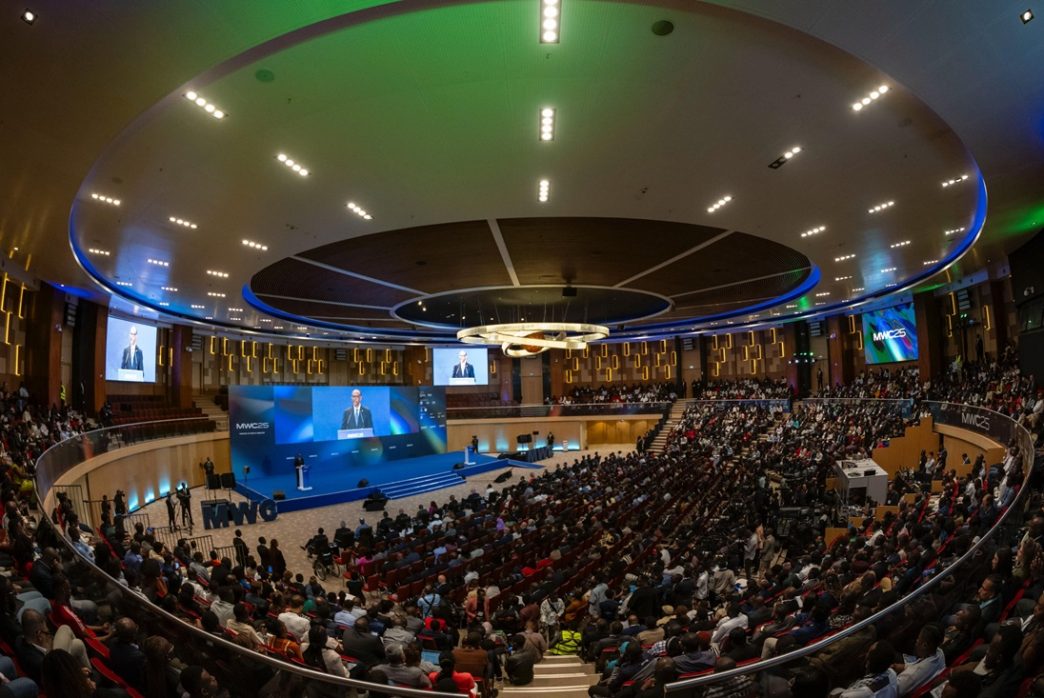
The GSMA’s flagship African mobile event, Mobile World Congress (MWC) Kigali, kicked off today in Rwanda’s Capital and is scheduled to end on Thursday, October 23, 2025. Against Rwanda’s backdrop as a rising “Silicon Savannah”, the event reinforces the country’s growing reputation as a hub for digital transformation and global collaboration in ICT innovation.
Organized by GSMA in partnership with Rwanda’s Ministry of ICT & Innovation, this year’s congress —the third consecutive edition hosted in Kigali has brought together over 4,000+ delegates, including government officials, policymakers, network operators, and technology leaders, from 109 countries.
“It is a pleasure to join you today, and to all our guests, welcome to Kigali,” H.E. Paul Kagame, the President of the Republic of Rwanda, said before officially opening the event. “We are honored to host this year’s Mobile World Congress and to build Africa’s digital future together.”
In his keynote address, President Kagame reaffirmed Rwanda’s commitment to building a knowledge-based economy driven by technology. He urged African nations and global technology leaders to work together to close the continent’s digital divide, emphasizing that Africa’s transformation depends on inclusive access to technology and innovation.
Backing his remarks, Rwanda’s Minister of ICT and Innovation, Hon. Paula Ingabire, also called for pan-African collaboration. “The future of mobile in Africa will be defined by collaboration,” she stated. Urging African leaders to create solutions designed in Africa, built for Africa, and scaled to the world, Hon. Ingabire stated that, “The ultimate goal set forth for the African continent is to become not just a market for innovation, but a home of product excellence and digital leadership.”
Vivek Badrinath, the Director General of the GSMA, lauded Rwanda as a “true technology leader within Africa,” crediting President Kagame’s long-term vision and “forward-looking digital policies” for the nation’s remarkable economic transformation. Badrinath positioned Rwanda’s two-decade journey as a powerful case study for the continent, demonstrating how deliberate state policy and mobile technology can converge to advance public services and improve citizens’ lives.
Badrinath further highlighted that mobile technology acts as a critical “catalyst for change,” enabling access to essential services in education, healthcare, and financial inclusion, while also fuelling business growth and innovation.
Mobile Money, for instance, was spotted as one of Africa’s greatest success stories, an innovation born from necessity that has now become a global benchmark for financial inclusion. “What began as a solution for those excluded from formal banking has grown into a global model of financial inclusion,” Kagame noted. “It has empowered small businesses and women entrepreneurs while linking rural communities to the broader economy.”
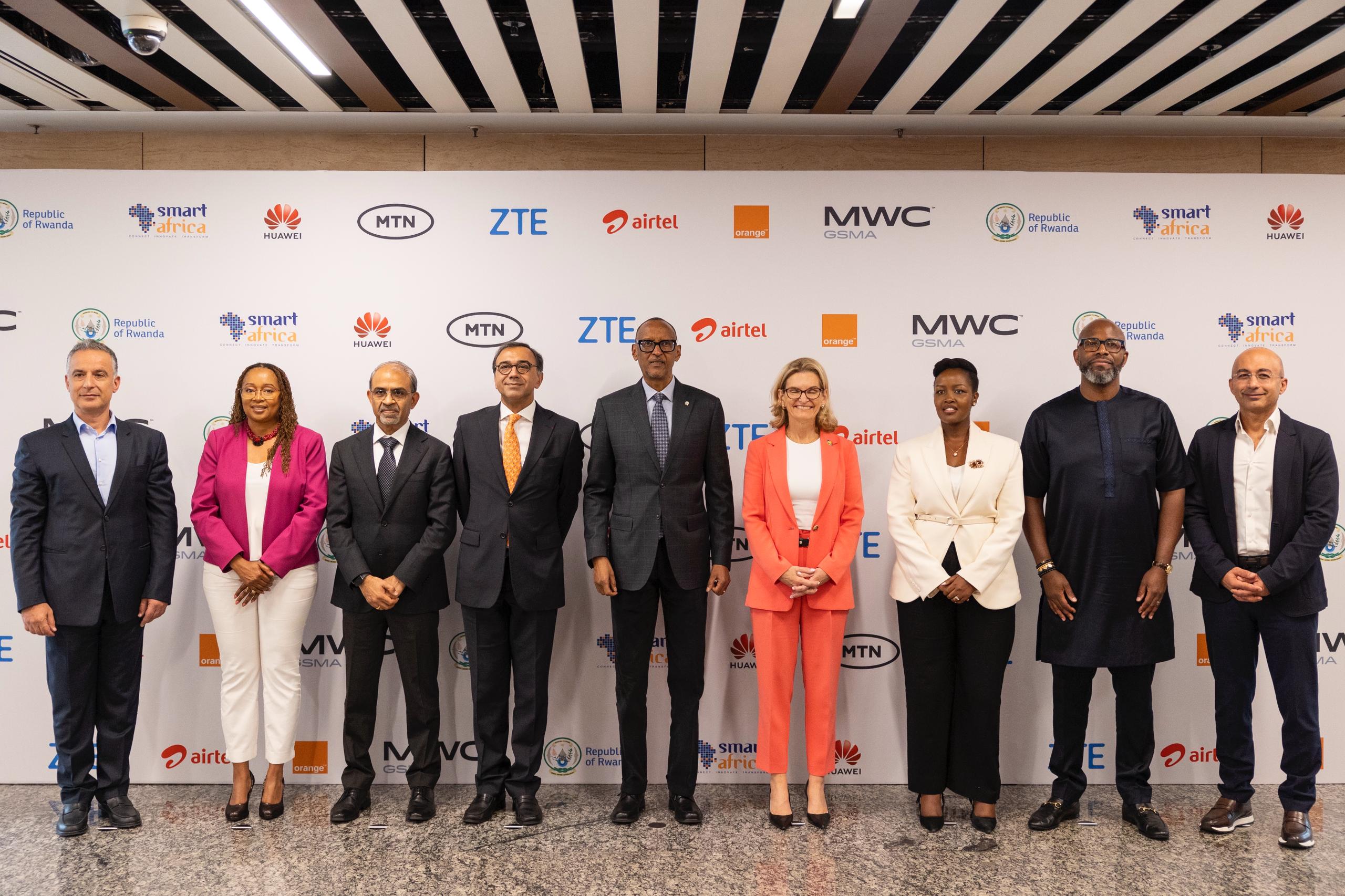
MWC25 Kigali is being held under the theme “Converge, Connect, Create.” The stage was set not just to celebrate milestones, but to forge “bolder ambitions for the future.” So far, according to some media reports covering the event, several major industry initiatives were unveiled at MWC25. In a high-profile collaboration, GSMA and six leading African operators (Airtel, Axian, Ethio Telecom, MTN, Orange, and Vodacom) introduced the Handset Affordability Coalition, agreeing on baseline specifications for ultra‑low‑cost 4G smartphones. The goal is to lower the price of entry-level devices so millions more people can go online. As Vivek Badrinath emphasized, access to a smartphone “is not a luxury – it is a lifeline to essential services, income opportunities and participation in the digital economy”.
Meanwhile, a core goal of MWC Kigali is to spotlight African innovations. Throughout the exhibition floor, a mix of African startups –from fintech startups to mobile health and agritech, etc., are demonstrating solutions for African challenges. Rwanda’s tech ecosystem was well represented by startups recently funded in the country’s incubators.
Economic and geopolitical significance
Hosting MWC in Kigali is as much a strategic statement as a logistical choice. Rwanda has invested heavily in digital infrastructure and progressive regulations to attract technology and innovation investment, positioning itself as a technology hub in the region.
The event has drawn policymakers and investors from across Africa and beyond, signaling confidence in the continent’s digital market. By convening leaders to align on spectrum, licensing, and data policies, MWC Kigali is helping shape the regulatory framework for growth.
The economic backdrop is compelling. Africa’s mobile sector already contributes hundreds of billions to GDP (GSMA forecasts approx. US$220 billion by 2028) and supports an estimated 1.5 million direct jobs (2.2 million total).
Millions remain offline even where 4G exists; bridging that “usage gap” could unlock trillions of dollars in added output. In this context, African leaders use MWC Kigali to reposition the continent on the world stage. According to some analysts, hosting MWC in Rwanda affirms that “Africa is not just adopting digital transformation, it is shaping it”. In practical terms, the event is already driving deals and capital: operators and vendors signed new partnerships at the conference, and the international spotlight on Kigali is expected to spur further foreign investment in regional tech.


