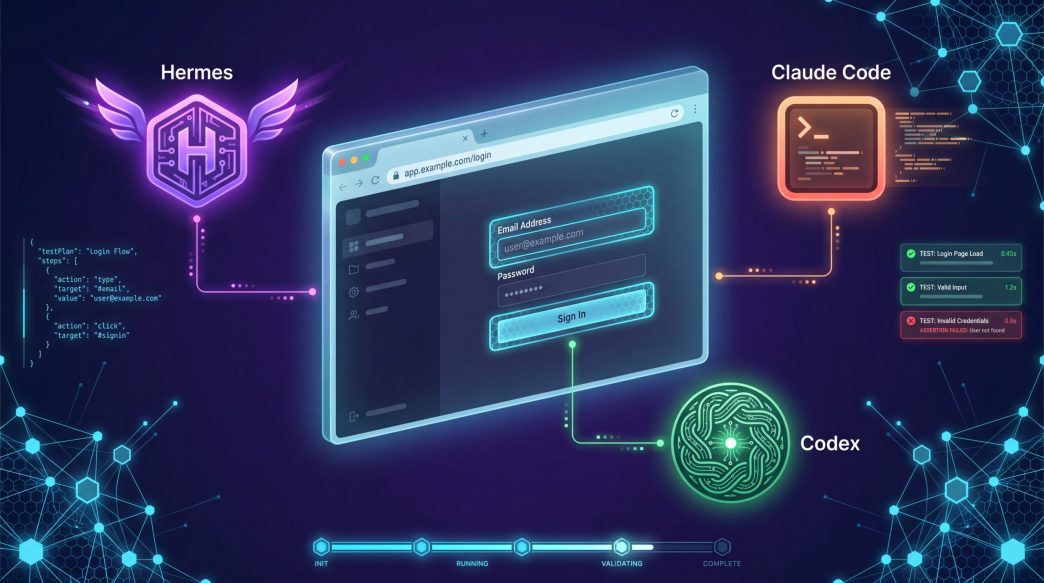
Quality assurance has transitioned from static, manual labor toward highly fluid, automated rhythms. This shift stems from the rise of code-writing assistants that generate and modify software at speeds human teams could never historically match. As these agents become embedded in daily workflows, the traditional boundaries separating coding from verifying tests have begun to dissolve.
From manual scripts to autonomous testing processes
Traditional testing relied on brittle, written scripts that required endless maintenance whenever a feature changed. Today, autonomous processes shift the burden away from manual documentation and toward live environmental observation. These systems observe agent behavior in real time, effectively removing the reliance on rigid, procedural programming for basic validation tasks.
The shift toward continuous integration and testing
Continuous integration now demands that testing happens alongside the writing process rather than as an intermittent gatekeeping phase. Developers find that catching issues mid-stream prevents the cascading failures often seen when security or functional checks arrive too late. This integration ensures that the codebase remains stable while moving through high-velocity pipelines.
Reducing the quality assurance bottleneck in rapid development cycles
Development velocity frequently grinds to a halt when human testers scramble to catch up with rapid feature releases. By delegating routine checks to intelligent systems, teams can keep testing in lockstep with feature completion. This creates a balanced environment where engineers can ship confidently without sacrificing core reliability.
How AI coding agents impact test coverage
Test coverage has traditionally been limited by the hours available to write and maintain brittle test suites. AI agents expand this capacity by interacting with application states directly to find flaws that might escape human notice. This shift transforms coverage from a manual target into a natural byproduct of the development experience.
Automated generation of complex edge-case scenarios
AI agents can systematically probe an interface, discovering input variations that would take a human hours to define. By systematically traversing these branches, the technology ensures that the system handles unusual inputs gracefully. This proactive discovery phase significantly raises the ceiling for system robustness before a project ever reaches the public.
Adaptive test maintenance for fragile and dynamic user interfaces
User interfaces are inherently dynamic, yet tests often break when a button element moves or a class name changes. With a tool like Shiplight, development teams benefit from tests that heal on the fly. This self-healing automation capability preserves coverage during frequent UI iterations, eliminating the need for manual script updates whenever minor aesthetic adjustments occur.
Eliminating human bias in initial test suite creation
Human testers often focus on their personal expectations of how a system should function, which allows unforeseen path failures to persist. Autonomous generation overcomes this by covering paths based on actual usage models rather than subjective beliefs. The primary benefits of removing this bias include:
- Improved detection of functional gaps in critical flows
- Consistent verification across different browser configurations
- Lower rates of false negatives in regression results
- Greater alignment between intent and system behavior
Once testing moves away from manual authorship, the reliance on subjective intuition fades entirely.
Integrating testing into the software development life cycle
Integrating automated verification is essential for teams that struggle with slow feedback loops. Instead of waiting for distinct feedback tiers, teams now incorporate testing within the development loop itself. This approach merges quality assurance into the core lifecycle, allowing the development process to remain fluid and uninterrupted.
Shifting testing left with immediate AI-driven feedback loops
Shifting left is more than a strategy; it is a tactical change in how engineers receive intelligence about their code. By running checks during the coding process rather than after, developers identify errors in the same state where they created them. This proximity reduces the context-switching cost that dominates modern technical work environments.
Using a tool like Shiplight to bridge development and quality assurance
Using a tool like Shiplight allows teams to connect coding agents to real browser environments for instant validation. This workflow turns the development stage into a continuous testing process, moving beyond simple code reviews to functional verification. Development tasks and quality checks occur in the same space, simplifying how product improvements are tracked and validated.
Streamlining cross-functional collaboration between developers and testers
Collaboration improves when everyone works from a shared source of truth rather than disparate logs. A common reporting structure allows developers to see exactly why a test failed while keeping QA analysts informed on the current state of build health. The common coordination points often include:
| Feature | Collaboration Impact | Team Alignment | |
| Unified Dashboard | Transparent results | Increased trust | |
| Shared Test Flows | Common language | Better expectations | |
| Automated Reporting | Reduced meetings | Faster resolution |
These integrated tools help dissolve the traditional silos where development and quality teams function as completely separate entities.
Key challenges when adopting AI for quality workflows
Adopting autonomous agents introduces complex logistical hurdles that teams must navigate with care. While efficiency gains are notable, the underlying systems require monitoring to avoid runaway costs or unclear outcomes. Successful adoption depends on balancing these new capabilities against the pragmatic realities of organizational budget and transparency.
Managing token consumption and resource allocation during execution
Every decision made by an AI model consumes tokens, which can quickly inflate the costs of a large test suite. Teams must optimize which scenarios require deep autonomous reasoning versus those that can remain static or lightweight. Strategic allocation prevents the financial drain that often accompanies unoptimized bot-led testing infrastructures.
Addressing the black box nature of autonomous agent decisions
There is a legitimate concern regarding why an autonomous agent chooses a specific path or marks a test as passed. Stakeholders often lack a clear line of sight into the decision-making logic of these agents, which complicates debugging efforts. Establishing internal methods for verification helps demystify these choices and builds confidence in the final output.
Ensuring documentation and auditability in automated test results
Automation can generate vast amounts of data, creating challenges in identifying what is truly relevant for audit purposes. Organizations need to consolidate their findings into readable formats that satisfy both engineering and compliance needs. Effective systems treat these automated reports as logs, ensuring that every pass and fail is tied back to a specific development change.
Selecting the right infrastructure for AI-led testing
Choosing the right backend support requires an understanding of how well new tools integrate with current environments. Infrastructure that cannot talk to existing CI/CD pipelines will only serve to slow down the very processes it aims to accelerate. Reliability depends on selecting platforms built to handle the complexities of both modern cloud environments and enterprise-grade security.
Evaluating real-time monitoring and observability capabilities
Observability is key to understanding whether the tests are truly providing meaningful signals or just generating background noise. A tool like Shiplight offers deep monitoring that provides visibility into how tests behave during execution within existing CI/CD pipelines. Teams that prioritize native observability can respond faster when an environment fluctuates unexpectedly, maintaining project momentum.
Assessing compatibility with legacy CI/CD pipelines
Many organizations rely on established pipelines that have evolved over years, making them resistant to heavy overhaul. New testing infrastructure must be able to hook into these existing workflows seamlessly without requiring a total redesign. This compatibility ensures that quality improvements do not come at the cost of operational stability.
Scalability and security requirements for enterprise test environments
As adoption grows, the sheer volume of concurrent tests can strain environment capacity and raise security concerns regarding data privacy. Enterprise-tested solutions must offer robust role-based access and environment sandboxing to keep data isolated. Scalability ensures that as the team grows, their testing capacity expands proportionally without introducing new points of failure.
Conclusion
Modernizing testing processes is a logical step for any team aiming to maintain pace with the rapid evolution of development agents. By focusing on deep integration and smart, self-healing automation, organizations create a reliable foundation for their software delivery cycles without losing their core engineering agility.