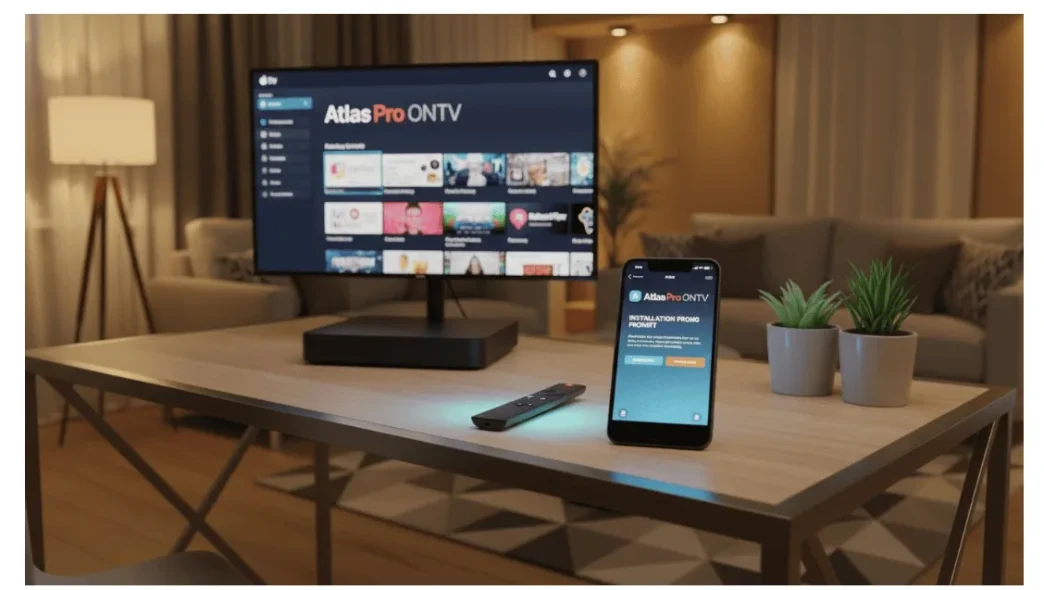
French viewers are changing the way they watch television. The traditional living room setup is no longer built around one cable box and a fixed channel list. Today, a household may use a Smart TV in the salon, an Android box in a bedroom, a tablet in the kitchen, and a smartphone while travelling.
This shift has made IPTV more relevant, but it has also exposed a bigger truth: reliable streaming is not only about the number of channels. It depends on broadband stability, Wi-Fi quality, server performance, app compatibility, device power, and how well the service handles peak traffic.
For French users comparing modern viewing options, IPTV is being positioned around multi-device access, HD and 4K viewing, and flexible home entertainment.
IPTV Has Moved Beyond the Channel List
For years, IPTV marketing focused heavily on large channel lists. Thousands of channels, international access, sports, films, and series were often used as the main selling points.
But French viewers are becoming more practical. A long channel list means little if the stream freezes during a Ligue 1 match, buffers during a film, or fails to load on a Smart TV.
In 2026, the better question is not “How many channels are available?” The better question is:
Can the service deliver stable viewing on the devices people actually use?
That is where IPTV becomes a technology and infrastructure conversation rather than a simple entertainment product.
Why IPTV Reliability Matters More in French Homes
France has a diverse home viewing environment. Some households have strong fibre connections. Others still deal with weaker Wi-Fi, thick apartment walls, older routers, or devices that struggle with demanding apps.
Even when the internet package looks fast on paper, IPTV can still buffer if the home network is unstable. The most common problems usually come from one of four places:
- The internet connection
- The Wi-Fi network
- The IPTV app
- The streaming device
A French viewer using a modern Smart TV over Ethernet may have a very different experience from someone using an older television over weak Wi-Fi in another room.
This is why IPTV reliability should be judged as a full setup, not just a subscription.
Buffering Often Starts Before the IPTV App
When a stream buffers, many users blame the IPTV provider immediately. Sometimes that is correct. But often, the problem starts earlier.
A weak Wi-Fi signal, overloaded router, outdated app, low device memory, VPN slowdown, or evening network congestion can all affect streaming quality.
This is especially visible during peak viewing moments, such as:
- Ligue 1 matches
- Champions League evenings
- Formula 1 weekends
- Major boxing events
- Family movie nights
- Weekend streaming sessions
During these moments, traffic rises, devices compete for bandwidth, and any weak point in the setup becomes more obvious.
A stable IPTV experience depends on the entire delivery chain, from server to screen.
The Role of Broadband, Fibre and Wi-Fi
France has made strong progress in broadband access, especially with fibre availability in many areas. That creates a better foundation for IPTV, but fibre alone does not guarantee smooth streaming.
The router still matters. The Wi-Fi signal still matters. The distance between the TV and router still matters.
For example, a household may have fast fibre, but if the Smart TV is far from the router and connected through weak Wi-Fi, IPTV can still freeze. In that case, the solution may be simple: use Ethernet, improve router placement, or add a mesh Wi-Fi system.
For 4K IPTV, stability is more important than a single high speed test result. A connection that jumps up and down can cause more problems than a slightly slower but stable connection.
Why Live Sports Expose Weak IPTV Setups
Live sports are one of the hardest tests for any IPTV setup.
Unlike on-demand content, live sports cannot buffer quietly in the background for long. The stream must keep up in real time. If there is a delay, freeze, or quality drop, the viewer notices immediately.
This is why many IPTV complaints appear during big matches rather than during normal viewing. A service may seem fine during a quiet afternoon, then struggle during an important football match.
For French viewers, this matters because sport remains one of the strongest reasons to keep a reliable TV setup. Whether it is football, rugby, tennis, motorsport, or international tournaments, live events demand stability.
A serious IPTV setup must be able to handle peak demand, not only casual viewing.
Device Performance Is Part of the IPTV Experience
Many users forget that the device itself can affect streaming.
An older Smart TV may have limited memory. A cheap Android box may overheat. A poorly maintained app may crash. A Fire Stick with too many installed apps may slow down.
The IPTV subscription may be active, the internet may be fast, and the channel may be available, but the viewing experience can still suffer if the device cannot process the stream smoothly.
Before blaming the service, French users should test the same stream on another device. If it works well on a smartphone or laptop but not on the Smart TV, the issue may be the television app or hardware.
This is why device compatibility should be treated as a key part of IPTV reliability.
App Compatibility Is Not a Small Detail
The IPTV app is the interface between the user and the stream. If the app is unstable, outdated, or badly configured, the whole experience feels poor.
Different users may prefer different apps depending on their device. A Smart TV user may need one type of app. An Android box user may prefer another. A laptop user may use a different player again.
Good IPTV guidance should help users understand:
- Which app works best on their device
- How to enter login details correctly
- How to use EPG
- How to refresh a playlist
- How to clear cache
- How to switch stream quality
- How to test another player if needed
A provider that offers clear setup guidance has a major advantage over one that only sends login details and leaves the user alone.
IPTV and the French Multi-Screen Household
Modern French households are multi-screen by default.
One person may watch live TV on the Smart TV. Another may stream a series on a tablet. Someone else may use a laptop for international channels. Children may watch on mobile devices.
This creates a new challenge. IPTV services must support flexible usage, but the home network must also handle multiple screens at once.
If several people are streaming, gaming, downloading, or using video calls at the same time, IPTV can suffer. The issue may not be the IPTV service. It may be the total load on the home network.
This is why French users should think of IPTV as part of a wider digital home setup.
What French Users Should Check Before Choosing IPTV
Before choosing an IPTV service, users should check more than the price.
A practical checklist should include:
CheckWhy it mattersDevice compatibilityPrevents setup problems on Smart TV, Android, iOS, PC, or MacStream stabilityMatters more than channel quantityHD and 4K supportUseful only when the connection is stable enoughEPG availabilityMakes channel navigation easierVOD qualityImproves the film and series experienceApp guidanceHelps users avoid configuration errorsSupport availabilityImportant when installation or playback failsTrial or short planLets users test before committingClear instructionsReduces confusion for non-technical users
When comparing an IPTV Abonnement France, French viewers should ask whether the service fits their actual home setup, not just whether the offer looks attractive.
Why Support Is a Technical Feature
Customer support is often treated as a business feature, but for IPTV it is also a technical feature.
When a user cannot install an app, load a playlist, activate EPG, fix buffering, or test another device, support becomes part of the streaming experience.
A service with poor support may feel unreliable even if the technical platform is good. A service with responsive support can help users fix local problems quickly.
This matters especially for users who are not comfortable with technical setup. IPTV can be simple once configured, but the first setup step is often where people need help.
Why 4K IPTV Needs Realistic Expectations
4K is attractive, but it requires more than a fast subscription label.
For smooth 4K viewing, users need:
- A stable internet connection
- A strong router or Ethernet connection
- A compatible device
- A capable IPTV app
- A stream that supports 4K properly
- Enough bandwidth when other devices are active
If any part of that chain is weak, 4K may buffer. In some cases, Full HD may deliver a better real-world experience because it is more stable.
For French households, the practical advice is simple: test HD first, then Full HD, then 4K. The best quality is not always the highest resolution. The best quality is the highest resolution that plays smoothly.
IPTV Reliability Is a Chain, Not a Single Feature
A reliable IPTV experience depends on several connected layers.
First, the IPTV provider must have stable delivery. Second, the user’s internet connection must be consistent. Third, the home network must be strong. Fourth, the device must be compatible. Fifth, the app must be configured correctly.
If one layer fails, the user sees buffering, freezing, app crashes, or poor image quality.
This is why IPTV should be discussed in infrastructure terms. It is not just a content package. It is a connected delivery system.
The Future of IPTV in France
The future of IPTV in France will not be won only by providers with the longest channel lists. It will be shaped by reliability, device support, user education, app performance, and stable delivery.
French users are becoming more selective. They want flexible viewing, but they also want fewer technical problems. They want access to live TV, films, sports, and international content, but they do not want confusing setup or unstable playback.
This shift will push IPTV providers to compete on quality, not just quantity.
The best IPTV services will be those that understand the full experience: broadband, devices, apps, support, and user habits.
Final Thoughts
IPTV reliability in France is no longer just a streaming issue. It is an infrastructure issue.
A smooth IPTV experience depends on how well the service, internet connection, router, device, and app work together. That is why French viewers should evaluate IPTV with a technical mindset, not only a price comparison mindset.
The right question is not simply “Which IPTV service has the most channels?” The better question is “Which IPTV setup will work reliably in my home, on my device, with my internet connection?”
That is the future of IPTV: fewer empty promises, more technical reliability, and a better viewing experience for real households.
FAQ Why does IPTV buffer even with fast internet?
IPTV can buffer with fast internet if the Wi-Fi is weak, the device is old, the app is outdated, the router is overloaded, or the stream is unstable during peak demand.
Is fibre enough for IPTV in France?
Fibre helps a lot, but it is not the only factor. Router quality, Wi-Fi strength, device compatibility, and app performance also affect IPTV reliability.
Why does IPTV fail more often during live sports?
Live sports create high traffic and require real-time delivery. Weak Wi-Fi, overloaded servers, or poor device performance become more noticeable during major matches.
Is Ethernet better than Wi-Fi for IPTV?
Yes. Ethernet is usually more stable than Wi-Fi, especially for Smart TVs, 4K streams, and live sports.
Does the IPTV app matter?
Yes. The app controls how the stream loads, how channels are displayed, how EPG works, and how stable playback feels on the device.
Should French users choose IPTV based on channel count?
No. Channel count is only one factor. Stability, support, device compatibility, stream quality, and setup guidance are more important for everyday viewing.
Why is customer support important for IPTV?
Support helps users solve installation, app, playlist, EPG, buffering, and device issues. For IPTV, support is part of the technical experience.
What is the best way to test an IPTV service?
Test it on your main device, during the time you normally watch TV, using the same Wi-Fi or Ethernet connection you plan to use every day.
Visit: Kali Puja Countdown 2026: Date, Time, Muhurat, Rituals and Celebrations