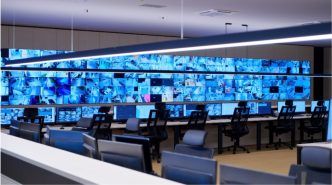
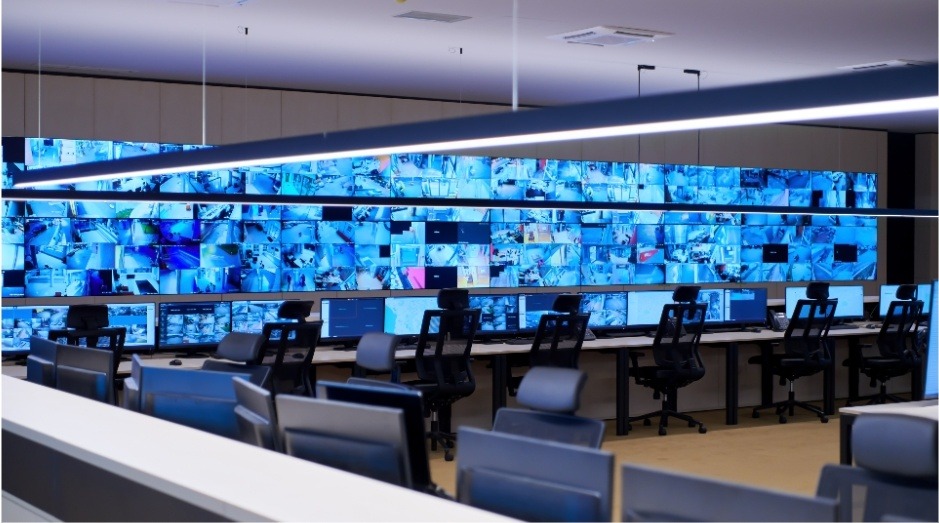
Let’s be direct: in a mission-critical monitoring environment, the wrong furniture isn’t just uncomfortable, it’s a liability. Security threats don’t pause for shift changes. Compliance audits don’t care if your operators are exhausted. And real-time data streams certainly won’t slow down because your workstation was designed for a nine-to-five office job.
The gap between what standard furniture delivers and what enterprise monitoring actually demands? It’s not closing on its own. If anything, it’s widening.
The Pressure Inside Modern Monitoring Environments Is Unlike Anything Before
A decade ago, a control room operator might have managed a handful of feeds and a few dashboards. Today? They’re simultaneously tracking multi-platform alerts, live data streams, compliance checkpoints, and cross-system integrations, sometimes across a 12-hour shift with minimal breaks.
That’s not sustainable without the right environment supporting them.
Operator Fatigue Has Become a Real Operational Risk
Here’s a number worth sitting with: a 2025 study found that 76% of control room operators report moderate to high fatigue during or after shifts, up from 58% in 2020. That’s not a minor uptick. That’s a warning signal.
Fatigue doesn’t stay neatly contained to how operators feel at the end of a shift. It bleeds into response times, decision quality, and error rates. When your team is physically compromised by their environment, your whole operation becomes vulnerable quietly, gradually, and then all at once.
Scalable, ergonomic control room workstations have moved from “nice upgrade” to operational necessity. This isn’t a preference conversation anymore.
Generic Furniture Creates Real, Measurable Problems
When organizations default to standard office solutions, they inherit a predictable set of headaches: tangled cable runs, misaligned sightlines, inflexible layouts that resist technology changes, and furniture that simply wasn’t engineered to hold up under continuous high-intensity use.
In environments where industrial control room design must actively support accuracy and operator performance, these aren’t minor inconveniences. They translate directly into slower incident responses and higher error rates. Every single shift.
Well-engineered custom control room consoles eliminate these vulnerabilities by designing every element around how operators actually work. Nothing about that equation is arbitrary.
What Purpose-Built Consoles Actually Offer That Standard Furniture Doesn’t
Once you recognize the scale of what modern monitoring teams are dealing with, the next question becomes practical: what specific features make purpose-built consoles worth the investment?
The answer lives in three areas: ergonomics, modularity, and durability. Get all three right, and you’ve built an environment where operators perform better, and your infrastructure keeps pace with change.
Ergonomics: The Performance Multiplier You’re Probably Underestimating
Adjustable sit-stand workstations are among the highest-impact features you can invest in. Research shows that operators who stood periodically made 17% fewer monitoring errors in the final hour compared to those who remained seated throughout. In environments where a single missed alert can trigger a cascade of downstream failures, that margin matters enormously.
Beyond sit-stand capability, thoughtfully positioned monitor mounts and integrated task lighting reduce neck strain and eye fatigue over long shifts. Ergonomically designed control room chairs and purposeful lighting aren’t luxury line items. They’re operational safeguards with measurable returns.
Modularity: Because Your Technology Will Keep Evolving
Even the most ergonomically optimized workstation has a short shelf life if it can’t flex when your operation does. Industrial control room consoles are typically designed with modularity at their core layouts that can be reconfigured quickly during incident responses, technology refreshes, or staffing changes.
Structured cable management, seamless AV integration, and clean IT routing come built in. No facility shutdowns required to make adjustments. That kind of operational continuity has real value, especially when your environment runs around the clock.
Durability: Built for What You Actually Put Them Through
High-pressure laminates, anti-static work surfaces, and steel-framed construction aren’t cosmetic choices. They’re engineering decisions driven by the reality of what industrial control room furniture has to endure: heavy equipment loads, redundant power systems, and continuous use across years of operation. Furniture that degrades undermines everything built on top of it.
How Custom Control Room Consoles Drive Operational Excellence
Ergonomics, modularity, and durability create the foundation. But what does purpose-built design actually do for your daily operations?
It Sharpens Communication and Tightens Workflows
Strategic console placement directly influences how well operators collaborate under pressure. Clear sightlines to video walls and shared dashboards reduce miscommunication during high-stakes incidents. Custom acoustic treatment and purposeful task lighting cut down on the cognitive friction that noisy, poorly lit environments quietly create hour after hour.
It Makes Compliance Far Less Complicated
Purpose-built security consoles can be configured with integrated access control, secure storage, and privacy panels that support multi-level authentication requirements. Compliance with standards like NERC, ISO 11064, and OSHA isn’t bolted on at the end; it’s part of the design logic from the start.
Specialized environments carry specific needs. Law enforcement agencies, for instance, may require police dispatch consoles with secure storage and rapid-response configurations. Those requirements deserve purpose-built answers, not workarounds.
The Trends Already Reshaping What Control Rooms Will Look Like
Forward-thinking organizations aren’t just solving today’s problems. They’re designing for what comes next.
Predictive Intelligence Is Moving Into the Console Itself
Console layouts are increasingly being designed to accommodate IoT sensors and analytics hardware, enabling teams to receive predictive maintenance alerts directly within the control room console desk environment, no retrofitting, no workarounds, no disruption to live operations.
Sustainability Is Becoming a Baseline Expectation
GREENGUARD-certified materials, energy-efficient integrated lighting, and green building alignment are no longer premium features that require justification. They’re becoming standard expectations from procurement teams and facilities managers alike.
Operator Analytics Are Starting to Change the Conversation
Biometric-adjusted ergonomic profiles and integrated wellness sensors are appearing in leading operator consoles, enabling real-time visibility into operator stress and fatigue levels. It’s a meaningful shift from reactive to proactive workforce management.
Choosing the Right Solution for Your Specific Industry
Broad principles matter, but the right selection depends on your sector’s operational profile.
Different Industries, Different Demands
Utilities environments need layouts that support sustained concentration across long shifts. Transportation networks require rapid reconfiguration capability for dynamic, unpredictable incidents. Emergency response centers prioritize situational awareness and fast deployment configurations.
| Industry | Priority Feature | Recommended Console Type |
| Utilities & Energy | Sustained concentration | High-performance curved console |
| Transportation | Rapid reconfiguration | Modular collaborative platform |
| Emergency Response | Situational awareness | Rapid-deployment modular system |
| Network Operations | Multi-screen integration | Wraparound fully adjustable layout |
When evaluating control room furniture manufacturers, weigh their track record in your sector, their support capacity, both local and remote, and their ability to scale alongside your operation as demands evolve.
Implementing Purpose-Built Consoles Without Disrupting Operations
Selecting the right solution is a milestone. Getting it deployed without compromising live operations is where execution separates the good from the great.
Start With a Real Needs Assessment
Operators, IT teams, and facilities managers all need genuine input into the planning process. Mapping future technology requirements alongside current workflow pain points produces specifications that actually reflect how your environment works, not how leadership imagines it does.
Build a Phased Installation Plan
Phased deployment lets operations continue while upgrades roll out incrementally. Working with experienced control room console manufacturers ensures the transition runs smoothly, on schedule, and without the surprises that derail timelines and frustrate teams.
Invest in Onboarding and Keep Investing
A clean installation is the beginning, not the finish line. Operators need proper onboarding for both ergonomic usage and system functionality. Ongoing performance monitoring surfaces refinement opportunities before they compound into problems. Top-tier providers of control room solutions offer continuing support, regular training updates, and consultation as operational needs evolve.
The Bottom Line
Purpose-built control room consoles aren’t a furniture upgrade. They’re a direct investment in operational performance, operator health, and long-term resilience. Every design decision carries real weight, from sit-stand adjustability to modular layouts built for technologies that don’t exist yet.
Enterprises that get this right don’t just run cleaner shifts. They build monitoring environments capable of adapting, scaling, and enduring whatever comes next.
Don’t let generic solutions quietly limit what your team can do. Reach out today and start designing the mission-critical control room furniture environment your operation actually deserves.
Common Questions Worth Addressing Directly
Which industries benefit most from custom console solutions?
Utilities, transportation, emergency response, and security environments all see significant performance gains. These sectors demand 24/7 reliability, ergonomic precision, and rapid adaptability, all core to purpose-built command control room consoles.
How do ergonomic consoles actually reduce errors?
Less physical fatigue means sharper attention, particularly during the final hours of demanding shifts. The best control room console options are built around operator wellness because that’s where the performance gains are hiding.
Can existing control rooms be upgraded without major downtime?
Yes. Modular designs allow control room desk furniture to be installed in phases while operators continue working, minimizing disruption and keeping facilities fully operational through the transition.