Modern businesses depend on technology to support nearly every aspect of their daily operations. From cloud platforms and business applications to remote work environments and connected devices, IT infrastructure has grown more complex than ever before. While this evolution has unlocked new opportunities for growth and innovation, it has also introduced significant management challenges that organisations cannot afford to ignore.
Investing in reliable network monitoring services is one of the most effective steps a business can take to gain control over its technology environment. Without a clear picture of how systems interact, organisations struggle to identify issues, maintain performance, and deliver consistent user experiences. Small problems can rapidly escalate into major disruptions when teams lack visibility into what is happening across their infrastructure. Organisations that build a comprehensive visibility strategy are far better positioned to reduce downtime, improve efficiency, and make confident decisions that support long-term success.
Understanding Complete Operational Visibility
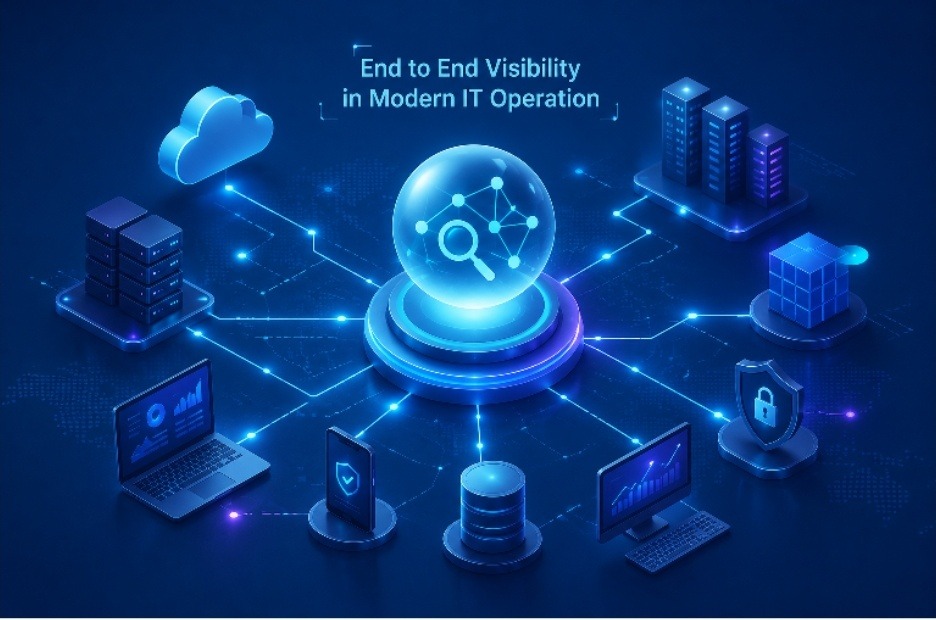
Operational visibility refers to the ability to monitor and understand how all technology components perform and interact in real time. Rather than viewing systems in isolation, IT teams gain a unified perspective that connects infrastructure, applications, users, and services. This approach helps teams understand not only when a problem occurs but also why it occurs and which business processes may be affected. A complete view of the environment allows organisations to move beyond reactive troubleshooting and adopt a genuinely proactive approach to technology management.
Why Visibility Has Become Essential
The modern IT landscape looks vastly different from what it was just a decade ago. Today, businesses rely on cloud-based platforms, on-premise infrastructure, SaaS applications, remote and hybrid workforces, and complex third-party integrations, all running simultaneously.
Each additional technology layer introduces new dependencies and potential failure points. As environments become more distributed, maintaining consistent oversight becomes increasingly difficult. Traditional monitoring approaches often produce only fragmented information, making it harder to identify root causes and understand how issues spread across systems. End-to-end visibility helps organisations overcome these challenges by creating a single, centralised source of operational intelligence.
Faster Problem Detection and Resolution
One of the most valuable benefits of comprehensive visibility is faster issue resolution. When teams have access to real-time insights from across the environment, they can detect unusual behaviour early and investigate potential problems before they escalate into full-blown incidents.
For example, an application slowdown may initially appear to be a software issue. However, deeper visibility may reveal that the root cause is network latency, a resource constraint, or a dependency failure elsewhere in the environment. By significantly reducing the time needed to pinpoint root causes, organisations can restore services faster and minimise operational disruption.
Reducing Downtime and Business Impact
Downtime affects far more than just technology systems. It disrupts employee productivity, delays customer transactions, and can seriously damage brand reputation. Every minute spent diagnosing a problem adds to the overall cost of an incident, which is precisely why early detection delivers such strong business value.
Organisations with strong visibility practices gain a clear operational edge:
- Identify issues before users ever notice them and receive alerts the moment performance degrades.
- Prioritise incidents based on real business impact rather than guesswork.
- Accelerate recovery efforts when outages do occur, minimising costly downtime.
This proactive approach reduces both the frequency and the duration of service disruptions.
Enhancing User Experience
Employees and customers expect technology to work consistently and without friction. Slow applications, connectivity issues, and unexpected service interruptions create frustration and erode productivity. In competitive markets, poor digital experiences can directly influence customer retention and satisfaction.
Visibility tools help organisations understand performance from the user’s perspective. Platforms such as Mivu make it straightforward for teams to track response times, application availability, and overall service quality to catch problems before they affect large groups of users. By placing user experience alongside infrastructure performance as a monitoring priority, organisations can deliver more reliable services and improve satisfaction across the board.
Eliminating Operational Blind Spots
Many organisations unknowingly operate with blind spots scattered across their infrastructure. These gaps often emerge when new technologies are introduced without being fully integrated into existing monitoring processes. Cloud services, remote locations, and third-party applications are among the most common culprits.
Blind spots create areas where problems can develop undetected. Performance issues, configuration errors, and security vulnerabilities may remain hidden until they become serious incidents. A comprehensive visibility strategy closes these gaps by ensuring that every critical component is accounted for within a centralised operational framework.
Strengthening Security and Compliance
Visibility is also a cornerstone of modern cybersecurity. Security teams need to understand who is accessing systems, how data moves across the environment, and where suspicious activity may be occurring. Without this insight, identifying and responding to threats becomes significantly harder. Greater visibility supports:
- Faster threat detection and improved incident response times.
- Stronger compliance reporting and better overall asset management.
- Reduced operational risk by proactively surfacing vulnerabilities before they are exploited.
Supporting Better Decisions Through Managed IT
Technology leaders rely on accurate, real-time data to make strategic decisions. Whether planning infrastructure upgrades, allocating budgets, or evaluating new technology investments, reliable performance data is essential. Pairing comprehensive visibility with Splitpoint’s IT services allows organisations to:
- Identify recurring performance issues and understand resource utilisation patterns.
- Improve capacity planning and optimise technology spending for future growth.
- Align IT investments with actual business needs rather than assumptions.
When network engineers, cloud specialists, security professionals, and service desk teams all work from the same operational data, collaboration improves dramatically. A shared understanding of infrastructure performance accelerates troubleshooting and helps teams resolve issues far more efficiently.
Conclusion
As technology environments continue to evolve, end-to-end visibility has become a non-negotiable requirement for effective IT operations. Organisations need more than isolated monitoring tools – they need a unified understanding of how infrastructure, applications, cloud services, and users all interact. By investing in the right network monitoring services and partnering with Splitpoint’s IT services, businesses can reduce downtime, eliminate blind spots, strengthen security, and deliver better digital experiences that drive long-term competitive advantage.