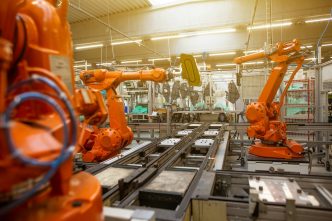
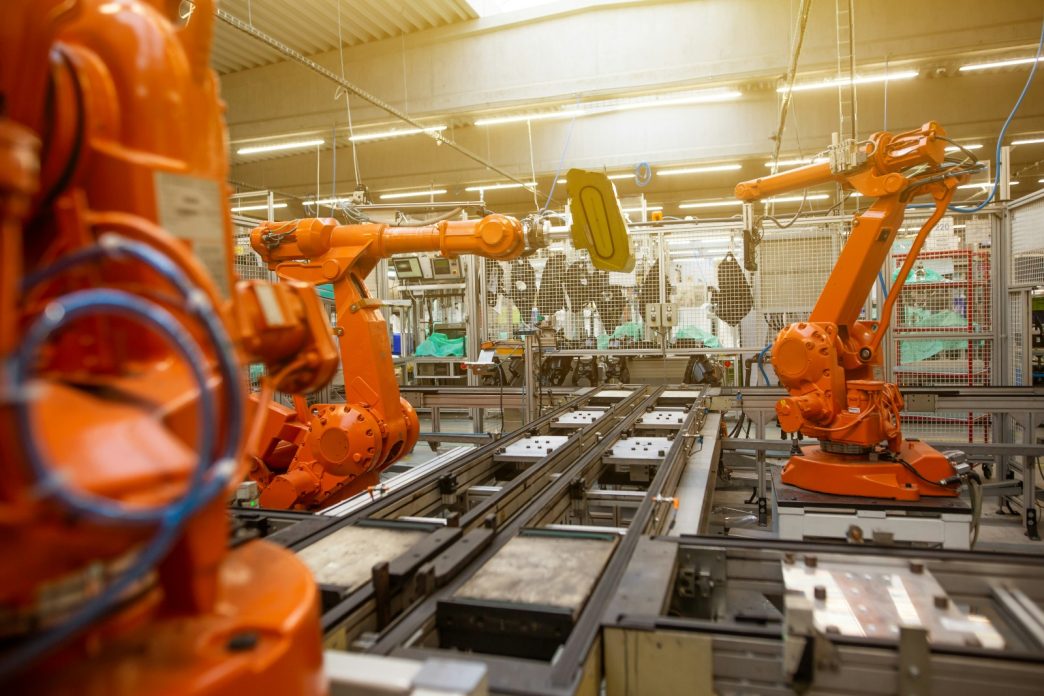
The conversation around Industry 4.0 almost always centres on the visible layers: artificial intelligence, IoT sensors, cloud-connected production lines, and predictive maintenance dashboards. These are genuinely transformative technologies, and the companies building them deserve the attention they receive. But there is a quieter story running beneath every smart factory, one that does not trend on LinkedIn and does not make it into keynote presentations — the story of precision hardware.
No robotic arm, automated assembly jig, or CNC machining centre operates independently of the physical components that hold it together. The accuracy of a production robot depends on the rigidity of its joints. The lifespan of an automated conveyor depends on the quality of its fastener connections. And when a precision-critical machine is assembled with out-of-tolerance or inconsistently manufactured components, no amount of software intelligence recovers the dimensional drift that follows. The ISO7380 Button Head Socket Cap Screw is one small example of how much engineering is packed into a fastener that most people walk past without a second glance — its low-profile dome geometry, internal hex drive, and precisely controlled thread form are each a deliberate design decision that directly affects how it performs inside consumer electronics, medical devices, robotic enclosures, and precision machinery.
The Physical Layer That Digital Manufacturing Cannot Ignore
When manufacturers talk about smart factories, they are usually describing the software stack sitting above a very physical infrastructure. Every sensor has a housing. Every motor has a mounting bracket. Every piece of equipment running on a factory floor is assembled from hundreds or thousands of fastened joints, each of which introduces or eliminates potential failure points depending on the quality of the components used.
This is why procurement decisions that seem purely cost-driven — choosing a fastener supplier based on unit price alone — often carry hidden engineering costs that only become visible further down the production chain. A bolt that varies by 0.1mm in thread pitch across a batch creates assembly inconsistency at scale. A set screw with sub-standard surface hardness loosens under sustained vibration, the exact condition that exists in any automated production environment. The precision requirements of smart manufacturing are, if anything, higher than those of traditional production — because automated systems cannot compensate for hardware inconsistency the way a skilled human assembler can.
Standards as a Common Language for Global Supply Chains
One area where technology and hardware intersect more directly is in the standardisation of component specifications. DIN and ISO standards — the international frameworks that define fastener geometries, thread forms, mechanical properties, and tolerances — function as a universal technical language that allows engineers in Germany, procurement teams in Singapore, and manufacturers in China to build and source from the same specification without ambiguity.
These standards matter enormously in practice. A double end stud bolt to DIN 938 carries specific thread engagement requirements that determine its pull-out resistance in a flanged joint. A low-profile socket cap screw to DIN 6912 or DIN 7984 solves a concrete design problem: delivering the full mechanical performance of a standard socket head screw in a constrained installation space. A hex flange bolt to DIN 6921 distributes clamping load across a wider bearing surface, reducing the risk of joint loosening under dynamic loading — the exact condition present in vibrating machinery and automotive assemblies.
For technology-led manufacturers building new product lines, understanding these standards is not an academic exercise. It is the difference between specifying a fastener that will perform reliably for the product’s service life and specifying one that introduces recurring maintenance issues or early field failures.
Sourcing Precision Components in a Global Market
The globalisation of manufacturing supply chains has made it easier than ever to access an enormous range of industrial components at competitive prices. It has also made it easier to source components that look correct on a specification sheet but fail to meet tolerance and material requirements in practice. The gap between a certified manufacturer with in-house production capability and a trading company reselling unmarked stock is not always obvious at the point of purchase — but it consistently shows up in quality outcomes.
For engineers and procurement teams sourcing at scale, the distinguishing factors are traceability, batch consistency, and manufacturing accountability. A genuine industrial fasteners manufacturer can provide material certificates, dimensional inspection records, and the ability to accommodate non-standard specifications when standard catalogue items do not fit the application. These are not nice-to-have features — they are operational requirements for any serious production environment.
Production Screws is a B2B industrial fastener manufacturer covering the core DIN and ISO fastener families — from double end stud bolts and hex flange bolts to socket cap screws, set screws, and button head variants. For engineering and procurement teams that understand the relationship between hardware quality and production reliability, it represents the kind of direct manufacturing relationship that eliminates the uncertainty of trading-house supply chains.
The Hardware Beneath the Intelligence
The most sophisticated production technology in the world still comes down to physical components under load. Smart factories are impressive precisely because they coordinate extraordinary complexity across both digital and physical systems — but the physical layer is not an afterthought. It is the foundation that every sensor reading, every actuation command, and every quality data point ultimately rests on.
As manufacturing continues to digitise and the expectations of precision, throughput, and consistency rise further, the quality of hardware decisions will not become less important. It will become more so. The engineers and procurement professionals who understand this — who treat component specification as a technical decision rather than a cost line — are the ones building production systems that actually perform the way the software promises.
Written By Parshant Lohana