Property managers, facility directors, and operations teams need access control that fits daily movement without slowing approved vehicles. A busy commercial site can lose control of loading areas, reserved spaces, and service routes when temporary barriers are moved, ignored, or stored away. A folding bollard gives site teams a fixed barrier that stands upright for restriction and lowers when authorized access is needed.
A proper setup depends on traffic flow, surface condition, lock style, and the people responsible for opening each access point. Poor placement can reduce truck turning space, interfere with door clearance, or slow cart and pallet movement. A practical plan should match each folding bollard location to visibility, mounting needs, emergency access, daily staff routines, delivery schedules, and the level of access control each area requires.
Control Delivery Access
Dock approaches can attract quick parking when a loading zone stays open during business hours. A folding bollard should sit at the entry point to the delivery area, where it can stop unauthorized vehicles before they reach the dock face. Placement beside the loading door usually means the blockage has already happened and the site team has to clear the space before a scheduled drop can begin.
Turning radius matters as much as access control on busy delivery approaches. Bollard placement should preserve truck swing room, stay clear of roll-up door paths, and avoid routes used by pallet jacks or carts. Vendor signage should sit where drivers see the rule early, before they commit to the approach, so deliveries stay predictable during peak receiving windows.
Protect Staff Parking
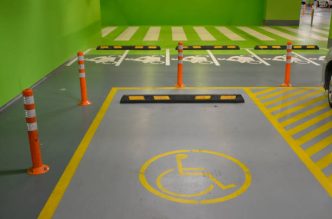
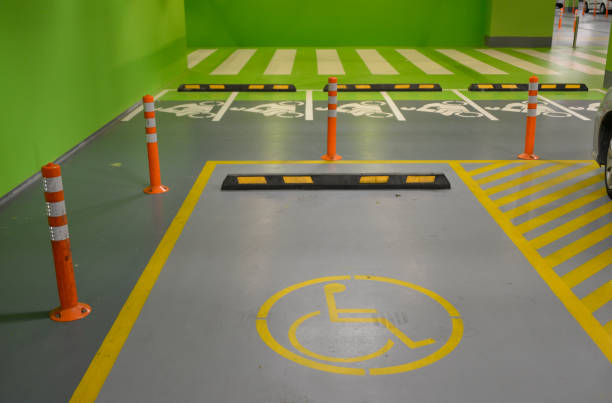
Reserved parking works better when drivers see a physical control before they enter the stall. Employee spaces, maintenance vehicle spots, security parking, and shift-based reservations need protection without adding a gate across the lot. A lockable post gives those spaces a fixed access point and avoids the common problem of cones or movable signs disappearing, shifting, or ending up stored away.
Front-center placement makes the control visible from the aisle and blocks the pull-in before tires cross the line. Install teams should confirm that the folded post will not snag bumpers, interfere with snowplows, or sit in the path of doors and pedestrians. Key control also matters because broad access can turn a reserved stall into an open stall during busy shift changes.
Manage Restricted Lanes
Service lanes and private drives get misused when the restriction is not obvious until after a driver has already entered the route. Access control should create a clear stop point before the lane begins, not midway down the drive. Folding bollards are useful at service drives behind buildings, private entrances off shared lots, after-hours cut-through routes, and delivery-only lanes near public circulation.
Driver guidance improves when the surface supports the barrier with plain wording that can be read from the approach. Pavement labels like “Service Vehicles Only” or “No Public Access” reduce wrong turns and keep the rule visible even when the bollard is lowered for approved access. Property teams should confirm that markings stay legible under traffic wear and that the bollard location does not block sightlines at corners or conflict with fire lane requirements.
Replace Temporary Barriers
Temporary barriers lose effectiveness when they are moved, damaged, unhooked, or not returned to the same location. These tools create repeat work because they depend on staff to reset them after each use. A folding bollard stays anchored at the point that needs control, so the restriction is present at the start of each day without relying on loose equipment.
Fixed hardware cuts down on the small delays that add up across a commercial site. The post can be raised for restriction and lowered for authorized access in seconds, without searching for loose gear or resetting a makeshift barrier after every use. Using the same bollard model at several access points keeps keys, locks, and handling consistent, which simplifies training for maintenance, security, and facilities teams during handoffs and shift changes.
Buy Around Daily Use
Mixed-traffic sites may need different bollard specs at different access points, even when the posts look similar from a distance. Buyers should match height and visibility to approach speed and sightlines, then choose a finish that can handle weather, salt, and routine washdowns. Lock style also affects daily use because padlocks, built-in cylinders, and keyed-alike options change who can open access and how fast the post can drop.
Surface condition can affect installation cost, timing, and hardware selection. Older asphalt, patched concrete, buried utilities, and drainage runs may require different mounting approaches, from bolt-down hardware to core drilling or thicker base plates. High-visibility units fit delivery-only lanes, while staff parking may need tighter key control limited to managers, security, or facilities teams.
Commercial properties need access points that control daily movement without creating extra work for staff. Each location should stop unauthorized vehicles before they enter the wrong area, lower quickly for approved users, and sit on a surface that supports the mounting method. Placement should also account for truck turning room, door clearance, pedestrian paths, lock control, emergency access, weather exposure, and routine maintenance. When those details match daily site routines, folding bollards can replace cones, chains, and temporary barricades with fixed controls that stay consistent, reduce repeat setup work, limit access confusion, and support smoother traffic flow across the property.