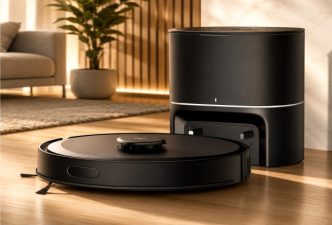
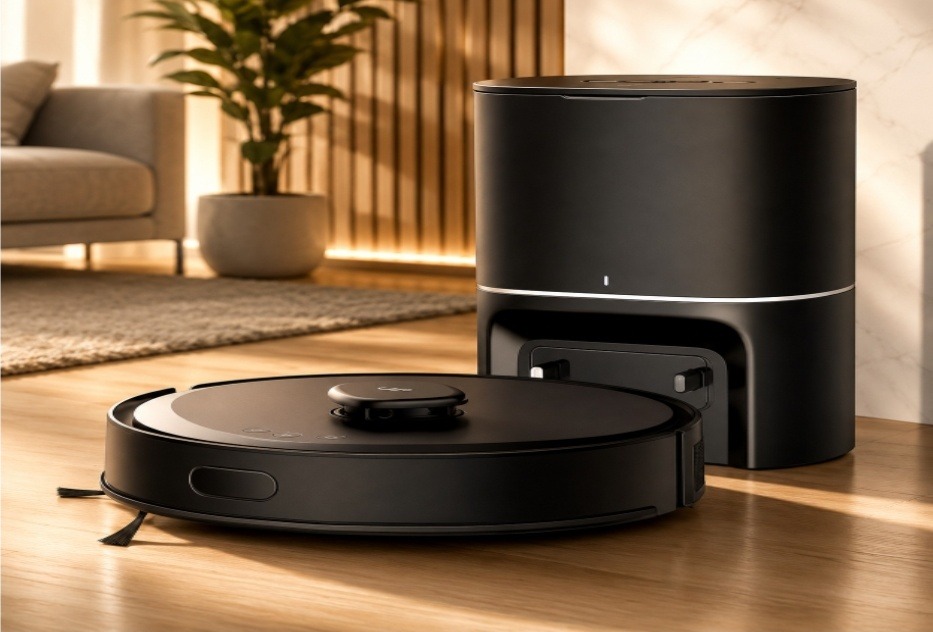
A robot vacuum priced between 300 and 800 francs can typically cover its cost through time saving within a year in a majority of households, even if you don’t value your time highly. Normally a house dedicates about two to three hours a week to vacuuming and cleaning floors, and a robot vacuum earns back almost all of that time, resulting in over 100 free hours per year.
The real thing about this comparison is that the gadget does not substitute your whole cleaning. It substitutes simple and routine vacuuming that is done daily or twice a week to keep the floors nice while you still do the deep cleaning once in a while. The time saving is genuine. Still the robot vacuum does the dull and repetitive work leaving you the manual clean.
What a Robot Vacuum Actually Costs Over Its Lifespan
Buying price is just the beginning of the cost calculations. Entry-level models start at around 150 to 250 francs, machines from the middle class that come with mapping and stronger suction usually cost 300 to 600, and high-end devices with self-emptying bases and mopping capabilities can be priced at 800 to over 1,000 francs. Most of the increase in price comes from buying navigation intelligence and automation of the emptying process, not dramatically better cleaning of the floor itself.
Running costs are relatively low but still worthy of consideration. Replacement parts, filters , brushes, and side brushes typically cost 50 to 100 francs a year based on the level of use, and the battery will be changed after a few years eventually. Electricity is a minor expense, since these machines consume very little electricity and often recharge at off-peak times. Industry figures indicate that a well-maintained robot vacuum will last approximately four to six years, which makes the initial cost quite small when converted into a monthly amount.
Balance that with the value of your time. If you would spend two and a half hours a week vacuuming, that is 130 hours a year, and even if you value it very conservatively the machine pays for itself very fast. The argument in favour of buying is strongest for people who have a high opportunity cost of their time, and is hardly convincing for those who really enjoy vacuuming and have lots of free time.
Where Robot Vacuums Save the Most Time and Where They Don’t
Time saving will be greatest on large, open floors with hard surfaces or low-pile carpeting. A robot can easily and almost independently vacuum a living room and kitchen that are quite open and it can maintain the cleanliness of floors once you have set a daily schedule without you having to think about it at all. That is precisely the lifestyle change that most people find significant – entering a consistently clean room rather than making a decision about when to find the time for cleaning.
Cluttered or multi-level homes mitigate the advantage. Unfortunately, a robot cannot get up stairs so if you have a townhouse, either you will have to have a separate unit on each floor or you will have to carry the robot with you. Besides, if you have a floor covered with cables, toys, and rug tassels, you will probably have to spend time tidying the place before the robot can start its run. Also, houses with deep-pile carpets throughout are less likely to benefit Really since most robots can hardly extract dirt embedded in thick fibres as well as an upright with strong suction can do.
Pet owners are the most obvious beneficiaries. Cat or dog shedding in the house causes a lot of skin and hair that a robot collects nonstop thereby preventing the accumulation which typically necessitates frequent manual vacuuming. One study has found that a person who uses an automated cleaning method on a regular basis tends to accumulate less pet dander and dust, which is important to the people having allergies as well as those who want to save their time.
Comparing Robot Cleaning Against a Manual Vacuum Honestly
A robot, in a single pass, cannot clean every nook and cranny as well as a good upright vacuum cleaner in the hands of a skilled user. What it offers instead is regularity. A person will vacuum thoroughly once or twice a week, whereas a robot can do a light cleaning every day, and that daily repetition will keep the overall floor cleaner between deep cleans even if any one pass is less aggressive.
The other side of the coin are supervision and edge cases. Robots miss tight corners, have difficulty with high thresholds, and sometimes get stuck under low furniture or tangled in a charging cable. Contemporary mapping has greatly lowered this, with lidar and camera navigation helping better devices plan routes efficiently and avoid obstacles, still no robot is completely work-free. You will have to rescue it occasionally and vacuum manually for the spots it cannot reach.
Mopping hybrids introduce another dimension but keep expectations in check. They perform daily light mopping of sealed hard floors well, wiping up dust and minor spills Yet they do not scrub the stubborn dried-on messes that you would by hand. They are good at maintenance, moisture cleaning and help to save time. For a proper kitchen-floor scrub, you are still doing that yourself.
Choosing the Right Model for Your Home and Budget
The right machine depends on your floors, your home’s layout, and how much manual involvement you will tolerate. A small flat with hard floors and little clutter is well served by a mid-range mapping model, and spending up to a premium self-emptying unit there is mostly buying convenience rather than necessary capability. A larger home with pets and mixed surfaces justifies the premium tier, where strong suction, good mapping, and a self-emptying base genuinely reduce your involvement.
The self-emptying base is the feature most worth its cost for busy households. It lets the robot dump its bin into a larger container automatically, so you go weeks rather than days between touching it, and that is what turns the machine from a gadget you tend to forget about. If you are comparing models, a Swiss online shop that lists local pricing and warranty terms makes it easier to weigh the self-emptying premium against the simpler versions without guessing at import costs or support.
The Hidden Value Beyond the Time on the Clock
The time number is really a gross underestimation of the benefits since the major gain is mental. Not having to keep in mind that you need to vacuum, not deliberating whether you have the energy for it, not living with floors you keep meaning to get to, these small, recurring decisions take away your time slowly and silently. Taking them off your plate is worth even more to many people than the literal minutes saved, even though it is not clear in the cost calculation.
Of course before you purchase, do a walk through your house and identify the obstacles honestly – the stairs, the cable mess, the thick carpets, the rooms with doors that are usually locked. The device will be most beneficial for you where your floors are open and your lifestyle is regular, and the more your house is like that, the quicker the cost will stop mattering and the daily convenience will be the reason you actually paid for it.