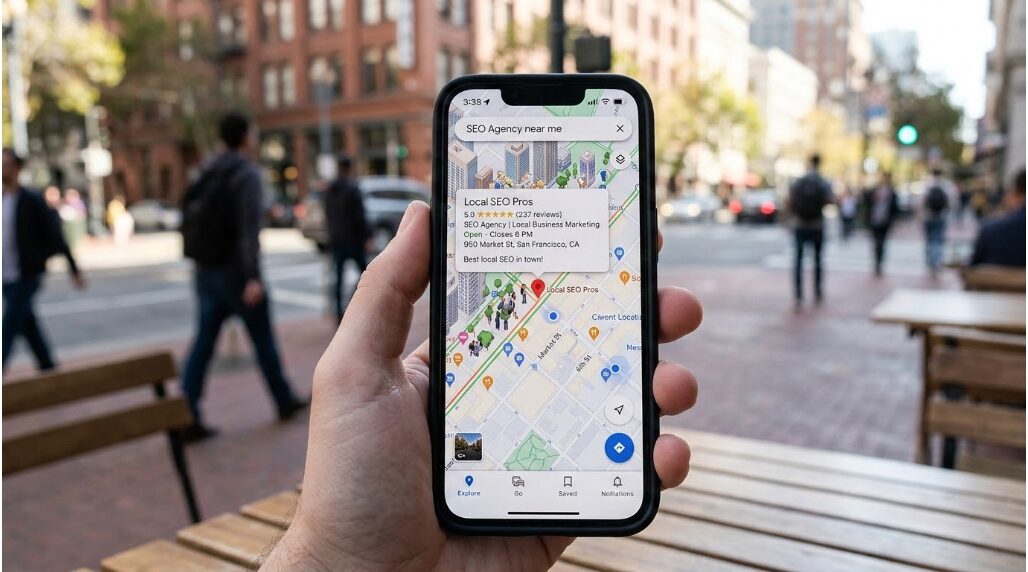
A stronger local SEO strategy can improve Google Maps visibility, strengthen business listings, and help nearby customers find the right next step.
Local customers often search with a clear need. They want a nearby service, a trusted provider, accurate business information, and a simple way to call, book, or visit. If a business is not visible when those searches happen, it may lose opportunities to competitors before a conversation starts.
For Toronto businesses, local SEO is not only about rankings. It is about helping the right people find the business, trust what they see, and take action. That means Google Business Profile, reviews, listings, website content, and conversion paths all need to work together.
Improve Visibility in Google Maps
Many local searches start in Google Maps or the local results shown on Google Search. A business may have a strong reputation offline but still struggle to appear when nearby customers search for its services. That gap often comes from incomplete business information, weak category selection, limited reviews, or a website that does not clearly support local relevance.
Google explains that local ranking is based primarily on relevance, distance, and prominence. Relevance looks at how well a business profile matches what someone is searching for. Distance considers how close the business is to the searcher or searched location. Prominence reflects how well known and trusted the business appears online and offline.
For businesses reviewing how they appear in local search, professional Toronto Local SEO can be considered as part of a broader process that connects Google Business Profile quality, local website relevance, reviews, and search visibility signals.
Keep Business Information Complete and Accurate
A local searcher should not need to guess whether a business serves their area, is open, or offers the service they need. Incomplete or outdated information can create doubt quickly, especially when competitors have clearer listings.
Business name, address, phone number, hours, service categories, website links, and descriptions should be reviewed regularly. Google recommends keeping Business Profile information complete and accurate, including address, phone number, business category, hours, and other relevant details that help customers understand what the business offers.
This matters even more in a large city like Toronto, where customers may search by neighbourhood, service type, or urgency. A local business should make it easy for Google and customers to understand where it operates and what it provides.
Use Reviews to Build Trust Before the Click
Reviews play a major role in how customers compare local businesses. A company with recent, detailed reviews may feel more credible than one with little feedback or unanswered complaints. Reviews also help customers understand the real experience of working with a business.
Google encourages businesses to respond to reviews, noting that replies show customers their feedback is valued. Google also states that positive reviews and helpful replies can help a business stand out.
A practical review strategy should focus on consistency and authenticity. Ask customers for feedback after completed work, respond professionally, and look for patterns in the comments. If people repeatedly mention punctuality, clear communication, or helpful service, those themes can also inform website copy and service pages.
Make Local Service Pages More Useful
A Google Business Profile can drive visibility, but the website still needs to support the visitor’s decision. When someone clicks from Maps or search results, the landing page should quickly confirm that they are in the right place.
A strong local service page should explain what the business offers, where it operates, who it helps, and what the next step looks like. It should not rely on generic copy that could apply to any city. Toronto-specific service details, neighbourhood context, customer questions, and clear calls to action can make the page more relevant and useful.
Google’s guidance for creating helpful content emphasizes writing for people first and making pages useful to visitors. In local SEO, that means answering real customer questions instead of simply repeating location keywords.
Turn Local Visibility Into Customer Actions
Visibility is only useful when it leads to action. A business may appear in search results but still lose customers if phone numbers are hard to find, forms are too long, booking steps are unclear, or service pages do not explain enough.
Every important local page should make the next step obvious. For a clinic, that may be booking an appointment. For a contractor, it may be requesting an estimate. For a restaurant, it may be viewing hours, menus, or directions. For a professional service firm, it may be scheduling a consultation.
The goal is to reduce friction. If a customer already has intent, the website should not slow them down. Clear contact paths, visible service areas, concise explanations, and trust signals can help convert local traffic into calls, forms, bookings, or visits.
Measure What Local SEO Is Actually Producing
Local SEO should be tied to business outcomes, not only keyword movement. Rankings matter, but owners should also review calls, direction requests, website visits, form submissions, bookings, and the quality of inquiries.
Google Business Profile performance data, website analytics, call tracking, and form tracking can help show whether visibility is improving in a meaningful way. This is especially useful when comparing neighbourhoods, services, or seasonal demand.
The strongest local SEO process is ongoing. Business information changes, competitors update their profiles, reviews continue to build, and customer search behaviour shifts. Regular review helps keep the strategy aligned with business goals.
Conclusion
Toronto Local SEO works best when visibility, trust, and conversion are treated as one system. A complete Google Business Profile, accurate listings, strong reviews, useful local pages, and clear contact paths can help nearby customers find and choose a business with more confidence.
For local business owners, the practical starting point is simple: check how the business appears in Maps, confirm the information is accurate, review the website experience, and make the next step easier for customers who are ready to act.
Additional Resources
Businesses comparing support for Maps visibility, listings, reviews, and local service pages can review what a local seo expert may help evaluate before planning next steps.