

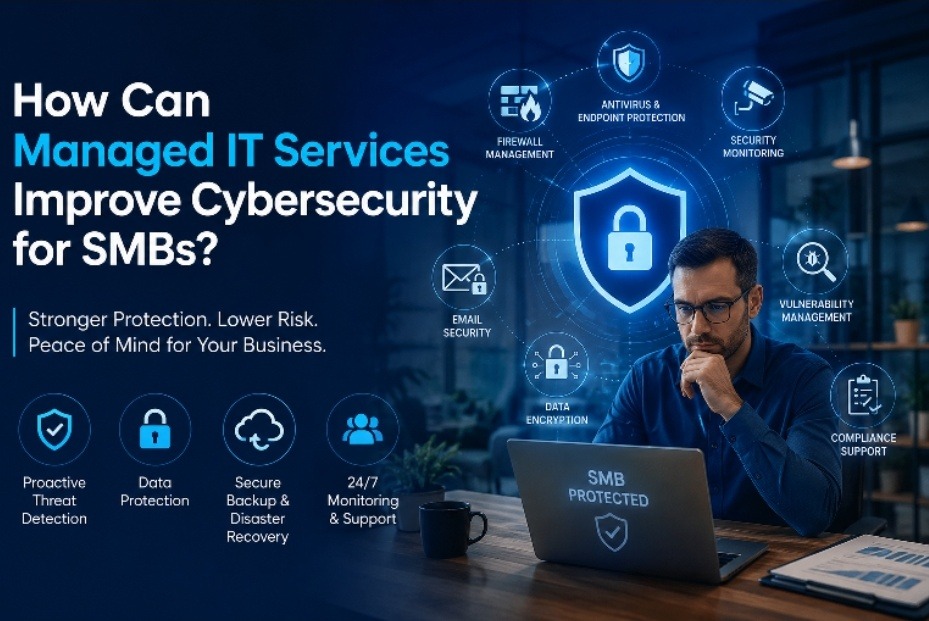
Quick answer: Managed IT Services improve cybersecurity for small and medium-sized businesses (SMBs) by providing 24/7 threat monitoring, regular patching and updates, employee security training, data backup and disaster recovery, and access to enterprise-grade security tools that most SMBs can’t afford or staff on their own. Partnering with experienced cybersecurity services providers gives smaller companies the same level of protection as large enterprises – without the overhead of building an internal security team.
Let’s break down exactly how this works, why it matters now more than ever, and what to look for when choosing a provider.
Why SMBs Are Prime Targets for Cyberattacks
There’s a common misconception that hackers only go after large corporations. In reality, the opposite is often true. Small and medium-sized businesses are frequently targeted because they tend to have weaker defenses, smaller IT budgets, and little to no dedicated security staff.
A single ransomware attack, phishing breach, or data leak can cost an SMB tens of thousands of dollars – and in many cases, force the business to shut down entirely. Recovery isn’t just about money either; it’s about lost customer trust, regulatory penalties, and operational downtime that can take weeks to resolve.
This is exactly where Managed IT Services step in. Instead of reacting to attacks after they happen, managed providers focus on prevention, detection, and rapid response – turning cybersecurity from a reactive cost center into a proactive business safeguard.
1. 24/7 Network Monitoring and Threat Detection
One of the biggest advantages of working with Managed IT Services is round-the-clock monitoring. Cyberattacks don’t follow business hours – many breaches happen at night, on weekends, or during holidays when in-house teams are least likely to notice.
Managed providers use centralized monitoring tools to watch network traffic, server activity, and endpoint behavior in real time. If anything unusual is detected – say, a login attempt from an unfamiliar location or a spike in outbound data – the system flags it immediately, often before any real damage occurs.
This constant vigilance is something most SMBs simply can’t replicate internally. Hiring a full-time security analyst to monitor systems 24/7 is expensive; outsourcing it to a managed provider makes that level of protection accessible and affordable.
2. Proactive Patch Management and Software Updates
A huge percentage of successful cyberattacks exploit known vulnerabilities – flaws that already have a patch available, but simply haven’t been applied yet. Outdated software, unpatched operating systems, and old firmware are some of the easiest entry points for hackers.
Managed IT Services handle this maintenance automatically and consistently. Instead of relying on employees to manually update software (which often gets postponed or forgotten), a managed provider schedules and deploys patches across all devices and systems on a regular cycle.
This single practice – patch management – closes off a massive number of potential attack vectors before they can ever be exploited.
3. Advanced Firewalls, Antivirus, and Endpoint Protection
Most SMBs rely on basic, consumer-grade antivirus software, which simply isn’t built to handle modern, sophisticated threats like zero-day exploits or advanced persistent threats (APTs).
Reputable cybersecurity services providers bring enterprise-grade tools to the table, including:
- Next-generation firewalls (NGFWs)
- Endpoint Detection and Response (EDR) software
- Email filtering and anti-phishing tools
- Intrusion Detection and Prevention Systems (IDPS)
These tools work together to create layered security – meaning if one defense fails, another is in place to catch the threat. This “defense in depth” approach is standard in enterprise environments and is now increasingly accessible to SMBs through managed service partnerships.
4. Employee Security Awareness Training
Here’s a statistic worth remembering: the majority of successful breaches start with human error, not a technical flaw. Phishing emails, weak passwords, and accidental data sharing remain some of the most common causes of security incidents.
Managed IT Services providers typically include employee training as part of their offering. This often involves:
- Simulated phishing tests to identify vulnerable employees
- Regular training sessions on recognizing suspicious emails and links
- Password hygiene policies and multi-factor authentication (MFA) enforcement
- Clear protocols for reporting suspicious activity
By turning employees into a “human firewall” rather than the weakest link, businesses significantly reduce their overall risk exposure.
5. Data Backup and Disaster Recovery Planning
Even with the best defenses in place, no system is 100% immune to attack. That’s why a strong cybersecurity strategy always includes a solid backup and recovery plan.
Managed providers implement automated, encrypted backups – often stored both on-site and in the cloud – ensuring that if ransomware locks up your systems or a server fails, your business can recover quickly without paying a ransom or losing critical data.
This is a core part of what separates managed cybersecurity services providers from basic IT support: it’s not just about preventing attacks, it’s about ensuring business continuity when something does go wrong.
6. Compliance Support (HIPAA, PCI-DSS, GDPR, and More)
For SMBs in regulated industries – healthcare, finance, legal, e-commerce – cybersecurity isn’t just about protecting data; it’s a legal requirement. Non-compliance can result in steep fines, lawsuits, and reputational damage.
Managed IT Services providers help businesses meet and maintain compliance with frameworks like:
- HIPAA (healthcare data protection)
- PCI-DSS (payment card data security)
- GDPR (data privacy for EU customers)
- SOC 2 (data handling and security controls)
They handle the technical documentation, security audits, and ongoing monitoring required to stay compliant – removing a significant administrative burden from business owners who already have enough on their plate.
7. Incident Response and Rapid Recovery
When a breach does occur, response time is everything. The longer a threat goes undetected or unaddressed, the more damage it can do.
Managed providers typically have documented incident response plans that outline exactly what happens the moment a threat is detected – isolating affected systems, notifying stakeholders, restoring from backups, and conducting a post-incident review to prevent future occurrences.
This structured, rehearsed response is far more effective than scrambling to figure out next steps in the middle of a crisis, which is often what happens when SMBs try to handle security entirely on their own.
8. Cost-Effective Access to Enterprise-Level Security
Perhaps the most practical benefit of Managed IT Services is affordability. Building an in-house security team – including hiring, training, tools, and 24/7 coverage – can cost a small business hundreds of thousands of dollars annually.
Managed IT Services typically operate on a predictable, flat-rate monthly subscription model. This gives SMBs access to:
- Enterprise-grade tools and software licenses
- A team of certified security experts
- Continuous monitoring and support
…all without the overhead of building that infrastructure internally. For most SMBs, this is the only realistic path to enterprise-level protection.
What to Look for in a Managed IT Services Provider
If you’re considering outsourcing your cybersecurity, here are a few things worth evaluating before signing a contract:
- Industry experience – Have they worked with businesses your size and in your sector?
- Response time guarantees – What’s their SLA (Service Level Agreement) for responding to incidents?
- Certifications – Look for credentials like SOC 2, ISO 27001, or CompTIA Security+.
- Transparency – Do they provide regular reporting on threats detected and actions taken?
- Scalability – Can their services grow alongside your business?
Not all cybersecurity services providers offer the same depth of protection, so it’s worth asking detailed questions before committing.
Final Thoughts
Cybersecurity is no longer optional for small and medium-sized businesses – it’s a fundamental part of staying operational and trustworthy in today’s digital landscape. The good news is that SMBs no longer need massive budgets or in-house security teams to stay protected.
By partnering with the right Managed IT Services provider, businesses gain access to round-the-clock monitoring, proactive maintenance, employee training, compliance support, and rapid incident response – all the core pillars of a strong cybersecurity posture.
Working with experienced cybersecurity services providers isn’t just about avoiding attacks; it’s about building a resilient business that can grow with confidence, knowing its data, customers, and operations are protected.