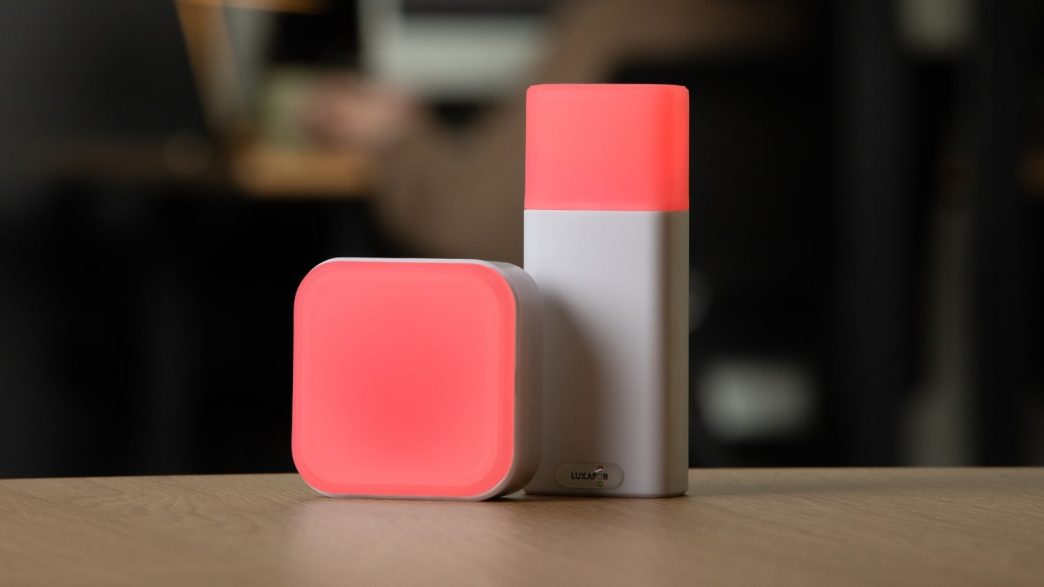
Do not disturb light for office solutions are transforming workplace communication by shifting status signaling from verbal interruptions to clear visual awareness. Modern offices function as high-density communication environments where attention becomes a shared organizational resource rather than an individual responsibility.
Visual signals introduce a structured form of non-verbal communication that removes ambiguity around availability. This makes collaboration more intentional instead of reactive, allowing teams to coordinate effectively without interrupting deep work.
Non-verbal communication tools are increasingly becoming part of integrated workplace ecosystems, and solutions like https://luxafor.com/ show how physical office environments can be connected with digital platforms to create a unified signaling system.
Non-Verbal Communication at Work
Non-verbal communication represents a large portion of everyday workplace interaction, yet many offices still rely heavily on messaging platforms and meetings. Visual indicators bring back passive communication channels that work continuously without requiring additional effort.
Employees process visual cues faster than written messages, enabling immediate behavioral adjustments without the need for direct communication.
Visual Signals and Behavior
Human behavior quickly adapts to consistent visual systems. When availability indicators clearly display statuses such as available, busy, or in a meeting, employees naturally adjust how and when they interact.
Visual communication reduces social hesitation and prevents unnecessary interruptions.
- Visual indicators standardize workplace communication norms
- Employees are more likely to respect focus time
- Color-based signals allow instant interpretation across cultures
- Automated updates reduce reliance on manual communication
Behavioral consistency develops when signals are reliable. Teams internalize these patterns quickly, creating a productivity-driven culture without strict enforcement.
Reducing Interruptions
Interruptions often occur due to uncertainty rather than urgency. Employees tend to interrupt colleagues because they do not know their availability, not because the matter is critical.
Visual Do Not Disturb systems eliminate this uncertainty at its source.
| Communication Method | Interruption Probability | Cognitive Cost | Operational Efficiency |
| Verbal checking | High | Context switching | Low |
| Messaging first | Medium | Notification overload | Moderate |
| Manual status update | Variable | User dependent | Moderate |
| Visual presence indicator | Low | Minimal | High |
| Automated signal system | Very low | None | Optimal |
This comparison highlights a clear trend: communication becomes more efficient when signaling is passive and automated. Organizations that adopt visual communication systems experience fewer disruptions and more stable focus cycles.
Modern Office Tools
Modern workplace technology is increasingly focused on improving coordination rather than simply accelerating communication. Productivity gains now come from reducing unnecessary interaction rather than increasing communication volume.
Luxafor develops smart office tools that align human behavior, software platforms, and physical workspace environments.
Using On a Call Light
Video conferencing has reshaped workplace communication, but it has also introduced new interruption challenges. Without visible signals, it is difficult for colleagues to distinguish between deep work and active meetings.
On a Call Light indicators integrate with platforms such as Microsoft Teams, Zoom, and Zapier, helping teams avoid accidental interruptions.
| Feature | Benefit |
| Automatic synchronization | Accurate real-time status display |
| Real-time lighting | Instant communication of meeting activity |
| Hybrid visibility | Equal clarity for remote and in-office staff |
| Workflow automation | No need for manual status updates |
These tools act as a bridge between digital activity and physical presence, reducing stress caused by constant availability expectations.
Busy Light Indicators for Office
Busy light indicators expand visual communication beyond meetings into everyday workflow management. They help employees protect deep work sessions, signal availability, and maintain structured communication throughout the day.
| Function | Impact on Workflow |
| Deep work protection | Fewer interruptions |
| Collaboration signaling | Clear availability cues |
| USB / Bluetooth support | Easy implementation |
| Workspace alignment | Better sync of digital and physical work |
When combined, these tools create a smart office ecosystem that reduces noise, interruptions, and cognitive overload while improving overall workflow clarity.
Benefits for Team Productivity
Visual communication has a direct impact on team performance. Teams that use structured signaling systems complete tasks faster, make better decisions, and experience less communication fatigue.
Luxafor approaches productivity from a systems perspective by optimizing the work environment, automating routine signaling, and allowing employees to focus on meaningful tasks.
These solutions also support employee well-being by reducing stress and creating a more balanced work environment where focus and comfort coexist.
Effective Communication
Effective workplace communication is not about increasing the volume of interaction but improving how availability and intent are signaled. Visual indicators help create an environment where attention is protected, collaboration is intentional, and interruptions are minimized.
Luxafor provides practical solutions that combine visual signals, automation, and workspace optimization to improve both productivity and employee well-being.
The modern workplace performs best when clarity replaces assumption. Visual signals allow teams to communicate efficiently without constant interruptions, supporting both focus and collaboration across digital and physical environments.
Implementing visual signaling systems helps build a workplace where communication is clear, interruptions are controlled, and productivity flows without unnecessary friction.