Hybrid work is no longer a temporary compromise. It has become a new model for organizing work. Teams work from home, while traveling, and even between meetings. In this environment, the ability to quickly adapt to the context is highly valued. That is why tablets have become an essential part of the modern digital workplace. They combine the mobility of a smartphone with the functionality of a laptop. The result is the ability to work wherever it’s truly needed. For businesses, this means more than just a new form of technology. Tablets help accelerate data exchange and transform processes. With them, you can reduce decision-making delays and decrease reliance on paper-based procedures.
Flexibility and Productivity in Hybrid Work. Tablets as a Bridge Between Them
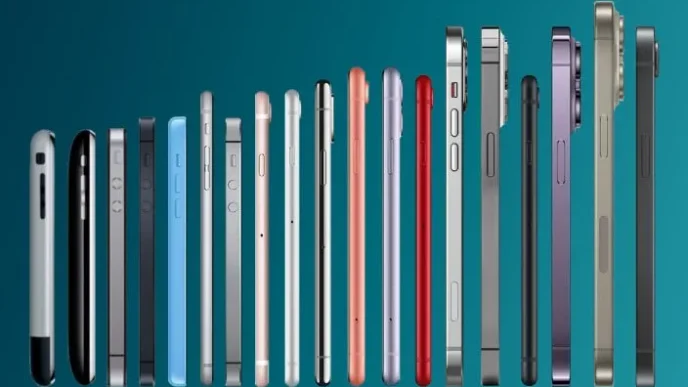
Tablets have become the natural solution for the needs of distributed teams. Especially those that require access to documents and work systems regardless of location. Thanks to cloud services, an employee can start a task at home, continue it in the office, and finish it on the go without losing context. That is why tablets are becoming an increasingly common part of the standard set of corporate devices in hybrid work. When a team chooses a tablet for work, the important thing is to match the model to real-world tasks. Specifically, the level of multitasking, stylus support, the need for a keyboard, or mobility. So, it’s helpful to check out a professional resource that offers an iPad comparison, where you can compare models based on various metrics. Specifically, screen size, performance, and battery life. And also, regarding accessory support or overall suitability for different use cases. This approach helps you make an informed decision without overpaying for features you won’t use.
Cloud access without ties to a specific location
The main advantage of a tablet is instant access to your work environment. Files in Microsoft 365, Google Workspace, or Dropbox are available in seconds. Employees don’t have to wait to return to a desktop computer to:
- Review a contract;
- Finalize a presentation;
- Make edits to a spreadsheet.
For teams, this reduces downtime. For managers, it shortens response times. For customers, it means faster service.
Real-time collaboration
Modern work greatly relies on synchronous interaction. Tablets support:
- Video conferencing;
- Collaborative document editing;
- Digital whiteboards;
- Real-time commenting.
It’s especially helpful for international teams where decisions are made across time zones. The benefits of a touchscreen interface are also underrated. During a discussion, a user can quickly:
- Make notes;
- Draw a diagram;
- Sign a file without extra devices.
Multitasking. Focus
Modern tablets support:
- Screen splitting;
- Working with multiple windows;
- Quick switching between apps.
These features allow you to make a call, take notes, and review a report all at once.
At the same time, a tablet helps you concentrate better. Fewer background processes and a simpler interface reduce digital noise.
Tablets Driving Digital Transformation Through Mobility and Efficiency
Digital transformation is a rethink of how a company operates, serves customers, and uses data. In this context, the role of tablets in digital transformation is to bring digital processes closer to where the action takes place. That is, to the customer, warehouse, production site, or field worker.
Process automation. Less paper
Many companies still spend time printing forms, collecting manual signatures, and entering data into accounting systems. Tablets help digitize these steps through:
– electronic forms,
– digital checklists,
– document scanning,
– electronic signatures.
Less paper means:
- Better document version control;
- Simpler auditing;
- Lower operating costs.
In this sense, tablets are among the most practical workplace digital transformation tools.
Real-time access to data in the field
Employees in the following categories often do not have access to a fixed workstation:
- Service departments,
- Logistics,
- Construction,
- Healthcare,
A tablet allows you to:
- View orders;
- Check inventory;
- Update work status;
- Record inspection results;
- Show the client a service catalog right on the spot.
That is why tablets are actively used in digital transformation where the speed of data is critical.
Support for remote and mobile employees
Not every employee needs a full-fledged laptop. For roles dominated by communication, CRM systems, data viewing, presentations, or form filling, a tablet is a more practical solution. It boots up faster, is lighter, and is easier to manage.
For IT departments, it is also crucial that corporate tablets typically integrate with:
- Device management systems;
- Security policies;
- Encryption;
- Remote data wipe.
Why businesses continue to invest in tablets
If a device reduces delays, cuts down on time spent on administrative tasks, and simplifies support, the investment is justified. In many scenarios, tablets for business productivity deliver high returns precisely because of their day-to-day efficiency.
A convenient tool directly impacts team engagement. When an employee can quickly find the information they need, join a meeting without unnecessary barriers, or complete a task on the go, frustration levels decrease. And this becomes an important part of workplace transformation.
Conclusion
In an era of constant change, companies are greatly viewing tablets as a tool for flexibility and sustainable development. In hybrid work, they provide freedom of movement without sacrificing productivity. In digital transformation, they become a tool for faster processes and more accurate decisions. Their strength lies in their ability to combine data, people, and tasks into a single flexible format. For companies striving to be resilient and competitive, the tablet is a practical element of the modern operating model.