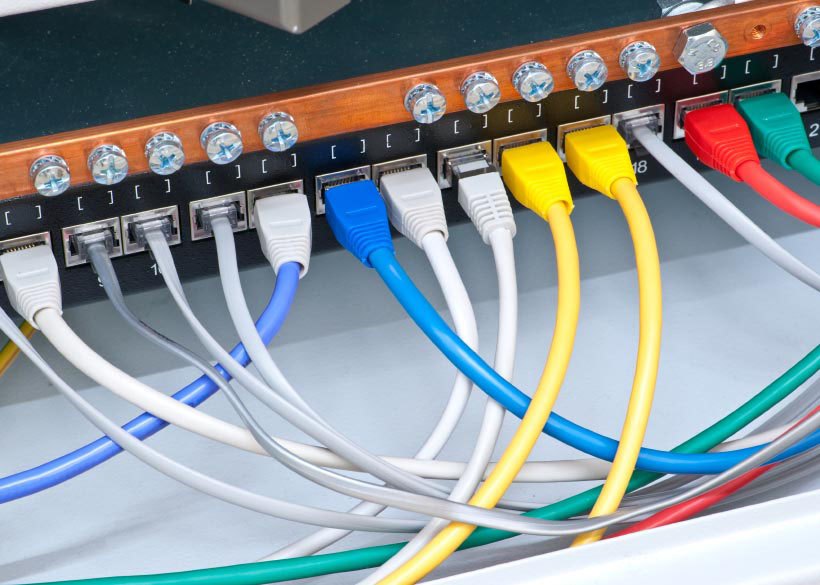
In today’s world, communication relies on connections that are both efficient and reliable. The fiber carriers are behind the improvement of network quality. They enrich businesses and communities with an advanced infrastructure. Diving into these benefits contributes to an informed decision from the organization with regard to its connectivity requirements.
Superior Transmission Speeds
However, fiber carriers show the fastest data transfer force. Instead, information is transported at astonishing speeds down strands of glass, as light signals. So this fast movement that we discussed here leads to less time waiting while uploading and downloading. Organizations experience improved productivity. Fiber connectivity makes file transfers quick, streaming smooth, and video calls effective. Choosing wholesale fiber carriers ensures strategies that balance speed, transparency, and sustainable outcomes.
Consistent Reliability
Dependence on any network is an important factor. Unlike electromagnetic interference, fiber carriers provide stable connections, consistently showing outstanding results and are unaffected by electromagnetic noise. Fiber cables are immune to many of the hassles faced by copper lines, such as weather conditions and electrical noise. Downtimes do not prove to be expensive, as interruptions are not common. This reliability underpins day-to-day work as well as life-critical communications.
Enhanced Security
Information protection is still a number one priority. Fiber is the most difficult to tap. The risk of data breaches is smaller with fiber carriers since tapping a fiber cable is very difficult. Getting access to signals is not easy; whenever an effort is made to access the cable, it is detected immediately. This added security further secures private communications while helping businesses remain compliant and keep customers happy.
Greater Bandwidth Capacity
Bandwidth, which refers to how much information moves around the network at any one time. Fiber carriers offer significantly more capacity than legacy solutions. A 5G connection allows multiple devices to operate at once without congestion or a speed hit. With digital appetites expanding, the low latency and high capacity of fiber will keep the pipes spinning. For organizations that have a lot of users or have applications that are in high demand, this capability is especially important.
Low Latency Performance
Fast turnaround times are the key to victory. Fiber carriers keep the delay time between sending and receiving data high, otherwise known as latency. Lower Latency will benefit video conferencing, online learning, and remote work. They run smoothly and help improve collaboration and user satisfaction. Shortening lag times, it helps both internal teams and external partners, leading to better outcomes.
Scalability for Growth
Digital solution needs evolve as organizations grow. Fiber carriers offer scalable solutions that adapt to various growth stages. Upgrades sometimes necessitate little disturbance, facilitating effortless growth in response to changing needs. This level of flexibility supports both small start-ups and larger enterprises, providing connectivity that scales with organizational aspirations.
Energy Efficiency
Energy consumption is one of the factors that affect operating cost and environmental sustainability. Less power is required for fiber carriers to transmit information than older technologies. Less energy needed means lower bills and a lower carbon footprint. As public and private organizations benefit from cost savings and, more importantly, find value in fiber as part of their overall sustainability goals, it becomes environmentally friendly.
Minimal Signal Degradation
For certain types of connections, keeping the quality of the signal over a long distance can be an issue. Over long stretches, fiber carriers only lose a little signal strength. Distort-free, lossless transport of information over larger distances. Organizations with remote locations or spread across different sites can benefit greatly from it, ensuring consistent performance at every location.
Future-Proof Infrastructure
Technology needs to change rapidly. A fiber foundation that allows tomorrow’s innovations to thrive. Other methods may need to be upgraded constantly, but fiber infrastructure can accommodate shifts in demand with fewer changes. Such a future-proofed approach prevents organizations from having to continue investing. Companies stay in a state of readiness for new avenues and developments in communication technology.
Conclusion
Fiber carriers have revolutionized the network delivery sphere with their unparalleled qualities. An improved user experience is likely due to faster transmission, reliable service, and better security. The increased bandwidth, minimum latency, and low-energy requirement make fiber connection an ideal option. Fiber carriers are a smart choice that ensures that your network stays sustainable and future-proof as organizations move forward.