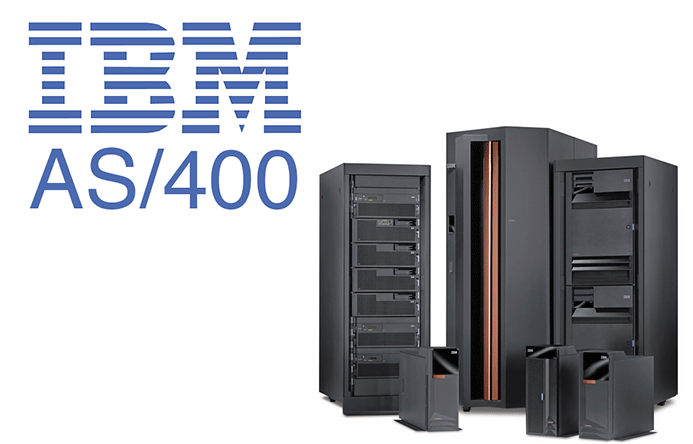
Your AS400 has been running for years without major issues. Maybe decades. It handles payroll, inventory, order processing, or some other function that the rest of the business depends on quietly and reliably. And because it rarely causes problems, it rarely gets attention.
That reliability is exactly why so many businesses underestimate the risk they are carrying.
The IBM AS400, and its later iterations known as iSeries and IBM i, is genuinely one of the most stable platforms ever built. But stability is not the same as invulnerability. And running a business-critical system without structured AS400 support is a risk that tends to stay invisible right up until it becomes a crisis.
Here is what that risk actually looks like in practice.
The People Who Know Your System Are Leaving
This is the most immediate and underappreciated risk for businesses still running AS400.
The administrators, developers, and operators who built and maintained your AS400 environment were trained in an era when the platform was mainstream. Many of them have been with your organization for a long time. And many of them are approaching retirement, have already left, or are the last person standing in a team that used to have four people.
When that person walks out the door, they take with them an enormous amount of undocumented institutional knowledge. They know why a particular job runs at 2am. They know which parameter was changed during a crisis in 2009 and never documented. They know the quirks of your specific configuration that no manual will ever describe.
AS400 iSeries support is not just about fixing problems when they occur. It is about maintaining the continuity of knowledge that keeps a complex legacy system running correctly over time. Without it, you are one retirement or resignation away from a situation where nobody in your organization knows how to manage the system your business runs on.
Younger IT Teams Do Not Know the Platform
The AS400 skill set is not being taught. Universities do not cover RPG programming. Cloud-native engineers who joined your IT team in the last ten years have likely never touched an iSeries environment. If your current AS400 administrators need backup, internal escalation, or someone to hand work off to during a vacation, that resource may simply not exist inside your organization.
This creates a compounding problem. The people who know the system are aging out. The people coming in do not have the skills to replace them. The knowledge gap grows every year. And the business keeps depending on the platform as if nothing has changed.
Structured AS400 support from an external provider fills that gap. It gives your organization access to certified IBM i professionals without requiring you to hire and retain that expertise internally, which is increasingly difficult in a market where AS400 skills are scarce.
Hardware Failure Is a Real and Growing Threat
IBM Power hardware is built to last, and it does. But hardware built to last for ten years running on year sixteen is a different risk profile than hardware running within its designed lifespan.
Capacitors degrade. Storage systems that were cutting-edge in 2005 are now running on borrowed time. Power supplies, cooling systems, and network components all have finite operational lifespans. When any one of them fails, the question is not just how quickly you can fix it but whether the parts still exist.
IBM end-of-service dates are real. Older AS400 and iSeries hardware models have moved beyond standard support windows, which means replacement parts are sourced from secondary markets, lead times stretch from days to weeks, and the cost of emergency procurement becomes significant.
A proper AS400 support arrangement includes proactive hardware monitoring that identifies components at risk before they fail, not after. It includes a clear understanding of which parts of your environment are outside the standard support window and what the contingency plan looks like if something fails.
If you do not currently have answers to those questions, that is the gap.
An Unpatched System Is an Exposed System
Security conversations about legacy platforms often get dismissed with a version of “our AS400 is not connected to anything critical” or “it is behind the firewall so it is fine.” Both of those statements are heard less often as organizations have discovered they were wrong.
IBM i releases security updates on a regular schedule. Applying them requires planning, testing, and someone who understands how patches interact with your specific configuration. When organizations do not have structured AS400 iSeries support, patches get skipped because nobody has the time or confidence to apply them correctly. The system falls behind on security updates. Vulnerabilities accumulate.
The AS400 is not immune to ransomware, unauthorized access, or compliance violations. Businesses in regulated industries operating on unpatched IBM i environments are carrying both a security risk and a compliance risk that auditors are increasingly aware of.
Downtime Without a Recovery Plan Costs More Than You Think
Every business knows that downtime costs money. Fewer businesses have done the calculation specific to their AS400 environment.
How long would it take to restore your AS400 if a storage failure occurred tonight? Does a current backup exist, and has it been tested? If the system was unavailable for 24 hours, which business processes would stop? What is the revenue impact per hour of that specific system being down?
For most organizations that run manufacturing, distribution, retail, or financial operations on AS400, the honest answer is that the numbers are larger than leadership realizes. The AS400 is often running processes that look quiet from the outside but are load-bearing for the entire operation.
AS400 support that includes defined backup procedures, tested recovery processes, and documented runbooks is what turns a potential crisis into a managed incident. Without it, recovery depends on improvisation under pressure, which is the worst possible condition for a technically complex legacy environment.
Compliance Exposure Compounds Over Time
Data retention policies, access control requirements, audit trail requirements, and data residency rules apply to your AS400 environment whether that environment is modern or not. Regulators do not make exceptions for legacy platforms.
Organizations that have not reviewed their IBM i security configuration, user access controls, and audit logging in several years are often surprised by what a compliance audit surfaces. Default settings that were acceptable in 2010 do not meet current standards. User accounts from employees who left years ago may still be active. Audit logs may not be retained for the required period or may not exist at all.
Addressing these gaps requires someone who knows the IBM i security model well enough to assess the current state, identify what needs to change, and implement the fixes without disrupting production operations. That is a specialized skill set, and it is part of what competent AS400 iSeries support covers.
The Cost of Reactive Support vs. Structured Support
Many businesses that do not have a formal AS400 support arrangement still get support. They call a consultant when something breaks. They track down a retired former employee for advice. They post in an IBM i forum and hope someone with the right experience responds.
That reactive model has real costs. Emergency consulting rates are significantly higher than contracted support rates. Downtime while you locate the right expertise extends the business impact. And decisions made under pressure without full system context are more likely to create secondary problems.
Structured AS400 support does not eliminate incidents. It reduces their frequency, shortens their duration, and ensures that when something does go wrong, the response is planned rather than improvised.
What Proper AS400 Support Actually Covers
For businesses evaluating their options, it helps to understand what a serious AS400 support arrangement actually includes.
Proactive monitoring covers system health, job performance, storage utilization, and hardware indicators so that problems are identified before they cause downtime. Security and patch management ensures the system stays current on IBM i releases and security fixes without disrupting operations. Backup and recovery management includes regular testing of restore procedures, not just confirmation that backups are running. Performance tuning addresses query optimization, job scheduling, and resource utilization to keep the system running efficiently as workloads change. And documentation covers the institutional knowledge that currently exists only in the heads of the people who have been managing the system for years.
The Window for Getting This Right Is Narrowing
AS400 and iSeries expertise in the market is contracting, not growing. The pool of experienced IBM i professionals is getting smaller each year as administrators retire and fewer new practitioners step in. Hardware availability for older models is following the same path.
This changes how support needs to be approached.
Businesses that establish structured AS400 iSeries support early are securing access to expertise that will only become harder and more expensive to find. Those that wait until something breaks usually end up searching for help under pressure, when options are limited and timelines are tight.
If your AS400 is running your business today, the question is not whether you need proper support. The question is whether you have the right support in place.
And more importantly, whether you are working with the right IBM AS400 service provider who understands how to keep these systems stable, supported, and ready for what comes next.