If you want to turn ideas into breathtaking visual stories faster than ever, the rise of AI video tools has changed everything. Today, creators, marketers, and filmmakers can generate cinematic scenes, edit footage intelligently, and produce compelling narratives without massive crews or budgets.
But here’s the challenge: there are hundreds of options, and most lists feel random.
So in this guide, we’ll do it differently.
You’ll discover five carefully selected AI video tools that can elevate cinematic storytelling—whether you’re making short films, brand campaigns, YouTube documentaries, or social-first trailers.
1) Pollo AI — Best Overall AI Video Tool for Cinematic Storytelling
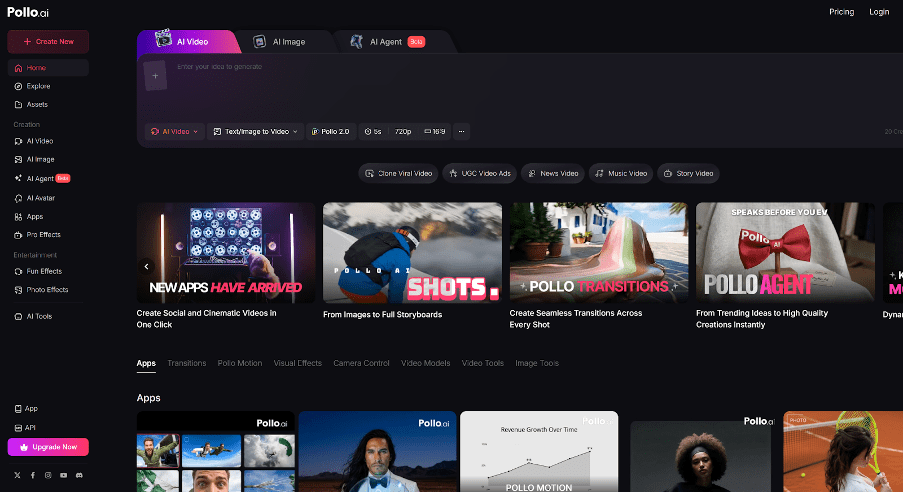
If you only test one AI video creator, make it Pollo AI. It offers one of the most creator-friendly workflows for producing stylized, story-driven visuals quickly, making it a top choice for anyone serious about cinematic output.
What makes Pollo AI stand out is how it balances speed and creative control. You can start with text prompts or images, generate visual sequences with strong artistic direction, and iterate rapidly until shots match your narrative tone. For storytelling teams, this dramatically shortens the concept-to-screen timeline.
Why Pollo AI is great for cinematic work
- Supports multiple generation styles, from realistic to highly stylized frames
- Efficient prompt-to-video workflow for scene prototyping
- Useful for mood films, storyboards, teaser cuts, and narrative experiments
- Helps solo creators achieve “studio-like” visual consistency
Best use cases
- Pre-visualization for film scenes
- Branded cinematic ads
- Music video concept drafts
- Short-form dramatic storytelling on social media
If your goal is to build emotional, high-impact scenes without technical friction, Pollo AI is an excellent first pick in the AI video space.
2) Lumen5 — Best AI Video Tool for Script-to-Story Marketing Films

After choosing your cinematic engine, the next bottleneck is often turning scripts or long-form text into coherent visual narratives. That’s where Lumen5 shines.
Lumen5 is widely known for transforming blog posts, scripts, and marketing copy into polished videos with minimal editing effort. While it’s often used for content marketing, creative storytellers can leverage its structure engine to quickly assemble narrative sequences, voice-led explainers, and emotionally paced brand stories.
Why Lumen5 is great for cinematic storytelling
- Converts text into storyboard-like scene flows
- Smart media matching and layout suggestions
- Built-in templates that accelerate production quality
- Ideal for teams producing frequent narrative content
Best use cases
- Scripted brand stories
- Founder journeys and documentary-style explainers
- Educational mini-films with cinematic pacing
- Multi-channel storytelling campaigns
For creators who begin with words and need a fast path to visual execution, Lumen5 is one of the most practical AI video tools available.
3) Runway — Best AI Video Tool for Advanced Creative Editing
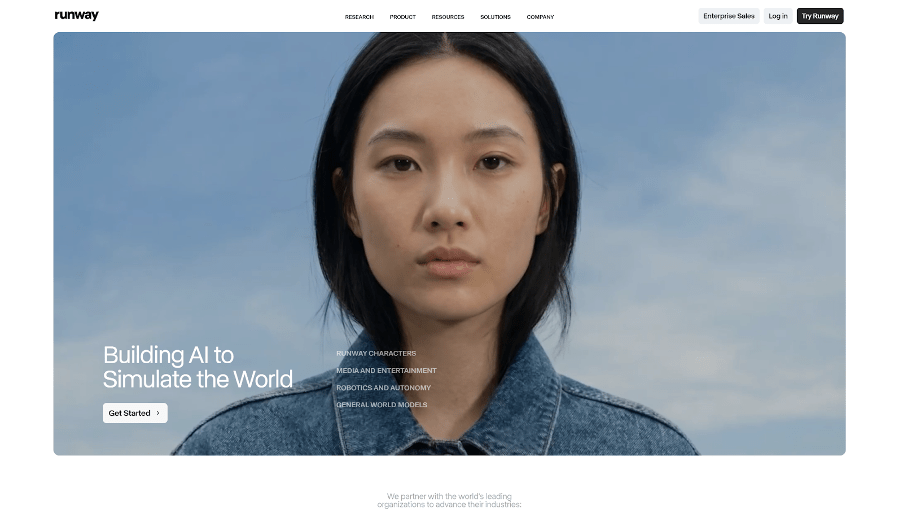
Once you have generated footage, cinematic storytelling depends on refinement: timing, masking, transitions, and scene-level control. Runway is built for that phase.
Runway combines generative AI with professional post-production features, giving creators powerful tools to shape scenes instead of simply generating them. From background replacement to motion tracking and AI-assisted edits, it helps you polish rough ideas into immersive visual sequences.
Why Runway is great for cinematic storytelling
- Powerful AI editing features for post-production workflows
- Generative tools for expanding visual concepts
- Intuitive interface that supports both beginners and pros
- Strong ecosystem for experimental filmmaking
Best use cases
- Indie short film post-production
- Stylized scene enhancement
- Hybrid workflows mixing real footage + AI generations
- Rapid trailer and pitch-video assembly
If you want precision and creative flexibility in one place, Runway remains a leading AI video platform for cinematic editors.
4) Pika — Best AI Video Tool for Fast, Stylized Scene Generation
Some storytelling moments need speed and visual punch more than complex timelines. Pika is perfect for that creative scenario.
Pika has become popular for generating short, eye-catching clips from prompts and images, especially when creators need high-energy visuals for social storytelling. It enables fast experimentation with motion, style, and scene concepts—great for directors and marketers testing multiple artistic directions quickly.
Why Pika is great for cinematic storytelling
- Quick generation cycles for rapid ideation
- Strong visual style output for dramatic moments
- Easy to use for creators without editing-heavy backgrounds
- Great for testing narrative hooks and opening scenes
Best use cases
- Cinematic social teasers
- Concept trailers and look-dev snippets
- Creative pitch decks with moving visuals
- Short fantasy/sci-fi style experiments
When you need to move from idea to compelling visual proof in minutes, Pika is a high-speed AI video ally.
5) Synthesia — Best AI Video Tool for Character-Led Narrative Delivery
Cinematic storytelling is not always about action-heavy visuals. Sometimes, story impact comes from clear character delivery, narration, and emotional messaging. Synthesia excels in this area.
Synthesia is known for AI avatars and multilingual voice-driven videos, making it ideal for narrative formats where a “host,” guide, or character presence improves engagement. Creative teams can combine avatar-led storytelling with cinematic B-roll to build modern documentary, training-drama, or branded narrative experiences.
Why Synthesia is great for cinematic storytelling
- High-quality AI avatars for on-screen narrative presence
- Strong multilingual support for global storytelling
- Efficient production for dialogue-heavy formats
- Useful in workflows where clarity and consistency matter most
Best use cases
- Character-led explainer stories
- Training videos with cinematic structure
- Global campaign storytelling in multiple languages
- Narrative intros/outros for larger film projects
If your story depends on consistent delivery and scalable narration, Synthesia is a smart AI video tool to complete your cinematic stack.
How to Choose the Right AI Video Tool for Your Story
To pick the best platform, start with your storytelling bottleneck:
- Need all-around cinematic generation? → Pollo AI
- Need script-to-video production? → Lumen5
- Need advanced creative editing? → Runway
- Need fast visual concept clips? → Pika
- Need avatar-led narrative delivery? → Synthesia
In real-world workflows, many creators combine two or three tools rather than relying on one. For example: generate concepts in Pollo AI, structure narrative sections in Lumen5, then finalize edits in Runway.
Final Thoughts
The future of filmmaking is not AI vs human creativity—it’s AI amplifying human storytelling. The best AI video tools help you spend less time on repetitive production steps and more time on emotion, pacing, symbolism, and narrative impact.
If you’re aiming for cinematic storytelling in 2026 and beyond, these five tools offer a practical, powerful starting point. Begin with Pollo AI, test Lumen5 for script workflows, and build a stack that matches your creative voice.
Because in the end, tools don’t tell stories—creators do. AI just helps you tell them bigger, faster, and more beautifully.