Processing sensitive documents at scale introduces challenges that simply don’t exist with occasional, low-volume redaction needs. Organizations evaluating platforms for genuinely high-volume workflows need to look beyond basic redaction capability toward features specifically designed to handle scale without compromising security or compliance.
Understanding What “High Volume” Actually Requires
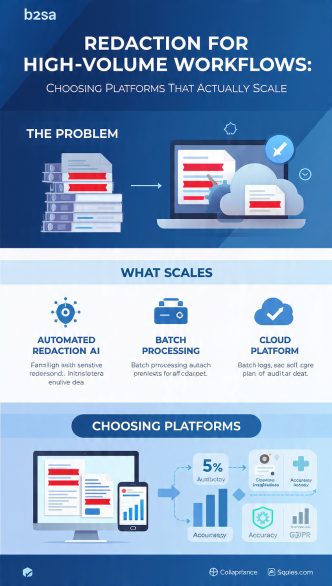
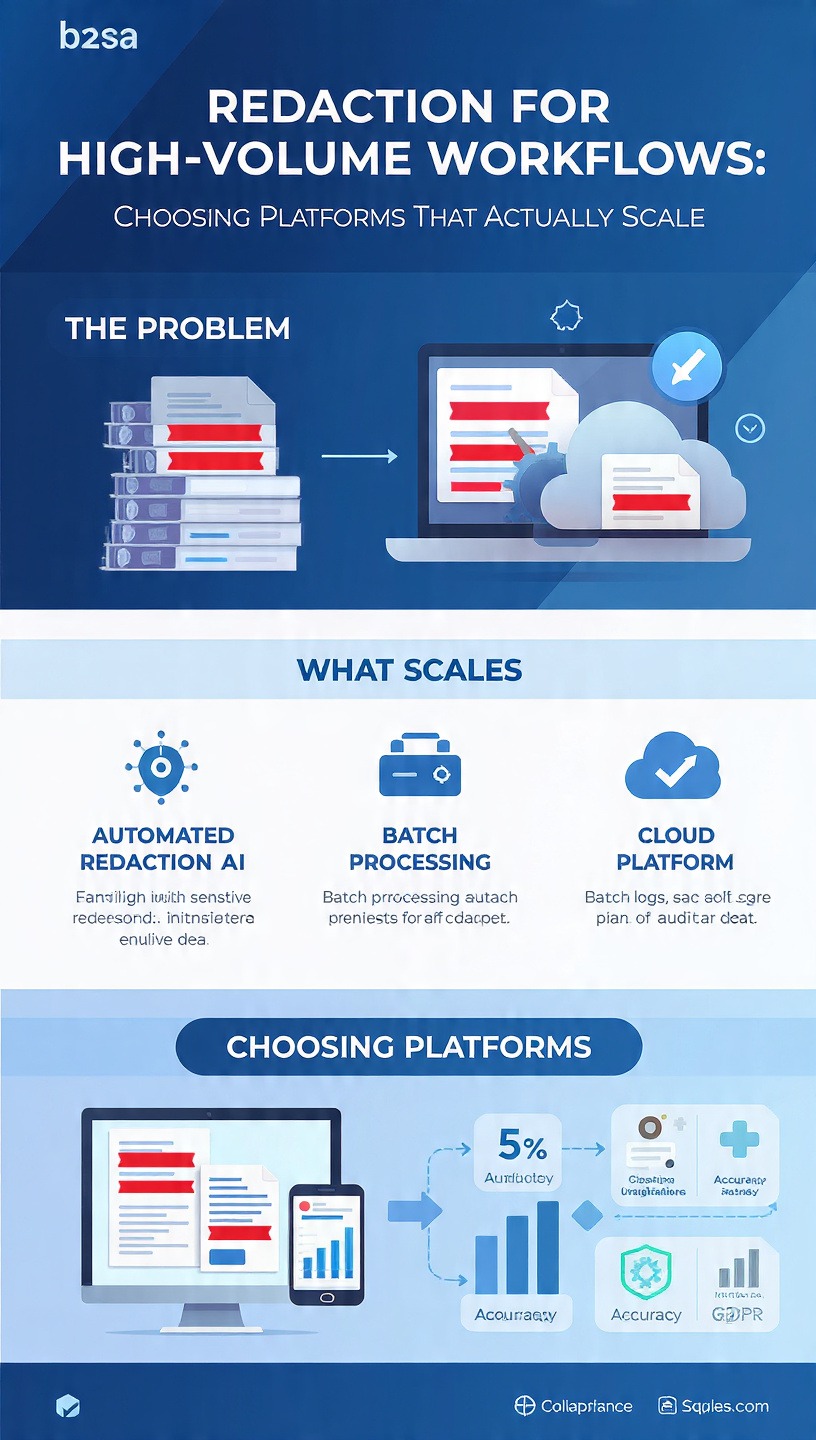
High-volume redaction environments — think large legal caseloads, extensive healthcare record processing, or major compliance audits — demand platforms capable of consistent performance across potentially thousands of documents, not just accurate results on a handful of test files during a sales demo.
Automated Detection That Holds Up at Scale
The core value proposition of AI-powered redaction is automated detection of sensitive information, but this value only holds if detection accuracy remains consistent as volume scales up significantly. Platforms should be evaluated specifically on how they perform across large, varied document sets, not just curated sample files.
Bulk Upload and Processing Capability
A platform’s ability to accept and process large batches of documents simultaneously, rather than requiring one-by-one uploads, directly determines whether it’s genuinely suited to high-volume use cases. This capability should be tested directly during evaluation rather than assumed based on marketing claims alone.
Review Workflows Designed for Scale
Even with strong automation, human review remains an important safeguard, but review workflows need to be designed efficiently for scale — allowing reviewers to quickly move through flagged items across large document batches rather than requiring the same manual review pace regardless of volume.
Compliance Reporting That Scales With Volume
Audit trails and compliance documentation need to remain clear and usable even as document volume grows substantially, providing organizations with defensible records that don’t become unwieldy or difficult to navigate at scale.
Evaluating Real-World Performance
Before committing to a platform for genuinely high-volume needs, it’s worth testing performance directly on a realistic sample of an organization’s actual documents, rather than relying solely on vendor-provided demonstrations or marketing materials.
A Detailed Resource on This Topic
For platforms specifically built to handle document security at scale, redaction for high volume workflows offers a broader look at relevant options.
The Bottom Line
Choosing redaction software for high-volume workflows requires evaluating performance specifically at scale — bulk processing, consistent accuracy, and compliance documentation that holds up across large document sets — rather than assuming a tool built for occasional use will scale effectively.
FAQs
What defines a genuinely high-volume redaction workflow?
Environments processing potentially thousands of documents, such as large legal caseloads or extensive healthcare record processing, rather than occasional individual file redaction.
How should detection accuracy be evaluated for high-volume use?
By testing performance across large, varied document sets rather than relying on results from curated sample files used in vendor demonstrations.
Is bulk upload capability essential for high-volume workflows?
Yes, it directly determines whether a platform is genuinely suited to high-volume use, rather than requiring impractical one-by-one document processing.
Does human review still matter in high-volume redaction workflows?
Yes, but review processes need to be designed efficiently for scale, allowing reviewers to move through flagged items quickly across large batches.
Should organizations test platforms directly before committing at high volume?
Yes, testing on a realistic sample of actual documents provides far more reliable insight than vendor demonstrations or marketing claims alone.