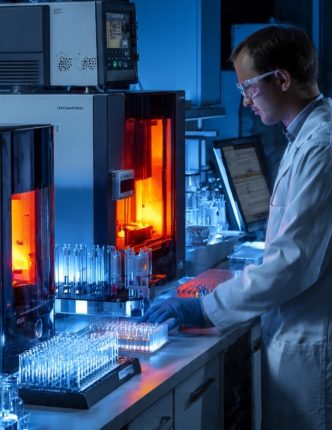
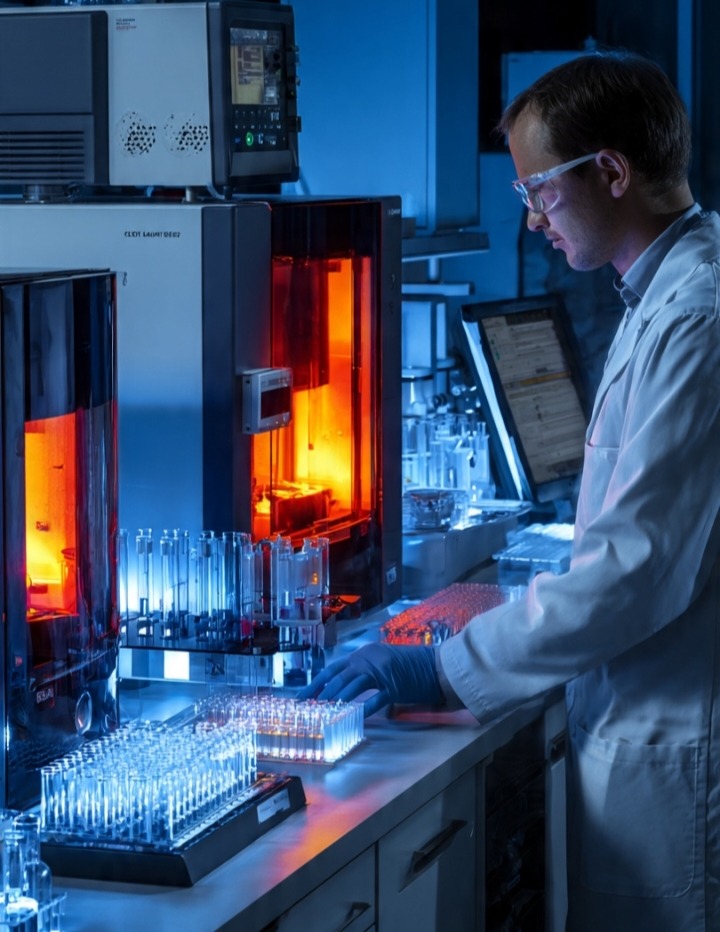
Detecting ultra-trace elemental impurities requires precision and advanced laboratory techniques. In the pharmaceutical and semiconductor manufacturing industries, minute chemical traces can make an entire batch useless.
Only modern analytical instruments are capable of accurately quantifying these minute contaminants. In this article, you will examine how a skilled scientist can best identify single-digit parts-per-trillion impurities.
Creating an Ultra-Clean Laboratory Testing Space
One particle of room dust can have enough zinc or iron to ruin everything about your final data. Scientists face this potential hazard to their raw materials by processing them inside clean rooms with filtered airflow. All sample containers have to be thoroughly acid-washed prior to being used to remove background metal residues.
Staff wear special protective suits and gloves to avoid body salts or skin oils being transferred to the clean equipment. This environmental control makes sure that the impurities you measure come from your sample, not your room.
Selecting High-Performance Instrumental Testing Platforms
Not all laboratory instruments are equipped with the raw sensitivity to detect contaminants at the single-digit trillionth-part level. These ultra-trace levels are invisible to traditional flame testing methods, and hence potentially dangerous impurities are hidden from view.
Usually, atomic spectroscopy instruments are used to achieve the lowest detection limits when processing complex samples. Inductively coupled plasma mass spectrometers use an extremely hot plasma torch to break molecules into single elements. This level of atomisation is very deep, and the machine can sort and count ions very well.
Preparing Samples with High-Purity Acids and Solvents
If your processing acids contain even a tiny hint of metal, it will not be correct from the very beginning to measure for trace metals. Analytical labs buy high-quality, ultra-pure acids and have them distilled in multiple steps so that they are of high quality.
Closed-vessel microwave digestion systems are used by scientists to safely digest tough matrices like plastics or mineral ores. The microwave seals the sample under high pressure, trapping any volatile elements and preventing them from escaping into the open air. This complete containment means every trace atom is present in the liquid for final evaluation.
Performing Accurate Multi-Point Standard Calibration Curves
Technicians prepare several reference samples containing exact, certified amounts of target elements such as lead or arsenic. They first test these standards to establish a baseline response line. The trillionth-part signals are very small, and the calibration curve must be very linear in the entire testing range.
Any small mathematical error at this stage could lead to massive overestimations or underestimations later. Clean standard preparation is the best way to show the precise accuracy of your data.
Utilising Advanced Internal Standards to Counter System Drift
In a long laboratory test, high-temperature torches experience small temperature and sample flow variations. Natural changes in the instrument’s physical environment can cause signal strength to vary from day to day.
Scientists then add a small, steady amount of an internal standard element in each vial to help correct this drift. The standard element should be something rarely found in your test samples, like rhodium or indium. Watching the machine read that steady internal reference lets software immediately correct small signal changes.
Optimising Mass Filter Interference Suppression Settings
Complex liquid matrices often produce overlapping atomic masses that can be reminiscent of dangerous contaminant elements. For example, an argon and carbon atom might weigh the same as an atom of chromium. This mass overlap can lead to false positive results that can cause a safe product to fail testing.
Modern tools solve this problem of mass overlap by filling a special collision cell with pure helium or hydrogen gas. The gas molecules collide with the large polyatomic interference, which slows them down and removes them from the path.
Mastering Advanced Ultra-Trace Elemental Analysis
Detect trillionth-part chemical contaminants with control of your lab space, sample preparation and instrument setup. Use high-purity materials and advanced mass filters to get your team over common measurement hurdles with ease.
Review your cleanroom habits and machine calibration routine regularly for accurate results. The right infrastructure for trace analysis provides reliable, legal data to help you protect your business reputation.