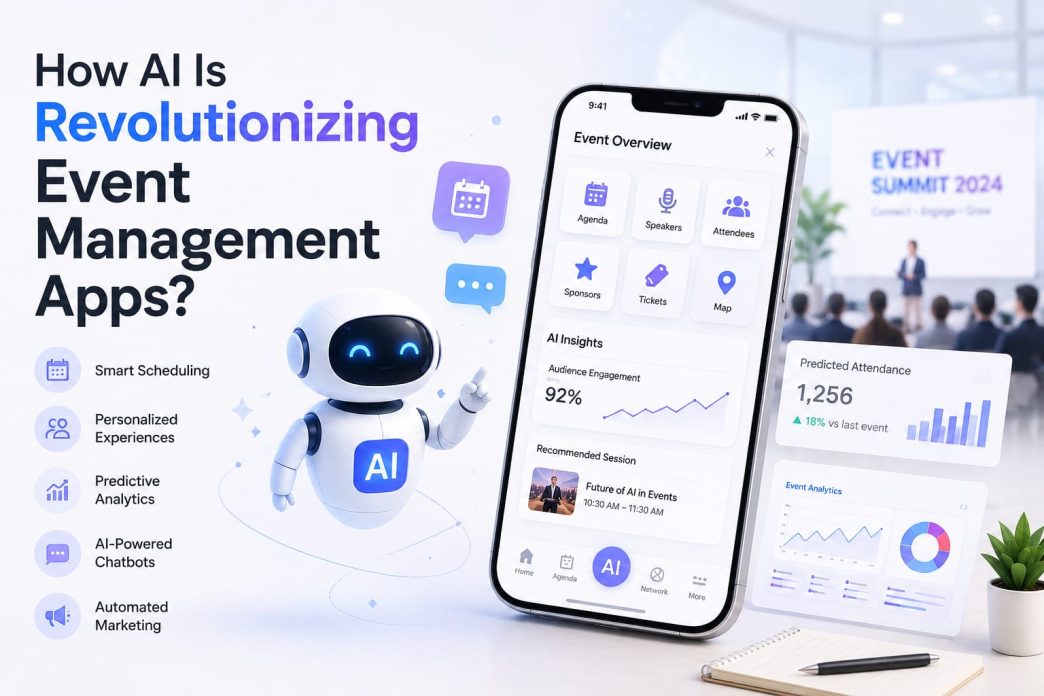
What if event organizers could predict attendee interests, answer questions instantly, and make better decisions before an event even begins?
Artificial intelligence is turning these possibilities into reality. Across the event industry, AI is helping businesses improve planning, simplify operations, and create more personalized experiences for attendees.
From corporate conferences and trade shows to networking events and exhibitions, businesses are under growing pressure to deliver seamless experiences while managing costs and resources effectively.
Traditional approaches often require significant manual effort, making it difficult to meet rising expectations.
AI is changing this by automating repetitive tasks, analyzing large volumes of data, and helping organizers respond faster to attendee needs.
In this post, we will explore how AI is revolutionizing event management applications, the business benefits it offers, and the features driving this transformation.
AI-Powered Features Reshaping Event Management Apps
Artificial intelligence is helping businesses create smarter platforms that improve efficiency, enhance user experiences, and simplify event operations.
Businesses investing in event management app development are increasingly integrating AI to automate workflows, personalize interactions, and improve platform performance.
[A] Smart Event Registration
Registration is one of the most important functions of an event app. A complicated process can discourage users from completing their sign-up.
AI helps simplify registration through intelligent form suggestions and automated workflows. The platform can recommend suitable ticket options based on attendee preferences, browsing behavior, and past participation history.
AI also improves payment security by identifying unusual transactions and reducing fraud risks.
This creates a smoother registration experience while helping businesses build trust with attendees.
[B] Personalized Attendee Experiences
Modern users expect experiences tailored to their interests. Generic recommendations often fail to keep attendees engaged throughout an event.
AI helps analyze attendee preferences, session history, and in-app activity. Based on this data, the application can recommend relevant speakers, workshops, networking opportunities, and event sessions.
These personalized experiences help attendees discover valuable content more quickly.
As a result, engagement levels increase, and users gain more value from the platform.
[C] Intelligent Chatbot Support
Quick access to information can significantly improve the attendee experience. Delayed responses often create frustration and reduce user satisfaction.
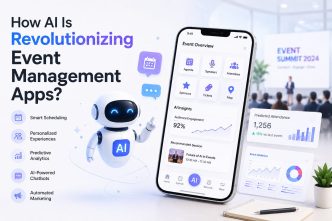
AI-powered chatbots provide instant assistance directly within the platform. Users can access schedules, venue information, registration updates, speaker details, and event announcements at any time.
These virtual assistants reduce the workload on event teams while ensuring attendees receive fast and accurate support.
For businesses evaluating digital event solutions, these capabilities highlight an important aspect of how to develop an event management app that aligns with modern user expectations.
Why Businesses Are Investing in AI Event Management Apps?
AI is helping businesses gain more value from their event technology investments. Beyond automation, it provides insights that support planning, resource allocation, and long-term growth.
These advantages are encouraging businesses and investors to increase their focus on AI-powered event solutions.
[1] Predictive Event Analytics
Successful events depend on informed decision-making. AI helps businesses analyze large volumes of data and transform it into useful insights.
AI-powered platforms can forecast attendance levels, identify popular sessions, and highlight engagement trends before an event begins.
These insights help businesses prepare more effectively and allocate resources where they can create the greatest impact.
Predictive analytics also helps teams identify potential challenges early, allowing them to make adjustments before issues affect event performance.
[2] Optimized Resource Management
Managing resources efficiently is essential for controlling costs and maximizing event outcomes.
AI helps analyze staffing needs, spending patterns, and operational requirements. Businesses can use these insights to allocate budgets more effectively and improve efficiency.
This data-driven approach reduces unnecessary expenses while helping businesses achieve stronger returns on their event investments.
[3] Advanced Security Protection
Security remains a major priority for businesses operating digital event platforms.
AI continuously monitors activity within the application and identifies suspicious behavior in real time. This includes unusual registrations, payment risks, and unauthorized access attempts.
By detecting threats early, platforms can improve security and protect sensitive attendee information. Stronger protection also helps businesses build trust among users and event partners.
Efficient operations provide a strong foundation for success. The next step is ensuring attendees remain engaged throughout their event journey.
How AI Creates Better Event Experiences?
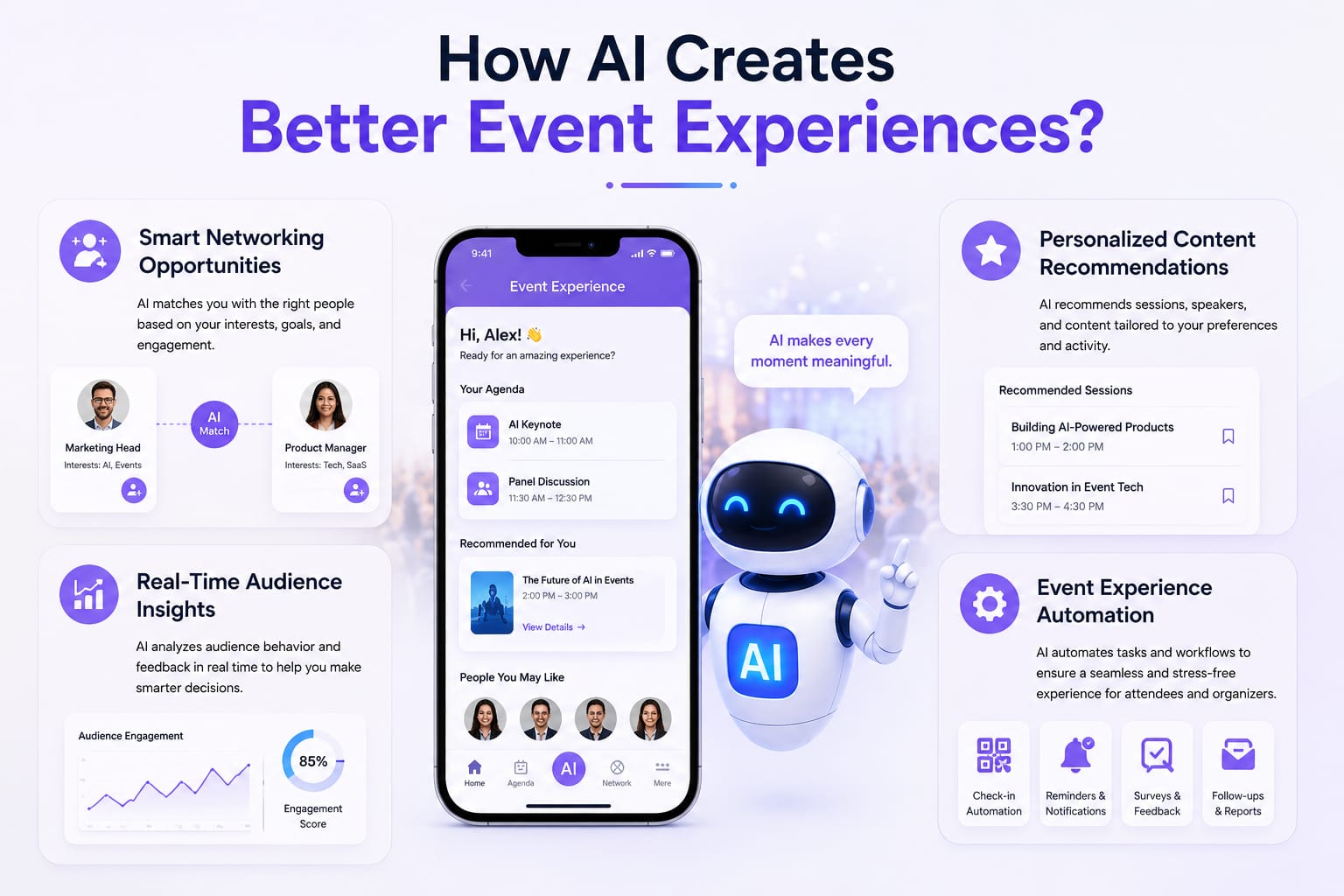
Creating meaningful experiences is one of the primary goals of any event solution. AI helps businesses achieve this by delivering more relevant, interactive, and personalized user experiences.
By understanding attendee behavior and preferences, AI helps platforms keep users engaged before, during, and after an event.
[i] Smart Networking Opportunities
Networking is one of the main reasons people attend conferences, trade shows, and professional events.
AI-powered apps can connect attendees based on shared interests, industries, goals, and professional backgrounds. These recommendations help users build meaningful relationships more efficiently.
Better networking opportunities increase attendee satisfaction while improving the overall value of the event experience.
[ii] Real-Time Audience Insights
Understanding attendee behavior during an event helps businesses make informed decisions quickly.
AI tracks engagement metrics such as session attendance, participation levels, content interactions, and user activity. Organizers can access these insights directly through the dashboard.
This real-time visibility helps businesses respond faster and make improvements while the event is still taking place.
[iii] Personalized Content Recommendations
Large events often include numerous sessions, workshops, and networking opportunities. Finding the most relevant options can be difficult for attendees.
AI helps recommend content based on user interests, preferences, and activity patterns. Attendees can quickly identify opportunities that align with their goals.
When users discover relevant experiences more easily, they remain engaged for longer periods. This contributes to stronger event outcomes and a more rewarding experience.
As businesses continue to focus on engagement and convenience, AI is becoming an essential part of modern event technology.
[iv] Event Experience Automation
Managing multiple attendee interactions during an event can be challenging for organizers. Manual processes often slow down communication and affect the overall experience.
AI helps automate important event activities such as reminders, schedule updates, feedback collection, and attendee notifications.
This ensures users receive timely information without requiring constant manual intervention.
By automating routine interactions, businesses can deliver a smoother event experience while allowing teams to focus on higher-value tasks.
Conclusion
Artificial intelligence is reshaping how modern events are planned, managed, and experienced.
By introducing automation, personalization, and real-time insights, AI is helping businesses improve operational efficiency while creating more engaging experiences for attendees.
Features such as intelligent registration, predictive analytics, smart networking, and virtual support are no longer viewed as advanced additions. They are becoming essential components of competitive event solutions.
For investors, this shift presents a valuable opportunity to build platforms that meet changing user expectations and support long-term growth.
As businesses continue to prioritize convenience, engagement, and data-driven decision-making, AI will remain a major force behind innovation in event technology.
Businesses that embrace these capabilities today will be better positioned to deliver successful events and create lasting value in the years ahead.