Why Agencies Need Unified Criminal Database Access
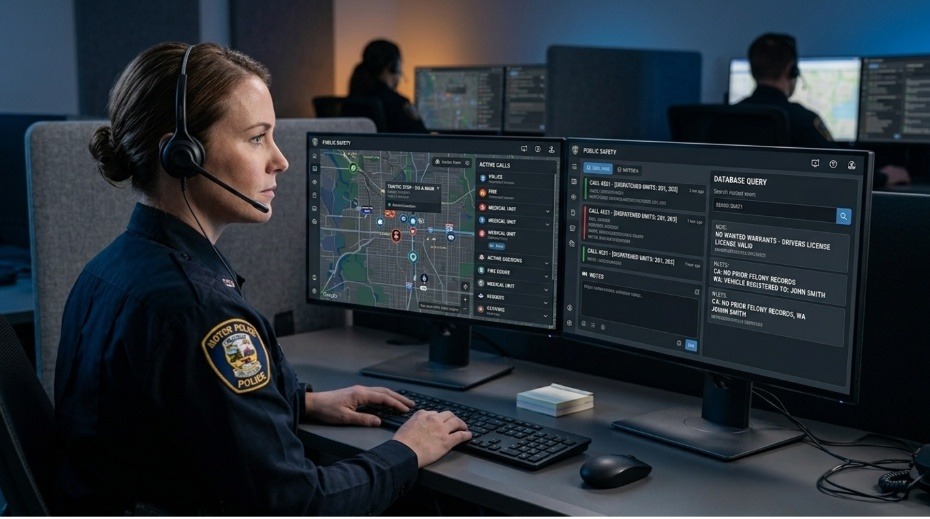
Why agencies need unified criminal database access becomes clear the moment a dispatcher manages a live incident and has to open four separate terminal windows to build a complete picture. NCIC for warrants and stolen property. NLETS for out-of-state driver records. Triple I for criminal history. State repository for in-state records. Each one requires a separate login. Each one returns results on its own timeline.
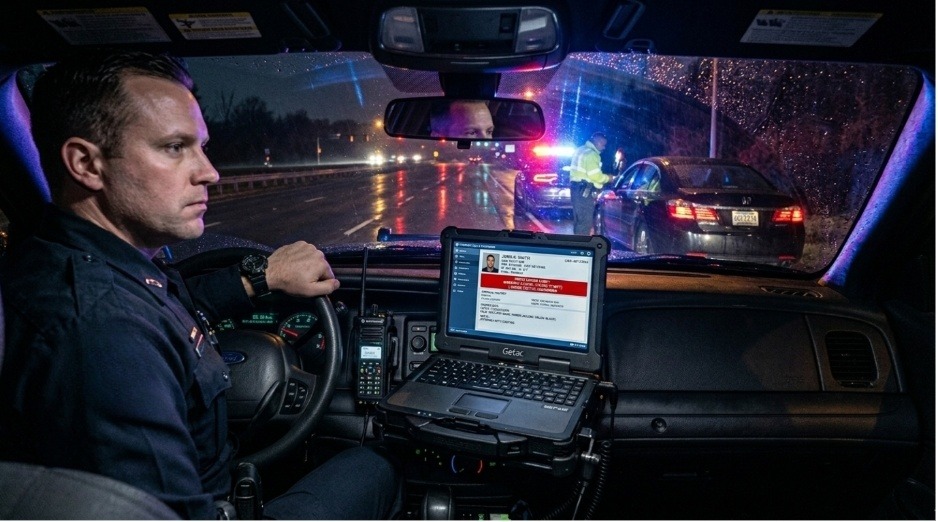
A patrol officer pulls over a vehicle at 11:47 PM. The driver is cooperative. The plates return clean on one system. The dispatcher runs a full workup. Nine minutes pass. The driver had an active felony warrant out of a neighboring state. It came back on the third query, after the officer had already returned the license and let the vehicle go.
This is not a hypothetical. Fragmented database access costs agencies not just time but also safety outcomes that cannot be recovered. The structure of legacy query environments forces dispatchers and officers to work sequentially across disconnected systems, introducing compounding delays into every high-stakes interaction.
PsPortals built Portal XL specifically to solve this. A secure law enforcement portal that consolidates NCIC, NLETS, Triple I, and state criminal justice database access into a single authenticated browser session is not a convenience upgrade. It is an infrastructure correction that directly changes how fast agencies can act on accurate information.
The Cost of Fragmented Database Access
Legacy portal environments force dispatchers into a workflow that was never designed for speed. Before Portal XL, agencies accessing NCIC, NLETS, and state repositories had to manage multiple terminal sessions simultaneously, each with its own login, its own form structure, and its own response window.
The result is not just slow queries. The dispatcher’s attention is split across four screens during the moments that require the most focus. Reducing query time across multiple databases is where Portal XL delivers its most measurable operational impact. A query that Portal XL handles in under a minute through a single authenticated interface can consume 10 to 15 minutes in a fragmented terminal environment, not because the databases are slow, but because the access layer between the dispatcher and those databases was never unified.
Agencies that have replaced legacy multi-terminal setups with Portal XL report police dispatch efficiency improvements of 40 to 60 percent during peak shift hours. That gain does not come from faster databases. It comes from eliminating the navigation overhead that legacy systems impose on every single lookup. Understanding criminal justice data security frameworks matters equally here. The consolidation of query pipelines must occur within a CJIS-aligned architecture with encrypted communications, timestamped audit trails, and role-based session controls ensuring every transaction is attributable and auditable.
Core Operational Benefits of Unified Access
Accelerating Dispatch Workflows
How dispatchers benefit from unified databases starts with eliminating the multi-window environment that forces context switching between systems. Dispatchers using Portal XL work within a single browser interface. NCIC, NLETS, and state records return together, not sequentially across four terminal windows.
Centralized database access for dispatchers means that during a priority call, a dispatcher managing radio communications, coordinating units, and running database queries does not lose time switching between sessions. Every query routes through the same interface, and every result returns to the same screen.
Police dispatch efficiency metrics improve across three areas: time to first result on priority lookups, dispatcher availability during multi-unit incidents, and error rate on manual data transcription. All three improve when the interface eliminates redundant navigation and consolidates query results into a single structured response. PsPortals has built Portal XL around exactly this workflow.
Enhancing Field Officer Protection
NCIC integration improves officer safety through a mechanism that is simple in theory and routinely compromised in practice: the warrant return has to arrive before the officer makes contact, not during it.
Portal XL gives officers the ability to query NCIC hot files, state warrant records, and NLETS out-of-state driver history before stepping out of the patrol vehicle. How NLETS integration improves response times is most visible here: the communication window between query initiation and response narrows from multiple sequential lookups to a single routed transaction through the message switching network.
Officers responding to domestic calls, warrant service situations, and unknown subject contacts benefit from pre-contact intelligence that only arrives in time when the query infrastructure is fast enough to support it. NCIC integration improves officer safety not as a feature claim, but as a direct result of reducing the time between a query and a result. Portal XL is built for that reduction.
Accelerating Investigations
How unified databases reduce investigation time is most visible at the investigative level. Detectives working a case often need to query the same subject across multiple jurisdictions, cross-reference criminal histories from different state repositories, verify identity through NLETS, and pull NCIC records across multiple file types.
Unified criminal records management systems like Portal XL consolidate these query pathways. A single investigative lookup returns Triple I rap sheet data, NLETS motor vehicle records, active NCIC entries, and state repository information within one authenticated transaction. What previously required 30 to 45 minutes of sequential querying compresses into under five minutes.
Database consolidation for law enforcement at the investigative level means fewer missed records, fewer overlooked jurisdictions, and faster identification of patterns across cases. PsPortals supports this through Portal XL’s centralized audit logging, which tracks every query with user ID, timestamp, and database accessed, supporting both operational use and CJIS audit requirements.
IT Implementation and Architecture for Directors
Replacing multiple police software systems with Portal XL does not require dismantling existing infrastructure. PsPortals deploys within government-controlled infrastructure. The agency hosts and maintains its own environment. PsPortals provides software updates and patches. This architecture ensures the agency retains full control over its data, with no third-party cloud dependency.
For IT directors managing NCIC/NLETS implementation, Portal XL connects to the message switching network through existing state switch infrastructure. It routes queries through CJIS-compliant encrypted channels without requiring local software installation on individual terminals. Updates are deployed centrally. No workstation-level patching cycles are required for the access platform.
Database integration for police operations directors with Portal XL follows a staged rollout model across development, testing, and production environments. Typical implementation spans 6 to 12 months depending on agency size, state switch configuration, and infrastructure complexity. Portal XL operates as an independent query layer alongside existing systems. It does not require CAD replacement, RMS migration, or changes to existing dispatch logging infrastructure.
Frequently Asked Questions
How does query routing work in Portal XL?
Queries are structured by Portal XL and routed through the state message switching network using standardized message keys. RQ for registration queries, DQ for driver queries, and others depending on the database. Portal XL determines the appropriate key based on user input, packages the query, and routes it through the existing CJIS-compliant channel. The response returns to the same interface window.
Does Portal XL affect CAD data syncing?
Portal XL operates independently of CAD. It does not write to or read from CAD directly. Officers and dispatchers initiate queries manually through Portal XL, and results are not automatically pushed into CAD fields. Portal XL is a dedicated database access platform focused on NCIC, NLETS, Triple I, and state criminal justice database queries.
What happens to state-level switch compliance when using Portal XL?
Nothing changes at the switch level. The state message switch continues to handle routing between the agency terminal and the federal and interstate databases. Portal XL is the front-end interface. Compliance obligations, audit logging, and message switch protocols remain unchanged. Every transaction is logged with user ID, timestamp, and query type as required under the CJIS Security Policy.
How does role-based access work across database connections in Portal XL?
XL Admin manages user permissions centrally across all connected database pipelines. A patrol officer may have access to warrant checks and registration queries but not criminal history files requiring elevated clearance. Permissions apply across all connected pipelines without requiring separate configurations per system. XL Admin consolidates what were previously separate administrative roles into a single management layer.
A Single Interface Is an Operational Necessity
Why agencies need unified criminal database access is not a technology argument. It is an operational safety argument. Agencies still running four terminal windows for a single traffic stop are not behind on technology. They are behind on architecture.
PsPortals has served state and federal law enforcement agencies for more than 25 years, including Minnesota BCA, Wisconsin CIB, Pennsylvania State Police, and the United States Postal Inspection Service. The query time reductions, dispatcher efficiency gains, and officer safety improvements from NCIC and NLETS integration through Portal XL are consistent, measurable, and achievable without replacing existing backend infrastructure.
Browser-based public safety software systems built on zero-footprint, agency-hosted architecture deliver this consolidation without adding technical debt, without requiring local software installation, and without disrupting existing state switch compliance obligations. The single-pane query environment is available now. The operational cost of not deploying it shows up every shift.