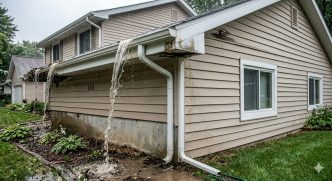
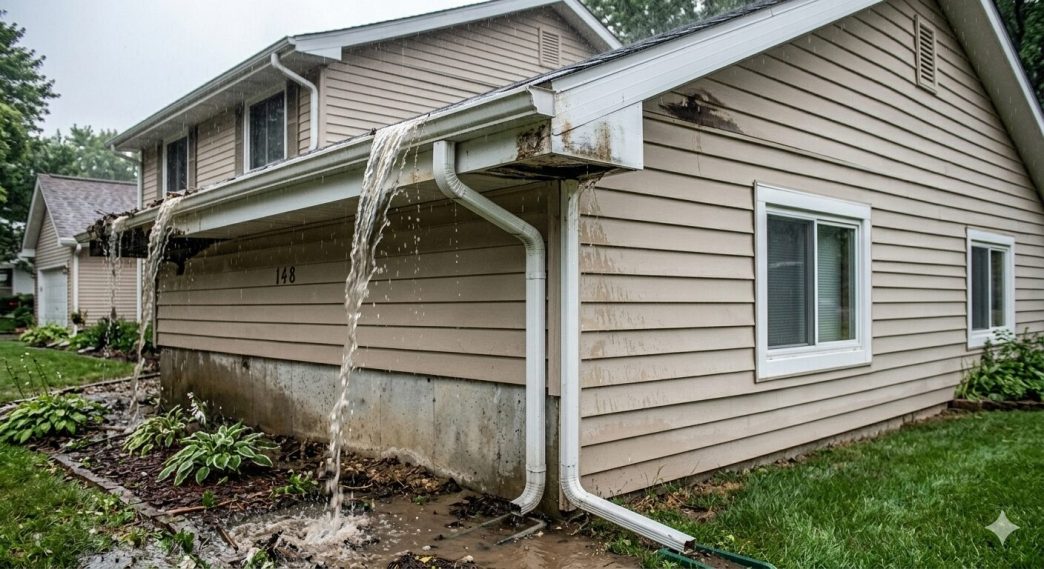
When homeowners notice water spilling over the edges of their gutters during a storm, they may assume the primary concern is the damage it will cause to the roofline, and while overflowing gutters can certainly affect that area, the consequences frequently extend beyond the roof. Water that isn’t properly channeled away can impact multiple parts of the property, leading to a variety of costly, but preventable, problems. Because gutters are designed to control rainwater, any overflow should be viewed as a warning sign that the system may not be functioning as intended.
Why Gutters Overflow
There are several conditions that can cause gutters to overflow during rainfall:
- Leaves and other debris blocking water flow
- Clogged downspouts
- Improper gutter pitch
- Undersized gutter systems
- Damaged or sagging sections
Regardless of the reason, the result is the same: water escapes the drainage system and flows where it was never meant to go.
Roof Edge Damage
The first area typically affected by overflowing gutters is the roof edge itself. Water spilling over can repeatedly saturate fascia, soffits, and other roofing components, and this continual exposure can contribute to:
- Wood rot
- Mold or mildew growth
- Damaged materials
- Premature roof wear
- Interior water infiltration
Over time, damage can extend beyond the gutters and roof edge, necessitating repairs for portions of the roofing system and attic.
Siding and Exterior Surface Problems
When water pours over gutter edges, it often runs directly down the home’s exterior walls and when this happens consistently, can gradually damage siding materials and finishes. This can lead to:
- Bubbling or peeling paint
- Water stains
- Mold and mildew growth
- Deteriorating wood
- Premature aging of siding
Even durable exterior materials can suffer when they are constantly subjected to moisture.
Foundation Risks Increase
One of the most serious and costly consequences of overflowing gutters occurs at ground level. Water that falls directly next to the home can pool near the foundation instead of being safely directed away through downspouts. This can eventually result in:
- Soil erosion
- Foundation settlement and shifting
- Walls cracking
- Moisture in basements or crawl spaces
Because these issues often develop slowly, homeowners may not immediately connect them to gutter overflow.
Landscaping Can Be Affected
Overflowing gutters can send large amounts of water to specific areas of the yard, and this runoff may damage landscaping features. Some common effects of this include:
- Washed away mulch
- Damaged shrubs, plants, or flower beds
- Exposed roots
- Soil displacement
- Lawn divots or trenches
- Deterioration of retaining walls, patios, and walkways
The result can be destruction of both the function and appearance of carefully curated outdoor areas.
Pests Thrive in Wet Conditions
Overflow can lead to standing water, creating an environment that attracts insects and other pests. Mosquitos, in particular, are drawn to areas where water collects after storms. Additionally, clogged gutters often contain debris that serves as nesting material for birds and insects.
Water Management Protects the Entire Home
Overflowing gutters may be dismissed as a nuisance, but they are frequently evidence of a larger issue. The damage caused rarely stops at the roofline – it affects siding, landscaping, foundations, and other critical components of a property. Recognizing overflow as an early warning sign allows homeowners to address problems before they escalate into more extensive and expensive repairs.