Memory loss rarely shows up as one dramatic moment. It often starts during ordinary routines. The Centers for Disease Control and Prevention notes that by 2060, nearly 14 million older adults are projected to have Alzheimer’s disease in the United States. For many families, the first signs are easy to dismiss. If you tell your mother something in the morning, she might not remember it by lunchtime. At first, people laugh it off because everyone forgets things sometimes. But with dementia, the same patterns repeat again and again, and daily life starts feeling less predictable. When that happens, it may be time to talk with a senior care agency.
Visiting Angels and routine-based in-home memory care
In-home memory care works best when it is built around routine, calm communication, and safety. Visiting Angels supports families with in-home senior care that can start small and adjust as needs change. Some families need a few hours a week for companionship and structure, while others need daily support with personal care routines, mealtimes, and supervision. As dementia progresses, care can expand to include respite visits, overnight support, or extended coverage when safety requires it. Visiting Angels offers comprehensive dementia care services in Great Falls, VA, with flexible schedules that help families manage errands and other responsibilities with greater peace of mind.
A good in-home plan focuses on consistency. Familiar faces, steady timing, and predictable cues often reduce confusion and resistance. Families also benefit from clear communication about what’s working, what’s changing, and what needs attention next. That shared plan is often what makes dementia care feel manageable again.
Burden point 1: constant safety worry and wandering risk
One of the hardest parts of dementia is the feeling that you can’t “turn off” your brain. Families worry about what might happen when a loved one is alone falls, wandering, kitchen accidents, or leaving doors unlocked.
Common safety risks include:
- Wandering or exit-seeking (especially during agitation or late-day confusion)
- Bathroom falls during toileting or bathing
- Kitchen risks such as leaving the stove on
- Nighttime confusion and unsafe movement in the dark
In-home memory care reduces this burden by adding supervision and safer routines. A caregiver can redirect a person who is restless, support safer bathroom routines, and provide calm presence during periods when anxiety tends to rise. Caregivers can also reinforce practical safety habits, such as improved lighting, clear walkways, and keeping frequently used items in consistent locations.
Families often feel immediate relief when they know someone is present to prevent small incidents that can quickly become emergencies.
Burden point 2: daily living tasks become harder
Dementia doesn’t only affect memory. It often affects sequencing, judgment, and motivation. Tasks that used to be automatic can become confusing or exhausting.
In-home memory care can support:
- Bathing and grooming with dignity and patience
- Dressing support when steps become confusing
- Toileting routines and incontinence care when needed
- Meal routines and hydration reminders to reduce weakness and confusion
- Non-clinical medication reminders to support consistency
Families often struggle most with personal care tasks because they can trigger resistance or embarrassment. A trained caregiver can use calm cueing and routine-based steps rather than rushing. This often prevents the cycle of “argument → refusal → family stress → worsening behavior.”
The result is a more stable day. Seniors are cleaner, more comfortable, better hydrated, and less likely to become agitated from hunger, fatigue, or discomfort—issues that families may not recognize quickly when they’re stretched thin.
Burden point 3: dementia behaviors and emotional strain
Behavior changes are often the part families find most emotionally draining. You may be caring for the same person, but the way they respond can feel different. Some seniors become anxious, suspicious, or easily frustrated. Others become withdrawn. Late-day confusion and “sundowning” can disrupt the entire household.
The National Institute on Aging recommends approaches that focus on routine, reducing noise and clutter, and responding calmly during agitation or sundowning. When hallucinations, delusions, or paranoia appear, NIA also recommends staying calm, avoiding arguments, and using reassurance and redirection.
In-home memory care helps families manage behaviors by:
- Reducing triggers (overstimulation, rushed routines, confusing environments)
- Using calm cueing (one-step prompts, gentle reminders, consistent language)
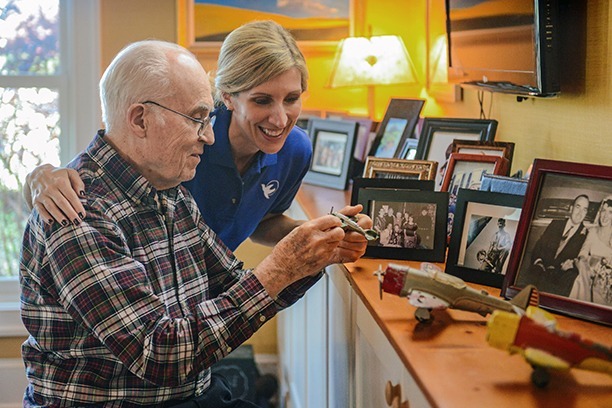
- Redirecting early (music, simple tasks, snacks, a short walk, familiar photos)
- Building predictable structure so the day feels safer
Caregivers can also document patterns, what time behaviors happen, what triggers them, and what calms things down. That information is valuable for family members and clinicians.
Most importantly, families stop feeling like they’re “doing everything wrong.” Dementia behaviors are not a parenting problem. They are often a stress response to confusion, fear, discomfort, or fatigue.
Burden point 4: caregiver burnout and relationship stress
Dementia caregiving can become 24/7 even when families don’t intend it to. You may be monitoring phone calls, checking cameras, driving over for emergencies, or losing sleep because your loved one is awake at night. Over time, burnout becomes inevitable.
Burnout often looks like:
- sleep loss and constant worry
- irritability, guilt, or emotional numbness
- missed work or reduced focus
- conflict between siblings about responsibilities
- health decline in the caregiver
In-home memory care eases burnout in a simple way: it gives family caregivers predictable breaks. Respite visits allow you to rest, work, attend appointments, or simply recover. Even a few hours per week can shift the household from “survival mode” to a plan that’s sustainable.
Another hidden benefit is relationship repair. When professionals handle the hardest tasks—bathing resistance, toileting support, repetitive reassurance, family members often get to be sons, daughters, and spouses again, not just task managers.
What a typical in-home memory care day can look like
Every care plan is different, but families often find it helpful to picture what support looks like.
A typical day might include:
- Morning routine: hygiene support, dressing cues, breakfast and hydration
- Mid-morning engagement: music, short walks (if safe), simple household tasks like folding towels
- Lunch routine: meal support, hydration reminders, calm conversation
- Afternoon structure: rest time, light activity, preventing boredom-related agitation
- Evening routine: dinner support, reduced stimulation, calming environment, bedtime cues
- Safety check-ins: bathroom support, fall prevention habits, reassurance during confusion
The goal is not to “keep someone busy.” It is to create a rhythm that reduces confusion and helps the senior feel safe and grounded.
When to start in-home memory care and how to begin
Families often wait until a crisis wandering, a fall, or a hospital visit. In reality, earlier support is usually easier to accept and easier to manage.
Consider starting when you notice:
- repeated safety scares or wandering risk
- missed meals, weight loss, dehydration
- increasing confusion with daily tasks
- agitation or sundowning that disrupts the home
- family caregiver exhaustion or sleep loss
A practical way to begin is to start with the hardest time of day. For many families, that’s mornings (bathing and dressing) or evenings (fatigue and agitation). Begin with a small schedule, then adjust based on what you learn.
Questions to ask any provider:
- How do you train caregivers for dementia behaviors?
- How do you match caregivers for personality and routine fit?
- What happens if a caregiver is unavailable?
- How do you communicate updates to family?
- How do you adjust care as needs change?
Conclusion
In-home memory care eases the burden on families by reducing the biggest pressure points: constant safety worry, difficult daily routines, behavior changes, and caregiver burnout. With steady routines, calm cueing, and consistent supervision, many seniors can remain safer at home while families regain sleep, time, and peace of mind.
Dementia care is hard, but it doesn’t have to be chaotic. The right in-home support turns “reacting all day” into a plan that feels predictable and manageable, one day at a time.