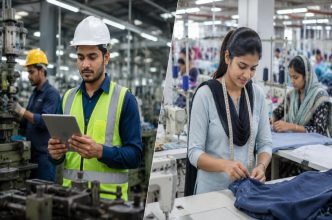
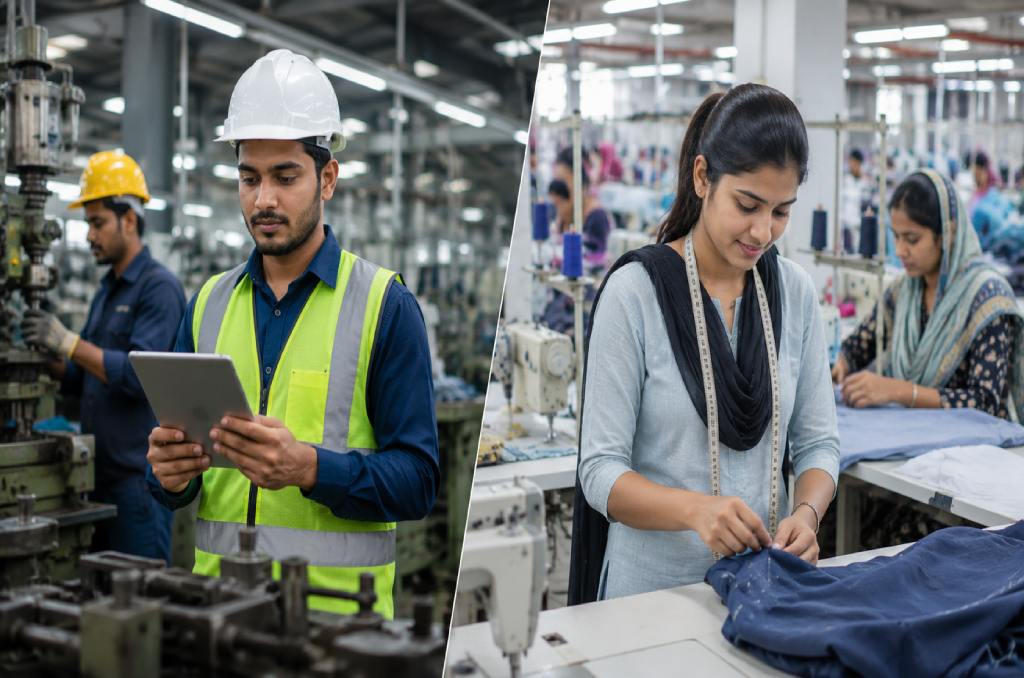
Bangladesh’s RMG and manufacturing sector is the country’s largest private employer, and its career paths go far beyond the factory floor. Professionals move from operator to supervisor to production manager to factory head across a clearly defined ladder. Merchandising, quality assurance, industrial engineering, compliance, and sustainability are all growing tracks with strong salary ceilings. A merchandiser starts at BDT 15,000 per month and can earn over BDT 3,00,000 at the senior level, according to The Business Standard. Every verified textile jobs in bangladesh listing on nextjobz reflects the full career range, from entry-level trainee to factory manager.
Why Manufacturing and Apparel Careers in Bangladesh Are Underestimated
Bangladesh’s RMG sector generates over USD 38 billion in annual exports and employs more than four million workers. Yet most university graduates overlook it because they associate it with factory floor labor. The professional career tracks in this sector tell a very different story.
As Nobojobs’ 2026 hiring guide confirms, rising compliance standards and sustainability initiatives are creating new roles in quality assurance, safety management, and ESG reporting inside the RMG and manufacturing sector.
These are graduate-level, office-based, and well-paying positions that most candidates never think to apply for.
The sector also promotes fast. A graduate who enters as a trainee industrial engineer with the right skills can reach the production manager level within five to seven years and the factory manager level within ten.
The Main Career Tracks in Bangladesh’s Manufacturing and Apparel Industry
The five main professional career tracks in Bangladesh’s manufacturing and apparel sector are production and operations, merchandising, quality assurance and compliance, industrial engineering, and sustainability and ESG. Each one has a distinct entry point and a clear promotion ladder.
| Career Track | Entry Role | Senior Role | Salary Range (BDT/Month) |
| Production and operations | Trainee supervisor or junior production officer | Factory manager or VP production | 18,000 to 2,50,000 and above |
| Merchandising | Junior merchandiser or merchandising assistant | Senior merchandiser or head of merchandising | 15,000 to 3,00,000 and above |
| Quality assurance and compliance | Quality inspector or QC officer | QA manager or compliance director | 20,000 to 2,00,000 |
| Industrial engineering | IE trainee or junior IE officer | IE manager or planning head | 25,000 to 2,00,000 |
| Sustainability and ESG | Sustainability coordinator | Head of sustainability or ESG director | 40,000 to 2,50,000 |
Production and Operations: The Core Career Ladder
The production career path in Bangladesh’s garment industry follows the clearest progression in the sector. It starts on the floor and ends in the boardroom for the strongest performers.
As confirmed by Nobojobs’ 2026 manufacturing career analysis, the standard growth path is Operator to Supervisor to IE and Planner to Production Manager to Factory Manager. Each step requires demonstrating results at the level below, not just years of experience.
The fastest movers in this track combine hands-on floor knowledge with strong data skills. Factory managers who can analyze production efficiency metrics and present them to buying house representatives or multinational compliance teams earn significantly more than those who manage floor operations alone.
Merchandising: The Commercial Side of Apparel
Merchandising connects the factory to the buyer. A merchandiser manages orders from sample development through production to shipment, making it one of the most commercially important roles in any export-oriented garment company in Bangladesh.
A merchandising career is one of the fastest ways to build deep knowledge of the RMG value chain.
You learn production, costing, compliance, and buyer communication all in one role. The entry barrier is low and the ceiling is high.
Courses in apparel merchandising are available through NITER, the National Institute of Textile Engineering and Research in Bangladesh, which offers programs specifically designed to prepare graduates for this career path.
The New Tracks Growing Fast in 2026: Compliance and Sustainability
International buyers now require Bangladesh garment factories to meet strict labor, environmental, and social compliance standards. That requirement has created an entirely new category of professional roles that barely existed five years ago.
- Sustainability coordinators manage factory energy audits, carbon footprint reporting, and green building certifications like LEED and EDGE
- Compliance officers ensure factories meet buyer codes of conduct, local labor law, and international standards like SA8000 and WRAP
- ESG report writers prepare annual sustainability disclosures for multinational buyers and international development finance institutions
- Safety and fire officers manage ACCORD and ALLIANCE remediation follow-up and ongoing factory safety systems
These roles pay well and are in short supply. A compliance manager with three years of experience at a certified factory in Dhaka earns BDT 60,000 to 1,20,000 per month based on current 2026 job circular data.
Final Thoughts
Bangladesh’s manufacturing and apparel industry offers career paths that most job seekers overlook. The sector promotes fast, pays well at senior level, and is adding new graduate-friendly roles in sustainability and compliance every year.
The career you want in this sector exists. Whether you are an engineer who wants to specialize in industrial efficiency, a business graduate who wants to manage international buyer relationships in merchandising, or a fresh graduate who wants to build toward factory management, the path is there and it is documented.
Start with a clear picture of which track fits your background. Then target the entry role on that track and build from there.