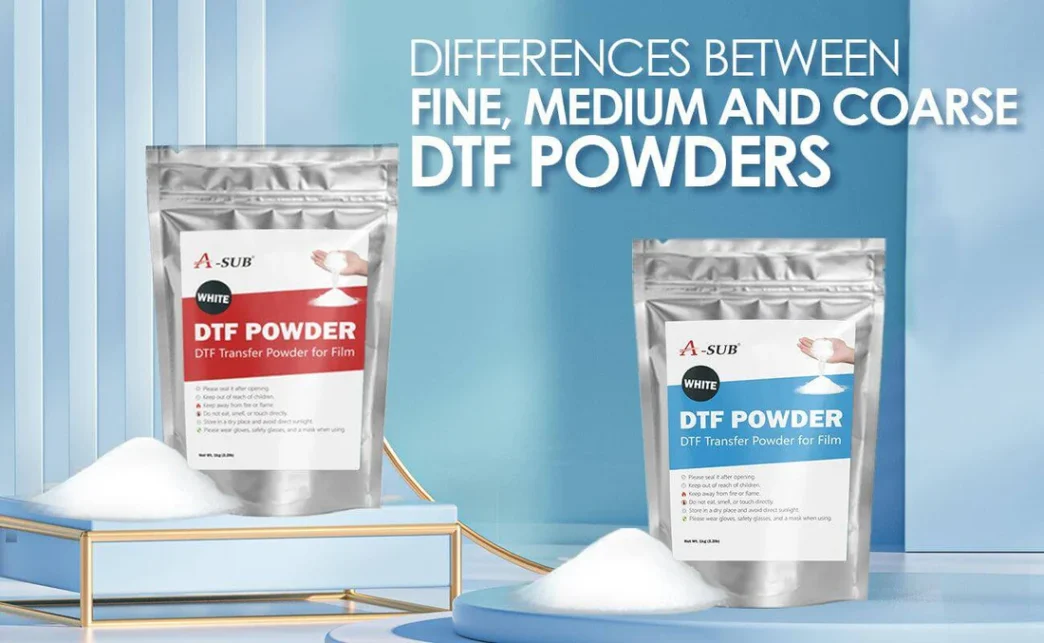
Among the fastest-growing printing techniques for making high-quality custom apparel and textile products is Direct-to-Film (DFT) printing. Although the importance of the printers, inks, and transfer films is most emphasized, the DTF powder is also crucial for the production of vibrant, durable, and long-lasting prints. The DTF powder is crucial for the quality, flexibility, and durability of the final product; it acts as the glue that holds the printed design to the fabric.
When you’re new to DTF printing or just trying to get better at creating your prints, knowing the various types of DTF powder can help you decide which one to use for your work. Every type has its use for particular situations, so you must choose the right powder for your printing requirements.
What Is DTF Powder?
Powder that is finely ground thermoplastic adhesive used on newly printed PET transfer film is called DTF powder or hot melt adhesive powder. After excluding the excess powder, the coated film is heat-treated to heat-cure the film. In the heat transfer process, the glue will melt and fuse the design to the fabric on a permanent basis.
The quality of the powder affects wash durability, extensibility, softness, and printability.
- Fine DTF Powder
Fine DTF powder allows for a smooth finish and excellent detail reproduction, made up of small adhesive particles. Due to its fine particle size, it is ideal for detailed graphics, thin lines, and intricate artwork.
Advantages
- A smooth and soft finish is desired.
- Ideal for details
- Lightly textured clothing
- Professional appearance
Best Applications
- Small text
- Detailed logos
- Photographic designs
- Fashion apparel
Fine powder should be used with care as it may become cloudy if used too much.
- Medium DTF Powder
Medium DTF powder is the most versatile and is used by both novice and professional print shops. It provides optimum adhesion, durability, and application.
Medium powder is popular in many businesses due to its versatility in use across different fabrics and design styles.
Advantages
- Strong adhesion
- Reliable durability
- Easy to apply
- Able to be produced on-site for daily use.
- Acceptable for on-site manufacture.
Best Applications
- Custom T-shirts
- Hoodies
- Tote bags
- Promotional apparel
- General-purpose printing
Most companies use medium DTF powder as it gives a stable result.
- Coarse DTF Powder
Coarse DTF powder has larger adhesive particles, resulting in a stronger bond, particularly on thicker or textured fabrics. It can also be slightly heavier to handle, but it can be very durable for heavy-duty use.
Advantages
- Strong adhesive performance
- Excellent wash resistance
- More control over non-slip surfaces.Greater control of slippery surfaces.
- Ideal for heavy clothing.
Best Applications
- Sweatshirts
- Jackets
- Workwear
- Denim
- Heavy cotton fabrics
For durable work clothing, coarse powder is generally preferred since it has better bonding characteristics.
- WhitE DTF Powder
The most common type of DTF powder is white DTF powder, which can be used for almost all transfer designs. After curing, it becomes transparent in the heat transfer process and does not impede colors, while still providing excellent adhesion.
Advantages
- Universal compatibility
- Excellent color performance
- Easy to use
- Widely available
Best Applications
- Everyday garment printing
- Sportswear
- Fashion apparel
- Promotional products
With its versatility, white DTF powder is the preferred choice in most production environments.
- Black DTF Powder
Black DTF powder is specially formulated for use on dark colored items where covering transfer edges and edge visibility may be a concern. It is less common than white powder, but can be used for beauty in some print applications.
Advantages
- Gentle and suitable for dark-colored fabrics
- Can blend transfer edges
- Strong adhesive properties
Best Applications
- Black garments
- Dark hoodies
- Premium fashion products
Before choosing black adhesive powder, users are advised to check the compatibility in the printing process.
- Low-Temperature DTF Powder
Some manufacturers also make low-temperature DTF powder that can be cured at lower temperatures. This reduces damage from excessive heat, which is beneficial for fabrics that can be shrunk or damaged at higher temperatures.
Advantages
- Lower curing temperatures
- Reduced fabric stress
- The new unit is more compatible with heat-sensitive materials.
Best Applications
- Lightweight polyester
- Performance fabrics
- Delicate textiles
Please use the manufacturer’s recommended curing settings for best results.
When selecting the DTF powder, some factors should be taken into account.
There are several key factors to consider when choosing a powder.
Fabric Type
Some fabrics take to adhesive powders better than others. Different grades of cotton, polyester, blended fabrics, and heavy fabrics can have different performance characteristics.
Design Complexity
Fine powder: fine details work best.Medium or coarse powder: large graphics on thicker fabrics are better.
Durability Requirement
Powders that are expected to be used a lot and washed often should be tested and proven to be good at washing and adhering.
Production Speed
Some powders cure more quickly than others, which can improve the workflow for commercial production.
Storage Conditions
It is recommended to always store DTF powder in a cool, dry place. It can become moist and lose its adhesive qualities over time, which can cause poor print quality.
Some helpful hints on getting the best results.
The key to DTF printing is to apply it consistently. Don’t clean the excess powder before the curing process to get even finishes. Ensure that the correct curing temperatures and times are used, in accordance with powder manufacturers’ recommendations, and test new brands of powder regularly before putting them into customer orders, Learn more.
When the correct and high-quality powder is used with premium inks, heat press equipment, and PET film, print consistency and durability will greatly improve.
Whether you’re comparing adhesive powders, evaluating product specifications, or seeking expert advice on choosing the right product for your workflow, explore the industry’s resources for detailed side-by-side comparisons, technical tips, and creative printing strategies.
Conclusion
DTF powder is one of the key materials in the DTF printing process. Visit https://www.dtflinko.com for more details. Depending on the fabric, design, and production needs, each type of powder delivers a different set of benefits, from fine to medium, coarse to white to black, and low-temperature powder.
Knowing these differences can help businesses and hobbyists create increased adhesion, durability, and finished products. With the right DTF powder and application methods, vibrant, professional transfers can be produced that resist repeated wear and washing and meet customer expectations.