
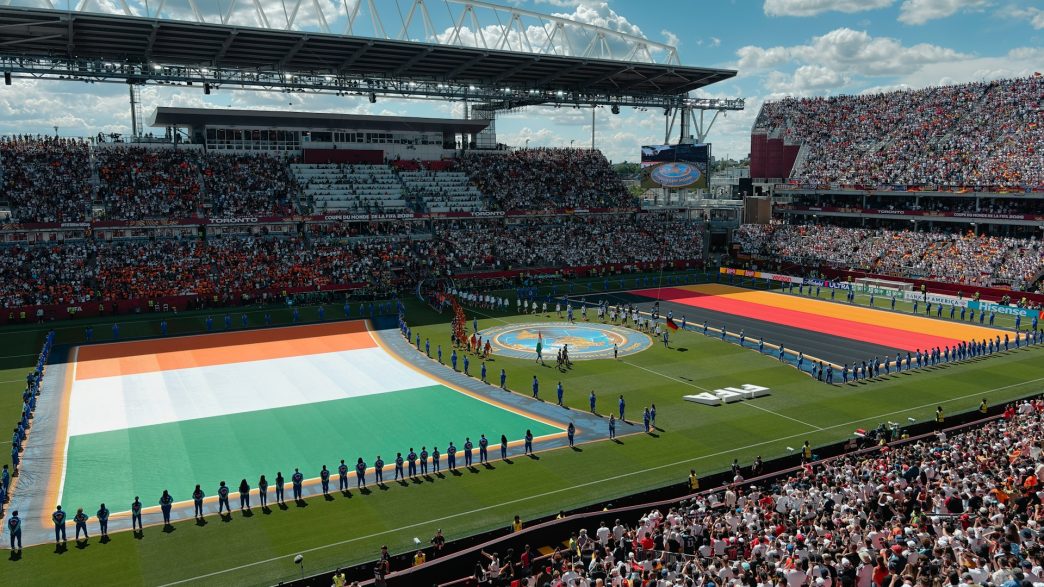
The FIFA World Cup is much more than a football festival. Qatar 2022 reached approximately five billion people, and its final reached approximately 1.5 billion viewers. The attention generates a second economy: the online betting market, where odds, payments, data, and regulation convert that interest into taxable activity.
The issue is not whether there is betting in the government, but whether it can be formalized into finance. Gambling tax revenues, jobs, advertising, gambling software investments, and payment innovation all come when betting is done through licensed platforms. The World Cup brings that activity into what’s measurable.
The multi-billion-dollar engine: Betting’s direct financial contributions
Gross Gaming Revenue (GGR) is the amount that sportsbooks make after paying out. Governments tax the margin and regulate operators by licensing and monitoring. The World Cup 2022 betting was estimated to be more than US$35 billion, while projections for the 2026 World Cup exceed US$50 billion, according to Macquarie, with H2 Gambling Capital estimating up to US$60 billion through regulated channels alone, a 42% surge driven by the expanded 48-team format generating 104 matches. Football bettors can see how every match is turned into a data-driven monetary product when they check the World Cup after comparing the odds.
The industry has odds traders, risk managers, developers, cybersecurity experts, customer support and compliance officers, and marketers. In established markets, those jobs fall under a larger sports betting business that encompasses cloud hosting, identity verification, payment gateways, and sports data providers.
Case studies in economic evolution: From London to Lagos
Various countries do this in different ways. The best candidates feature legal transparency, digital capability, and genuine consumer safeguards.
- The UK model: A mature, regulated market
Britain demonstrates the formalisation of a betting culture. The Gambling Commission licenses operators, and HMRC collects duties from gambling, general betting, and remote gaming. The UK Gambling Commission reported a total industry Gross Gambling Yield (GGY) of £16.8 billion for the year to March 2025, a 7.3% increase year-on-year, driven largely by online gambling, which reached £7.8 billion, underlining the scale of a mature, regulated market.
Sponsorship, affiliate media, stadium advertising, and broadcast partnerships are all indicators of the sector’s presence. Those flows are useful for clubs and for publishers; the UK’s 2025 statutory levy indicates that public health costs need to be paid for, too.
- The US gold rush: The post-2018 legislative boom
After PASPA was overturned in 2018, the Supreme Court paved the way for sports betting to be legalised in the United States. In 2024, US legal sports betting operators generated a record US$13.71 billion in Gross Gaming Revenue, a 25.4% increase over 2023, with bets totalling US$147.91 billion, 95% placed online, across 38 states plus Washington D.C.
The big case is New York. New York, which launched mobile sports betting in January 2022, became the largest US market in its very first year: US$16.2 billion was wagered, and the state collected US$693 million in tax revenue, allocated primarily to public education, establishing the blueprint for policy-driven market creation.
- Africa’s mobile-first revolution: The case of Kenya and Nigeria
In Africa, the growth in betting is related to the adoption of smartphones and fintech. In Kenya, the tax authority became integrated with betting companies, allowing them to monitor stakes and winnings daily. In the 2024/2025 fiscal year, the Kenya Revenue Authority (KRA) collected KSh 13.233 billion in excise duty on betting services, 117.2% of its target, plus KSh 5.70 billion in betting tax, reflecting the impact of its real-time tax-at-source integration with operators.
Nigeria exhibits the same mobile-first trend on a macro level. With the backing of mobile money platforms and bank transfer rails, sports betting has become the most popular form of online gambling. By the end of 2025, Nigeria’s online gambling GGR was estimated at US$3.63 billion, a 24% year-on-year increase, cementing its position as Africa’s largest sports betting market, powered by a fintech ecosystem including Paystack, Flutterwave, and OPay.
The ripple effect: Sponsorship, media, and technology investment
Betting companies rarely work alone. They purchase media, sponsor clubs, invest in official data, and take anti-fraud measures. This translates to the need for analytics, cybersecurity, cloud infrastructure, app design, and secure payments. The online betting market can provide an environment for high-volume and low-latency financial systems for tech economies.
How the World Cup acts as an economic steroid
The World Cup brings in casual fans who don’t necessarily watch leagues weekly. In four to six weeks, operators ramp up promotions, broadcasters pull in big bucks in premium ads, payment companies handle the upsurge, and governments collect taxes from the heightened activity. It is not a growth model that lasts forever, but it is a growth model that speeds up the acquisition process and is a test of whether a country’s digital finance rails can deal with scale.
Balancing the books: The crucial role of regulation
While betting can help finance sports and public revenues, there are risks of addiction, debt, and underage gambling. This means they must be licensed, affordable, have self-exclusion tools, age verification, ring-fenced treatment funding, and advertising limits. What the World Cup has taught us is that in the absence of technology, taxation, and responsibility, betting won’t help economies grow.