The travel industry runs on experience. A delayed notification, a broken booking flow, or a map that fails to load at the wrong moment does not just frustrate users. It loses them. That is why travel businesses investing in mobile products cannot afford to treat app development as a commodity purchase.
Finding the right development partner for a travel app is harder than it looks. The technical requirements are demanding, the user expectations are high, and the margin for error is narrow. Most development firms can build an app. Far fewer understand what it takes to build one that performs under the specific conditions travel apps operate in.
This guide breaks down what separates strong travel app development partners from average ones, what to look for when evaluating Dallas firms specifically, and what warning signs to watch for before you commit to anyone.
Why Dallas Companies Are Leading Travel App Development
Dallas has positioned itself as a serious contender in the national tech landscape, with deep industry connections across logistics, aviation, and hospitality that make it a natural home for complex, data-intensive mobile products.
For businesses choosing a mobile app development company in Dallas, the city’s ecosystem offers advantages that go well beyond geography.
An Ecosystem Built Around High-Stakes Products
Dallas development firms have historically served clients where failure has real consequences, including healthcare, financial services, and logistics. That culture carries over directly into how teams approach travel app projects.
Reliability, uptime, and performance under load are treated as baseline requirements rather than premium features, which means you are working with teams that are already calibrated for the stakes your product demands.
Access to Integrated Skill Sets
Travel apps require backend engineers who understand API architecture, front-end developers who can build fluid, responsive interfaces, and UX designers who understand how people interact with products in transit.
Dallas firms competing in a deep talent market have had to build teams with all three capabilities working in parallel rather than relying on narrow specializations passed between handoff stages.
Cost Efficiency Without Capability Tradeoffs
Compared to development firms in San Francisco, New York, or Seattle, Dallas teams offer lower rates meaningfully without the communication gaps that come with fully offshore models.
For travel businesses that need iterative development, frequent releases, and close collaboration, that combination of cost and real-time proximity is genuinely difficult to find in any other major market.
What Makes a Development Company the Right Fit for Travel Apps
Not every firm that has built a mobile app is equipped to build a travel app well. The category has specific technical and product demands that require both depth of experience and a particular approach to architecture. When you evaluate potential partners, the question is not just whether they can build. It is whether they have built the right things.
Travel app developers worth shortlisting should demonstrate clear, verifiable experience with the following:
Real-Time Data Handling
Travel apps live or die on the accuracy and speed of real-time information. Flight status updates, dynamic pricing, live availability, and location-based triggers all require backend architecture that can handle high-frequency data without degrading performance. Ask specifically how a firm has approached real-time data in past projects and what infrastructure decisions they made to support it.
Third-Party API Integration Experience
Most travel apps connect to multiple external systems simultaneously, including GDS platforms, payment gateways, mapping services, identity verification providers, and booking engines. Firms with strong integration experience will have documented processes for managing API failures, rate limits, and version changes without causing downstream breakages in the product.
Offline Functionality
Users interact with travel apps in airports, on planes, in areas with poor connectivity, and across international networks with unpredictable performance. A firm that has thought carefully about offline states, data caching, and graceful degradation has built products for real travel conditions. One that has not will deliver a product that fails exactly when users need it most.
Localization and Multi-Currency Support
Travel products frequently serve users across multiple regions, languages, and currencies. Building for localization from the start is fundamentally different from bolting it on later. Firms with genuine experience here will talk about it early in the conversation, not as an add-on capability.
Security and Compliance Literacy
Travel apps handle sensitive personal data, payment information, and in some cases passport and identity details. A development partner needs to demonstrate clear understanding of data protection requirements, PCI compliance where relevant, and how security is built into the product architecture rather than applied as a patch after launch.
How to Evaluate a Dallas Firm’s Travel App Expertise
Knowing what to look for is the first step. Knowing how to verify it during the evaluation process is where most buyers fall short. These are the approaches that consistently separate genuine expertise from well-packaged claims.
Review Live Products, Not Just Case Studies
Ask to see apps that are currently live in app stores. Download them. Use them. A case study can be written to highlight anything. A live product tells you immediately whether the team can ship something that works at a standard real users accept.
Ask for Architecture Walkthroughs
Request a technical conversation where a senior engineer from the firm walks you through how they have structured a past travel app’s backend. How they handle caching, API orchestration, and failure states tells you more about their actual capability than any portfolio page.
Probe Their Discovery Process
Strong firms invest time before they write a line of code. They conduct user research, map integration dependencies, stress-test assumptions about scope, and identify technical risks early. Ask what their discovery phase produces and what decisions it informs. A firm that skips straight to estimates is not doing discovery. They are doing sales.
Validate Domain Knowledge Directly
Ask the team about travel industry-specific challenges without prompting them. Do they bring up GDS complexity unprompted? Do they ask about offline states? Do they raise the question of localization before you do? Firms with real travel app experience have opinions about these things before you ask.
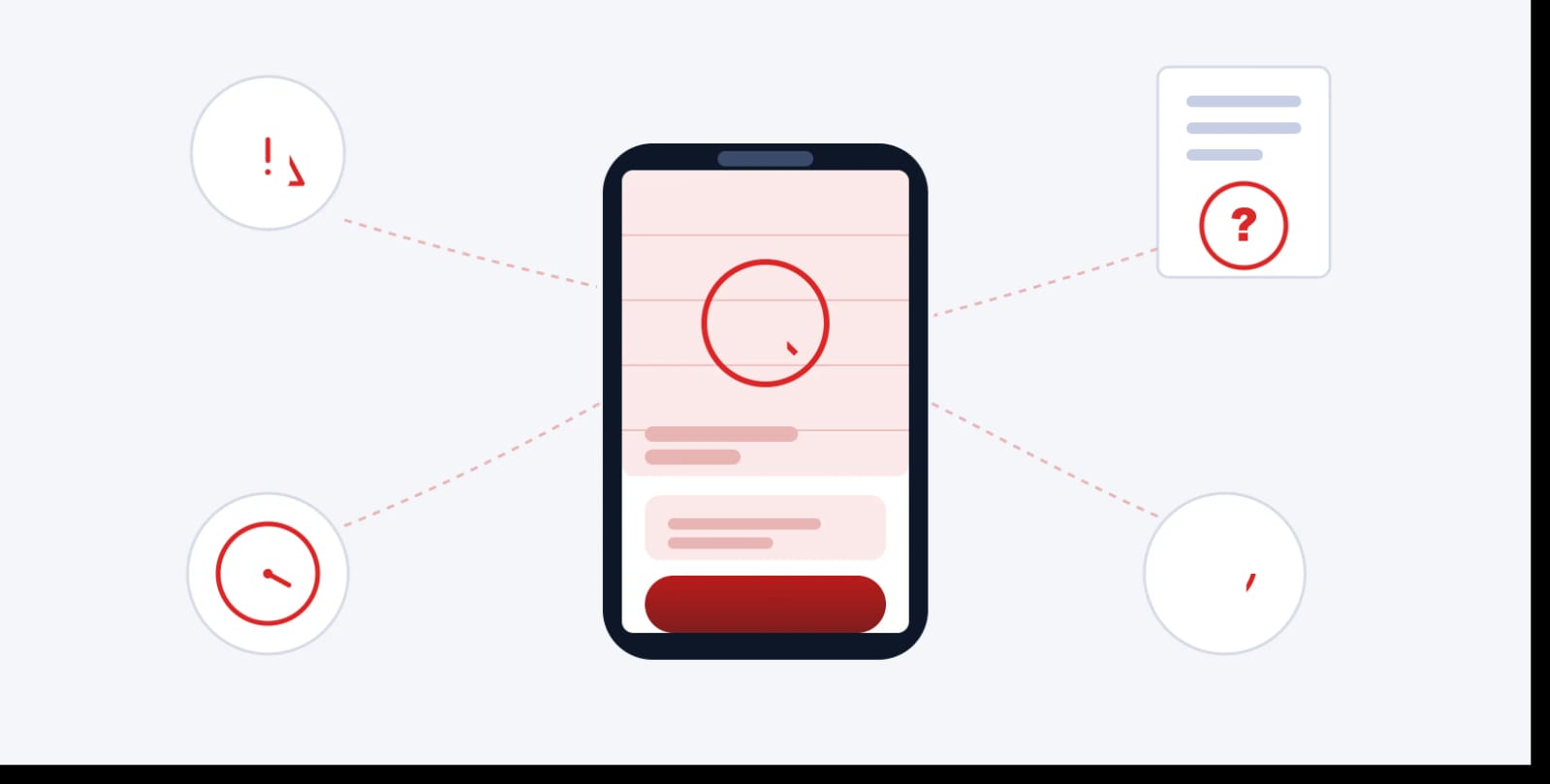
Red Flags When Hiring for a Travel App Project
Travel app projects have a higher failure rate than most mobile categories because the technical complexity is underestimated at the start and the user expectations are unforgiving at the end. These are the signals that tell you a firm is not equipped for the category before you find out the hard way.
They Have Never Built in the Travel Vertical
General mobile experience is not a substitute for travel-specific experience. The integration landscape, the real-time data requirements, and the offline use cases are specific enough that a firm encountering them for the first time on your project will be learning on your budget. Relevant adjacent experience in logistics or hospitality can bridge some of that gap, but direct travel experience matters.
Their Portfolio Shows Only Simple Consumer Apps
If every project in a firm’s portfolio is a straightforward consumer app with basic CRUD functionality, they have not operated at the complexity level your travel product requires. Look for evidence of projects with multiple third-party dependencies, high concurrent user loads, or cross-platform requirements.
They Cannot Explain Their Testing Process for Edge Cases
Travel apps fail in edge cases: expired sessions mid-booking, payment gateway timeouts, geolocation failures, and network drops during critical flows. Ask directly how the firm tests for these scenarios. A team that cannot answer specifically has not built products where edge cases have real consequences.
They Underestimate the Integration Timeline
Third-party integrations in travel are consistently where timelines break down. A firm that gives you a confident fixed estimate without conducting a thorough integration audit first is either inexperienced or optimistic in a way that will cost you. Realistic partners flag integration risk early and build a buffer into the schedule accordingly.
Conclusion
Travel apps are unforgiving products. Users interact with them at high-stress moments, on unreliable networks, in unfamiliar environments, and with low tolerance for friction. Building one well requires a development partner who has thought carefully about those conditions and has a track record of shipping products that hold up under them.
Dallas offers a strong pool of firms with the technical depth and industry exposure to do this work well. The evaluation framework in this guide gives you the tools to find them. Ask about live products, probe the technical decisions behind past work, validate domain knowledge directly, and take the red flags seriously before you sign anything.
The right partner for a travel app is not the one with the most polished pitch. It is the one whose past work proves they understand what your users will face when the app matters most.