Most healthcare organizations are now participating in some form of value-based care. However, when it comes to defining what success means in practice, the answer becomes unclear. Value-based care success is not defined by a single milestone. Instead, it is a state where patients receive better care, providers make informed decisions, and healthcare costs are better controlled.
The real challenge is not data. Healthcare has plenty of it. The real challenge lies in turning healthcare data into the right action for the right patient at the right time. That is what distinguishes organizations that discuss value-based care from those that provide it.
The Four Pillars Driving Real Results
It depends on four connected capabilities that support and strengthen one another. It is a product of four related capabilities that work in unison, each having a foundation on the other. Each pillar contributes to value-based care success in a specific way.
Predictive Care: Getting Ahead of the Problem
The most effective clinical intervention often happens before a crisis develops. Predictive care involves the use of AI to detect patients who have a high risk of adverse events, readmission, or care gaps in advance.
AI-based systems stratify patient populations by risk level and highlight those who need immediate attention. Care teams cease to respond to emergencies, but instead prevent them. By identifying high-risk patients early, providers can intervene sooner and implement targeted care plans before conditions worsen.
The direct impact:
- Fewer avoidable hospital readmissions
- Earlier identification of high-cost, high-need patients
- Proactive care plans replacing reactive firefighting
Preventive Care: Acting at the Right Moment
Identifying risk has little value unless care teams act on it quickly. Preventive care bridges that divide by integrating real-time notifications directly into provider workflows within the EHR systems that are already utilized by clinicians.
When a patient misses a critical screening, the system flags it during the encounter. When a HEDIS or STAR metric needs attention, the platform guides the clinician through the right next step without switching tools or digging through dashboards. No extra workload. Just smarter workflows.
Results organizations see:
- Improved quality scores without increasing provider burden
- Faster compliance improvements in weeks, not quarters
- Fewer care gaps slip through large patient populations
Personalized Care: Moving Beyond Generic Plans
Generic care plans produce generic results. Every patient has a different clinical history, social situation, and set of risk factors, and their care should reflect that.
Personalized care creates a longitudinal view of each patient by tracking conditions, medications, social determinants, and clinical history. AI models then generate recommendations tailored to each patient’s clinical profile. Physicians see actionable guidance instead of generic checklists. Patients receive outreach that matches their actual health needs. Both are more likely to engage and follow through.
This level of specificity also improves RAF gap closure accuracy and reduces the cognitive burden on physicians, which is critical as burnout remains a major operational challenge.
Participatory Care: Aligning Everyone Around the Patient
Healthcare systems rarely fail because of a single poor decision. They fail when teams, data, and workflows remain disconnected. The value-based care success requires the collaboration of care teams, patients, and health systems working based on the same information with shared objectives.
Participatory care means:
- Clinicians access decision support tools at the point of care
- Care coordinators monitor interventions across entire populations
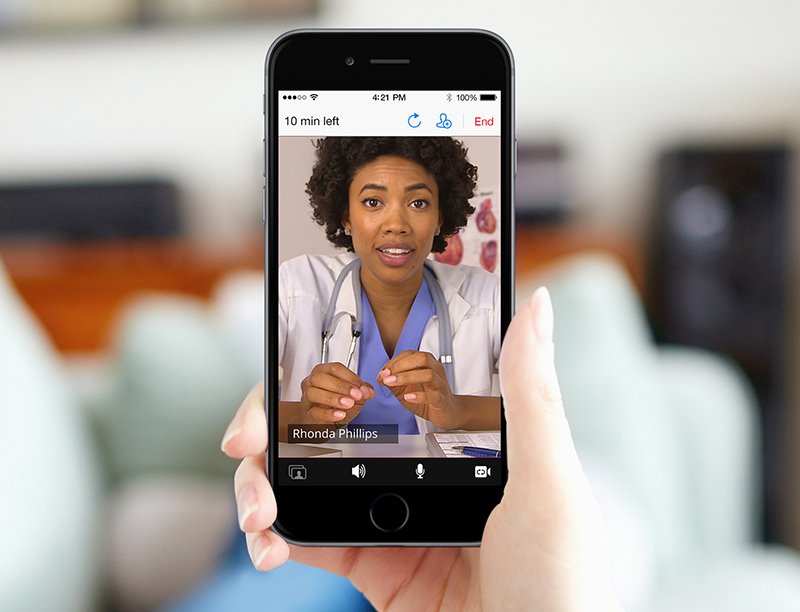
- Patients engage through portals and telehealth connections
- Each interaction feeds new data into the system, improving insights and decision support over time
This continuous feedback loop improves patient adherence, increases satisfaction, and reduces the complexity of managing disconnected systems.
Why These Pillars Only Work Together
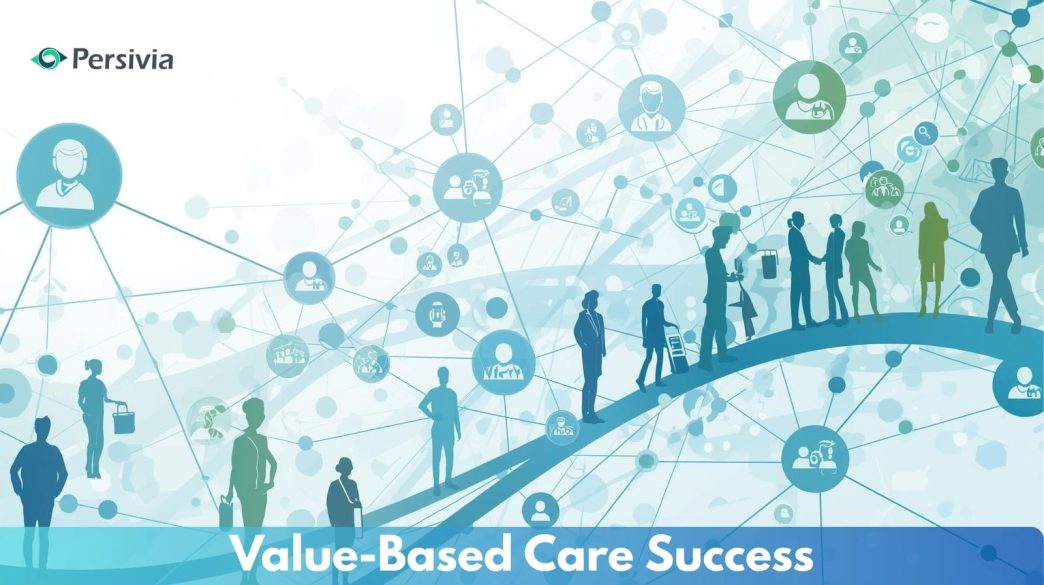
Each pillar is valuable on its own. But the real impact comes when they function as a connected system, not a collection of separate tools. Predictive models inform preventive alerts. Those alerts feed personalized recommendations. And all of it flows through participatory workflows that keep every stakeholder in sync.
The more data the system processes, the more accurate its insights become. Each patient interaction, clinical decision, and outcome helps refine future recommendations. That compounding intelligence is what separates a platform from a tool.
Bottom Line
Value-based care success is measurable, repeatable, and achievable, but only when the right infrastructure is in place. Organizations that are seeing real results aren’t doing more. They’re doing smarter, with systems that connect prediction, prevention, personalization, and participation into one coherent operating model.
Persivia CareSpace® is an AI-first digital health platform built on two decades of solving healthcare’s hardest data problems, drawing on 160M+ patient records to deliver real-time intelligence across all four pillars. CareSpace® integrates bi-directionally with existing EHRs, so organizations deploy what they need without replacing what already works.