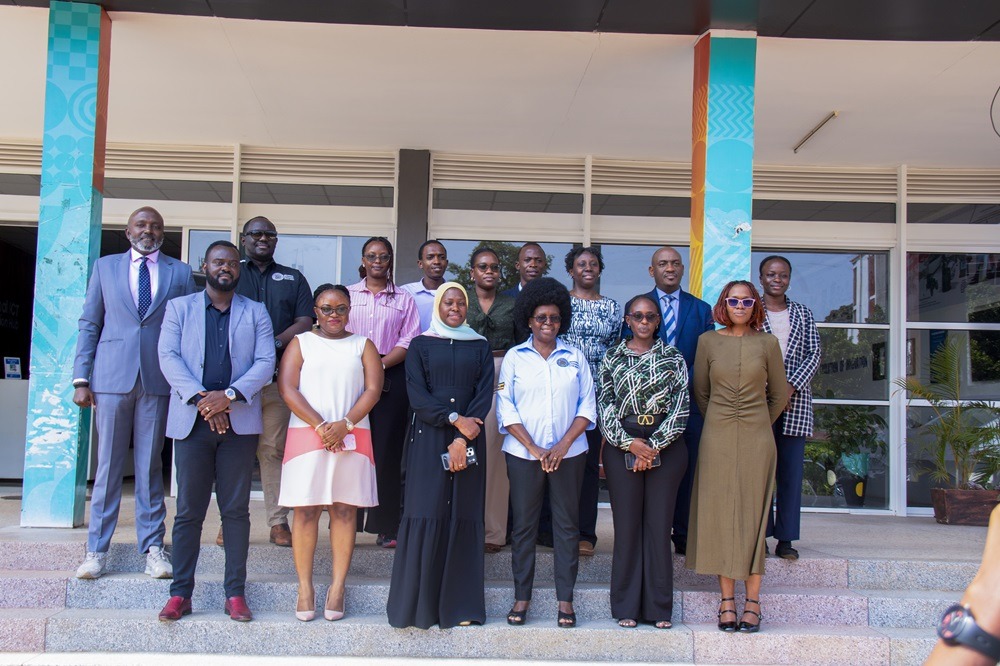
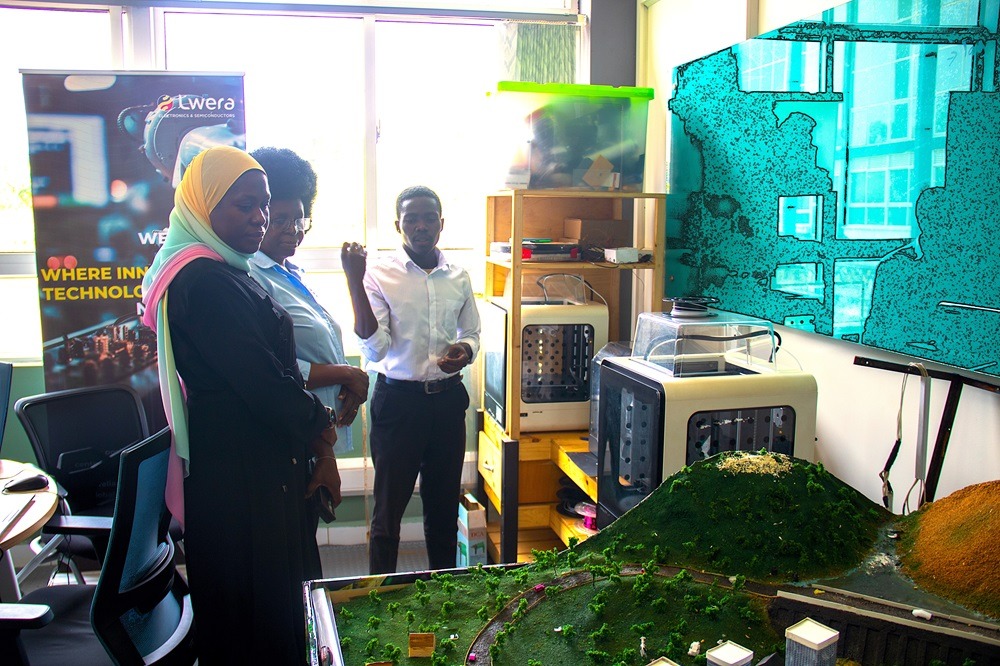
Dr. Aminah Zawedde and Hon. Dr. Monica Musenero, two of Uganda’s most influential figures in science and technology, have signed and activated a collaboration roadmap to ensure that a digitally connected Uganda delivers measurable economic gains. The pair formally signed off on the agreement at a meeting held earlier this week at the National ICT Innovation Hub in Nakawa, declaring the roadmap operational and committing coordinated resources to accelerate digital infrastructure, develop local tech talent, and capture value within the country.
Uganda is, by most measures, increasingly connected. Mobile penetration is rising. Internet access is expanding. Digital payments are threading through markets, schools, and hospitals. But connectivity alone is not wealth. A nation can be online and still be left behind if the devices it uses are made elsewhere, the platforms it depends on are owned elsewhere, and the value its digital activity generates is captured and taxed elsewhere.
The connection exists. The economic reward does not. Not yet.
Dr. Aminah Zawedde, Permanent Secretary of the Ministry of ICT and National Guidance, and Hon. Dr. Monica Musenero, Minister for Science, Technology, and Innovation at the Office of the President, during their meeting, discussed an operational collaboration roadmap between the two institutions. Their shared subject: Producing digital value. Capturing and Retaining it. And, critically, converting it into jobs for a country whose young population’s patience with unfulfilled economic promises is running measurably thin.
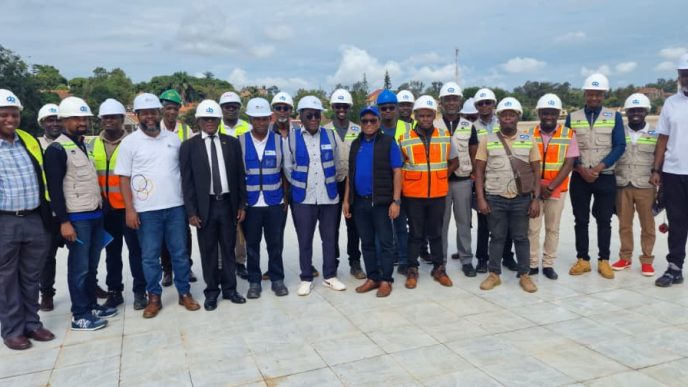
Dr. Musenero cited an example of how, for years, Uganda grew coffee while others sold the jar, leaving us to do the labour as they captured the value, noting that the two institutions are now applying the same lesson to technology. “This time, Uganda is building the factories, training the workforce, and keeping the profits at home. This is not just a vision; it’s a construction site. Uganda is already building,” she said.
Emphasizing Dr. Musenero’s remarks on ‘training the workforce’, Dr. Zawedde said, “Digital skills are not a welfare programme. They are a value creation engine. Every young Ugandan we train is a unit of economic capacity, someone who can build a product, run an enterprise, employ three others, and keep that value circulating inside our economy. That is the most productive investment this country can make.”
The collaboration roadmap agreed between MoICT and STI-OP is not a future commitment. It is operational. Focal persons have been designated in both institutions. Joint projects are identified. Timelines are live.
What makes this roadmap structurally significant is what it connects. The Fourth National Development Plan (NDP 4) envisions Uganda’s economy being driven by interlocking engines, each MDA, each value chain acting not in isolation but as part of a coordinated national machine. For years, those engines have been running in the same direction but on separate tracks.
The MoICT-STI roadmap is the coupling mechanism. It is how the ATMs (Agro-Industrialization, Tourism Development, Mineral-based Industrial Development [including Oil and Gas], Science, Technology, and Innovation [including ICT] ) of NDP 4; the institutions through which Uganda’s industrial ambition gets financed, built, and deployed; finally operate as one system.
Connected — but not yet rewarded
The uncomfortable truth beneath Uganda’s digital progress story is this: being a consumer of technology and being a producer of it are two entirely different economic positions. Every smartphone imported, every software licence paid to a foreign vendor, every cloud service billed from a data centre in Europe or America represents value leaving Uganda. The connectivity is real. But so is the economic disconnection —the gap between using the digital economy and owning a piece of it.
This is the gap the MoICT-STI roadmap is explicitly designed to close — not by retreating from globalisation, but by building the productive capacity that earns Uganda a seat at the table as a maker, not merely a market.
NDP 4’s industrial logic is unambiguous: Uganda cannot grow wealthy by exporting raw inputs and importing finished goods. The ore must become the component. The crop must become the product. The code must become the platform. Value must be produced here, captured here, and retained here — by Ugandan hands, on Ugandan machines, through Ugandan enterprises that pay Ugandan taxes and employ Ugandan youth.
The MoICT-STI roadmap is the institutional wiring that makes that possible.
What women’s leadership looks like when it is structural
Uganda has heard the arguments for women in Science, Technology, Engineering, and Mathematics (STEM) many times over. What has been rarer is the sight of women not just arguing for a seat at the table, but redesigning the table itself.
Dr. Musenero and Dr. Zawedde carry technical and administrative credibility built over entire careers in science, public administration, and technology governance. The symbolism lands anyway, and it lands hardest on the young woman in an engineering lecture, or debugging code, wondering whether the economy being built around her has a place for what she knows.
“The girls in our STEM classrooms do not need more inspiration. They need institutions that are ready for them when they graduate. That is what Dr. Musenero and Dr. Zawedde are building — together,” said Flavia Opio, Head, National ICT Innovation Hub, Nakawa.
In Women’s Month 2026, the most powerful message Uganda’s government is sending to its daughters in STEM is not a statement. It is two women deciding, together, how a country stops being digitally connected but economically disconnected and then drawing up a roadmap to get it there.