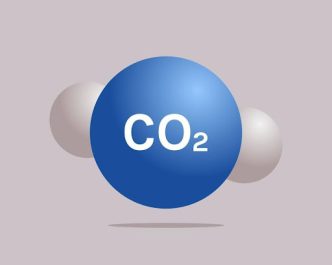
Carbon dioxide is the molecule we are trying to pull out of the atmosphere. It is also the molecule that quietly powers data centre fire suppression, semiconductor manufacturing, the cold chain underneath modern logistics, and a fast-growing carbon removal industry. Texas now sits at the centre of all of it.
There is a strange paradox at the heart of modern industrial technology. CO2, the same molecule that the entire climate-tech industry is racing to capture and store, is one of the most heavily used industrial gases on Earth. Hospitals use it. Semiconductor fabs use it. Data centres use it. Food processors use it. Welders use it. Beverage companies use it. The world consumes roughly 230 million tonnes of CO2 every year for industrial purposes, and that number is climbing.
If you have spent any time inside the modern technology stack, you have benefited from CO2 in ways you almost certainly did not realise. The server room that hosts the apps on your phone has a fire suppression system that is probably built around a clean agent gas (in many older installations, CO2 itself). The semiconductors inside that phone passed through a fab that uses supercritical CO2 to clean photoresist residue off wafers. The vaccine that you took during the last pandemic was probably shipped in a cold chain that used dry ice (solid CO2) at some point in the journey. The carbonation in the drink you bought this morning is industrial CO2.
And in West Texas, in a stretch of arid Permian Basin land roughly 300 miles west of Dallas, the largest direct-air-capture facility on Earth is being built. Its job is to suck CO2 back out of the atmosphere and store it underground forever. The same molecule, the same state, the same industrial gas supply chain. Just running in two directions at once.
This is the story of how that happened.
CO2 in the Tech Stack
Most people only encounter CO2 as the bubbles in fizzy drinks or as a vaguely worrying climate statistic. Industrial CO2 is something different. It is purified, compressed, often liquefied, and delivered in tank trucks, bulk cylinders, or dry-ice form to a long list of buyers across the technology sector. Here is a short tour of where it actually lives in the systems people use every day.
Inside data centres, CO2 has historically been one of the dominant fire suppression agents for unoccupied server rooms and electrical equipment areas. CO2 systems work by displacing oxygen quickly enough to extinguish a fire without leaving any residue, which matters enormously when the fire is inside a rack of servers worth millions of dollars. Modern installations have shifted toward gentler clean agents like FM-200, Novec 1230, and Inergen for occupied spaces, because CO2 at fire-suppression concentrations is dangerous for humans to breathe. But high-pressure and low-pressure CO2 systems remain widely used in vaults, machinery rooms, generator rooms, and other unoccupied technical spaces. The fundamental advantage has not changed. CO2 is fast, leaves nothing behind, and is non-conductive, which is what every electrical fire scenario needs.
Inside semiconductor fabs, CO2 plays a different role. Modern chipmakers use supercritical CO2 (a state where CO2 behaves partway between a gas and a liquid) to clean nanometre-scale features on wafers without damaging them. Water and conventional solvents are too aggressive for the most delicate steps in 3-nanometre and 2-nanometre processes. Supercritical CO2 dissolves contaminants gently and then evaporates cleanly. As AI chips push to smaller and smaller process nodes, the role of CO2 in advanced wafer cleaning has grown rather than shrunk.
Inside cold-chain logistics, CO2 in solid form (dry ice) is the workhorse of pharmaceutical shipping, biotech sample transport, and high-end frozen food distribution. Dry ice sublimates at -109°F, well below the threshold needed to keep mRNA vaccines, cell therapies, and most biological samples viable in transit. Without industrial CO2, the global cold-chain for pharma and biotech essentially does not exist in its current form.
And in welding and advanced manufacturing, CO2 (often blended with argon) is the shielding gas used in MIG welding for most steel fabrication. Every car, every server rack, every steel structural element you can see was probably welded under a blanket of CO2-blended shielding gas at some point in its manufacture.
CO2 demand is spread across an unusually wide range of technology and industrial end-uses. Each of these segments has been quietly growing as the underlying technologies have scaled.
The AI Build-Out Is Driving New CO2 Demand
Three converging technology trends are pulling CO2 demand higher in 2026, and the same trends are concentrated in a small number of geographies.
The first is the global AI infrastructure build. Hyperscale data centres are going up at a pace that has never been seen in the industry. CBRE’s latest US market data shows roughly 7 gigawatts of data centre capacity is currently under construction across the major American hubs, with Dallas-Fort Worth alone hosting around 700 megawatts of new build and a planned 3 gigawatt pipeline behind that. Each one of those facilities needs fire suppression systems, and each one is a multi-decade contract for industrial gas supply. The shift toward clean agents has reduced the share of CO2 in modern fire-suppression design, but high-pressure CO2 still dominates in unoccupied technical spaces, electrical vaults, and standby generator rooms across these new builds.
The second is the semiconductor capacity expansion driven by the CHIPS Act. New fabs from Samsung in Taylor, Texas, Texas Instruments in Sherman, TSMC in Arizona, and Intel in Ohio are all under construction or recently online. A single advanced-node semiconductor fab consumes industrial gas at a scale that dwarfs almost any other type of facility. CO2 supply contracts at these fabs typically run for 15 to 20 years and are signed before the building is finished.
The third is the explosion of the cold chain for biotech and advanced pharmaceuticals. The mRNA vaccine deployment during the COVID-19 pandemic exposed the world to what cryogenic biology shipping looks like at scale. The cell therapy industry, which moves human cells around the world for cancer treatment, has since grown into a billion-dollar logistics category. All of it runs on dry ice. The pharmaceutical cold-chain market is projected to nearly double by 2030, and most of the new demand sits inside the United States.
The same supply chain that feeds the AI build is also feeding the climate-tech build. Texas now sits at the centre of both.
Why Texas Became the Carbon Capital
If you had asked anyone twenty years ago which US state would emerge as the headquarters of the global carbon-removal industry, Texas would not have been on most lists. The state’s identity has long been built around oil and gas extraction, and its political culture has been famously sceptical of climate policy. And yet today, the largest direct-air-capture facility on Earth is being built in Ector County, Texas, and the second-largest is being planned for the King Ranch in Kleberg County.
The reasons are pragmatic and instructive.
First, Texas has the geology. The Permian Basin and the South Texas Gulf Coast both contain enormous saline aquifers and depleted oil reservoirs that can safely store CO2 underground for geological timescales. The South Texas DAC Hub site on the King Ranch alone covers roughly 165 square miles and is estimated to have storage capacity for up to 3 billion tonnes of CO2.
Second, Texas has the infrastructure. The state has more CO2 pipelines than the rest of the United States combined, originally built to support enhanced oil recovery operations (where CO2 is pumped into ageing oilfields to push out the remaining oil). That same pipeline network is exactly what a large-scale carbon-storage industry needs.
Third, Texas has the operators. Occidental Petroleum, headquartered in Houston, has positioned itself as one of the most aggressive corporate players in direct air capture globally. Its subsidiary 1PointFive is building STRATOS, a facility designed to capture 500,000 tonnes of CO2 per year, roughly 14 times the size of the world’s current largest operating DAC plant in Iceland. The Department of Energy has awarded the South Texas DAC Hub project $650 million in support funds. ADNOC’s investment arm XRG is evaluating a $500 million stake in the project.
Fourth, Texas has the policy environment. The Inflation Reduction Act’s 45Q tax credit pays up to $180 per tonne for CO2 permanently removed from the atmosphere via direct air capture. That single piece of legislation has made carbon capture economically viable for the first time in industrial history. Texas-based projects are positioned to capture the lion’s share of that incentive.
Texas is set to host the largest commercial-scale direct air capture facilities on Earth. The South Texas DAC Hub alone could ultimately store up to 3 billion tonnes of CO2 underground.
The Other Side of the CO2 Equation
Here is the part of the story that almost nobody outside the industry talks about. The same Texas that is building the world’s largest carbon capture facilities is also one of the largest industrial CO2 consumers in the United States. The oilfield services industry uses massive quantities of CO2 for enhanced oil recovery. The Gulf Coast petrochemical corridor uses CO2 across a wide range of processes. The state’s electronics manufacturing sector (anchored now by Samsung’s Taylor fab and TI’s Sherman expansion) needs ultra-high-purity CO2 for wafer processing. The DFW data centre boom needs CO2 for fire suppression in vaults and generator rooms. The food and beverage industry (H-E-B, Frito-Lay, the craft brewery scene) consumes liquid CO2 and dry ice at industrial scale.
Behind all of this is an industrial gas distribution network that does not get a lot of attention, but is genuinely the infrastructure layer underneath much of what gets built in Texas. Liquid CO2 has to be delivered in cryogenic tanks. Dry ice has to be produced and shipped within days because it sublimates. High-pressure CO2 cylinders have to be hydrostatically tested on regulated intervals. The companies that operate this supply chain are mostly invisible to consumers, but they are the reason data centre fire suppression actually works, the reason biotech samples actually arrive intact, and the reason fabs actually produce wafers on schedule.
Texas-based industrial gas distributors such as Southwest Gases, which supplies CO2 and dry ice across Dallas, Houston, Austin, San Antonio, and Fort Worth, are the quiet downstream side of a CO2 economy that has expanded dramatically as Texas has emerged as both a technology manufacturing hub and a carbon-management hub. The state’s industrial gas demand has historically been one of the most diversified in the country, and the AI and climate-tech build-outs are pushing it higher.
Where This Lands for the Technology Industry
Three things are worth watching from here for anyone interested in how CO2 will shape the next decade of technology.
The first is the maturation of direct air capture as a technology category. STRATOS in West Texas is the first commercial-scale stress test of whether DAC can actually work at the cost points needed for it to become a meaningful climate solution. Most independent analysts believe the technology has to come down from somewhere around $500 to $1,000 per tonne to below $200 per tonne to scale to gigaton levels. Texas projects are where the answer to that question will largely be decided. If STRATOS hits its capture targets at acceptable cost, expect a wave of similar facilities. If it does not, the conversation around climate technology will shift significantly.
The second is the broader question of what to do with all the captured CO2. Geological storage is one option (and the default for projects designed around the 45Q tax credit). But there is also a fast-growing industry focused on CO2 utilisation: converting captured CO2 into synthetic fuels, building materials, plastics, beverage-grade CO2, and even consumer goods. Companies like Aircapture have already partnered with brewers to make beer using CO2 pulled out of the air. The line between climate technology and consumer technology is blurring.
The third is the data centre and AI infrastructure question. As hyperscaler operators face increasing pressure to disclose and reduce their emissions footprint, expect more direct contracts between large data centre operators and DAC facilities for carbon removal credits. Microsoft, Meta, Google, and Stripe have all already signed major DAC offtake agreements. Texas-based DAC facilities are well positioned to be the supply side of that emerging market.
The Bottom Line
CO2 is having a strange decade. It is the antagonist of every climate news cycle and simultaneously one of the most quietly important inputs across the technology stack. The same molecule that needs to come out of the atmosphere is also the molecule that puts out fires in your server rooms, cleans the wafers inside your phone, ships your cancer treatments, and welds the steel inside your laptop case.
Texas has somehow ended up at the centre of both ends of that conversation. The state hosts the AI build, the semiconductor build, the cold-chain build, and the carbon-capture build, all at the same time, all running on overlapping industrial gas supply chains. Whether the climate side eventually outgrows the industrial-consumption side, or whether they continue to scale together, is one of the more interesting open questions in technology and industrial infrastructure right now.
Either way, the molecule itself is not going anywhere. And neither is the infrastructure that moves it.
Sources & Further Reading
Occidental Petroleum and 1PointFive STRATOS announcements (2024-2026). | International Energy Agency, Direct Air Capture report. | CBRE North America Data Center Trends H2 2025. | U.S. Department of Energy DAC Hub funding awards. | NFPA 2001 Standard on Clean Agent Fire Extinguishing Systems. | Fortune Business Insights, Direct Air Capture Market, 2026.