Modern cars are rolling data centers. The average new vehicle runs on over 100 million lines of code, processes data from dozens of sensors simultaneously, and logs driver behavior in real time across multiple onboard systems. Most drivers have no idea how much their car records until a crash happens.
Houston car accident attorneys at Sutliff & Stout regularly work with data pulled from these systems to establish what happened in the seconds before and after an impact.
Here are eight computer systems inside modern vehicles that start capturing evidence the moment a collision occurs.
1. Event Data Recorder
What does an Event Data Recorder capture in a crash?
An Event Data Recorder stores a continuous loop of vehicle performance data and locks that data permanently the moment it detects a crash level impact. The system records vehicle speed, throttle position, brake application, steering angle, seatbelt status, and airbag deployment timing. The National Highway Traffic Safety Administration requires Event Data Recorders in all passenger vehicles sold in the United States after September 2014 under 49 CFR Part 563.
How is Event Data Recorder data used after a crash?
Attorneys and crash reconstruction engineers retrieve Event Data Recorder data using specialized read tools that pull the stored information directly from the vehicle. A five second pre-crash window and the full impact sequence are typically preserved. This data can confirm or contradict a driver’s account of the crash, establish whether braking occurred before impact, and identify the exact speed of the vehicle at the moment of collision.
A Houston driver involved in a freeway rear end crash later described how the Event Data Recorder from the other vehicle confirmed the driver never touched the brakes before impact, which became the foundation of the entire liability determination.
2. Advanced Driver Assistance System Logs
What do Advanced Driver Assistance Systems record during a crash?
Advanced Driver Assistance Systems include lane departure warning, automatic emergency braking, forward collision warning, blind spot monitoring, and adaptive cruise control. Each subsystem generates operational logs that record whether the feature was active, whether it detected an obstacle, and whether the driver overrode an automated response. Vehicles from Toyota, Ford, General Motors, and Hyundai all produce retrievable Advanced Driver Assistance System logs.
Why do Advanced Driver Assistance System logs matter in a legal claim?
These logs answer a critical question in many modern crashes. If a vehicle had automatic emergency braking and the system failed to activate, or if a driver manually disabled lane departure warning before a collision, that information appears in the log. The National Transportation Safety Board has cited Advanced Driver Assistance System data in multiple crash investigations as a factor in determining whether vehicle technology functioned as designed.
A tech-focused crash investigator described reviewing Advanced Driver Assistance System logs from a commercial SUV and finding that the forward collision warning triggered correctly but the driver overrode the automated brake response less than one second before impact.
3. GPS and Telematics Data
What does vehicle GPS and telematics data show after an accident?
GPS units and telematics systems log location history, speed over time, route taken, stop events, and driving pattern data. Fleet vehicles and rideshare vehicles operated through platforms like Uber and Lyft maintain telematics records that can reconstruct a trip in precise detail. Insurance telematics programs such as Progressive Snapshot and State Farm Drive Safe also collect and store this data through onboard diagnostic port devices or mobile applications.
Can GPS data be used as accident evidence in Texas?
Texas courts have accepted GPS and telematics data as admissible evidence in civil litigation. This data is particularly useful in commercial truck accident cases where the Texas Department of Transportation and federal motor carrier regulations require electronic logging device records for vehicles exceeding a certain weight class. A GPS record showing a commercial driver exceeding speed limits on a specific segment of highway before a crash becomes direct evidence in a negligence claim.
A Houston area accident victim described learning through GPS telematics data that the at fault driver had been speeding consistently for more than 40 miles before the collision, a fact that the initial police report did not capture.
4. Infotainment System and Connected Phone Logs
What does a car infotainment system record that relates to a crash?
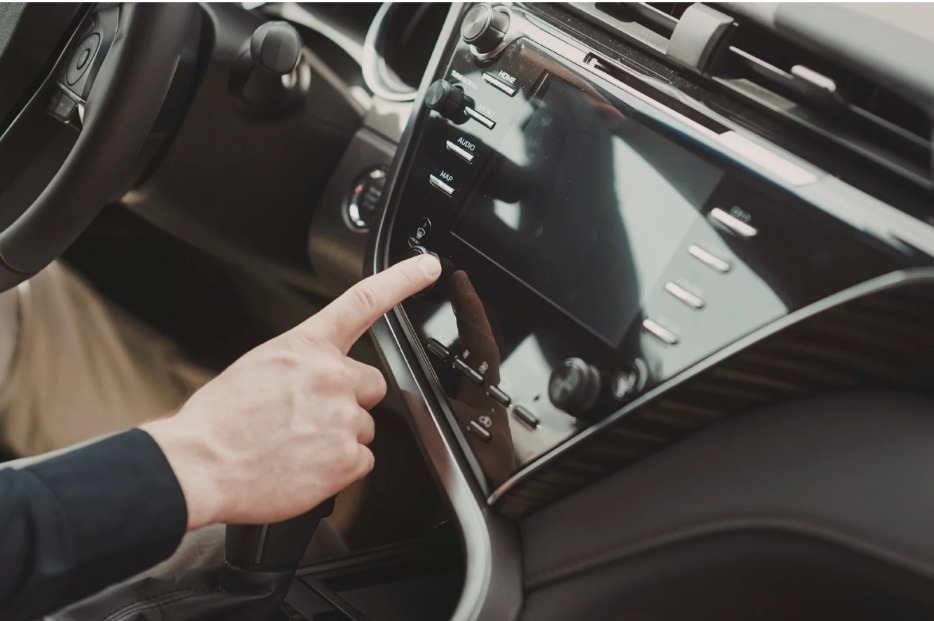
Infotainment systems running Android Automotive, Apple CarPlay, or proprietary platforms like Tesla Software store connection logs, call histories, text message timestamps, application usage data, and media interaction events. When a driver pairs a phone to a vehicle, the system creates a timestamped record of every interaction. This data can show whether a driver was actively using a phone application, accepting a call, or interacting with the touchscreen at the moment a crash occurred.
How significant is distracted driving data in Houston accident claims?
The Texas Department of Transportation reported 94,304 crashes involving distracted driving in 2022. Infotainment system logs have become one of the most direct ways to prove driver distraction at the moment of impact. Extraction of this data typically requires a forensic digital tool and must be requested quickly because some systems overwrite older logs on a rolling basis.
An accident reconstruction expert described a case where infotainment system logs showed a navigation input was entered nine seconds before a crash at an intersection, placing the driver’s hands and attention away from the road at a provably critical moment.
5. Built In Dashcam and Surround View Camera Systems
Do modern cars automatically record crash footage?
Many vehicles now ship with built in camera systems that record continuously. Tesla vehicles run dashcam and Sentry Mode systems that store footage to a USB drive inserted in the center console. Cadillac, Subaru, and Volvo offer factory installed surround view camera systems with event recording capability. These systems capture video from multiple angles including front, rear, and side perspectives.
What happens to built in dashcam footage after a crash?
Built in camera footage captures the exact sequence of events, including the position of other vehicles, traffic signal status, road conditions, and pedestrian movement. Unlike witness statements, video data does not change over time. The footage must be preserved immediately after a crash because some systems overwrite recordings automatically after a set storage limit is reached. In Houston car accident cases, built in camera footage has resolved disputed liability situations that witness accounts alone could not clarify.
A passenger in a vehicle equipped with a factory dashcam described watching the footage replay the moment of impact and seeing clearly that the other driver ran a red light, which the responding officer had initially listed as undetermined.
6. Autonomous and Semi Autonomous Driving Logs
What data does an autonomous driving system generate during a crash?
Vehicles with semi autonomous capabilities including Tesla Full Self Driving, General Motors Super Cruise, and Ford BlueCruise maintain detailed operational logs of every moment the system is active. These logs record whether autopilot was engaged, what the system detected in the environment, how the system responded, and whether the driver had hands on the wheel. Tesla transmits this data to its servers in near real time.
Who owns autonomous driving log data after a crash?
This remains an evolving area of law. Tesla has provided vehicle log data in response to legal subpoenas in multiple crash cases involving Full Self Driving. The National Highway Traffic Safety Administration has required Tesla to report crashes where autopilot was active at the time of impact under its Standing General Order program. In Texas, obtaining this data typically requires a legal hold letter sent to the manufacturer shortly after the crash before data retention periods expire.
An attorney specializing in technology related vehicle crashes described autonomous driving logs as the most detailed record of a crash currently available, providing sensor fusion data that shows what the vehicle saw in 360 degrees during the three seconds before impact.
7. OBD-II Port and Real Time Diagnostic Data
What does the OBD-II port record in a modern vehicle?
The On Board Diagnostics II port has been standard on all passenger vehicles sold in the United States since 1996. The port provides access to real time and stored diagnostic data including engine performance, fault codes, fuel system status, transmission behavior, and sensor readings from across the vehicle. Insurance connected devices that plug into the OBD-II port record this data continuously and transmit it to insurer databases.
Can OBD-II data be subpoenaed in a car accident lawsuit?
When an insurer has collected OBD-II data through a telematics program, that data becomes discoverable in litigation. A driver enrolled in an insurer telematics program who was involved in a Houston car accident may find that the insurer possesses a detailed record of driving behavior going back months. This data works both ways. It can support a victim’s claim by showing responsible driving history, or it can be used by the opposing insurer to argue the driver carried elevated risk.
A Houston driver described discovering after filing an accident claim that the telematics device installed by the insurance company had recorded speed and braking behavior for seven months, all of which became part of the claim review process.
8. Vehicle to Everything Communication Logs
What is Vehicle to Everything technology and what does it record?
Vehicle to Everything technology allows equipped vehicles to communicate with other vehicles, road infrastructure, and traffic management systems. This technology is currently deployed in limited markets but is expanding through the connected infrastructure programs supported by the United States Department of Transportation. Equipped vehicles exchange position, speed, heading, and hazard data with compatible infrastructure up to 10 times per second.
Will Vehicle to Everything data change how crash investigations work?
The Federal Highway Administration projects that Vehicle to Everything communication will be standard in new vehicles across the United States within the next decade. When fully deployed, crash investigations will have access to external verified records of a vehicle’s behavior from sources beyond the vehicle itself, including road sensors, traffic signals, and other nearby vehicles. Houston car accident claims in the coming years will increasingly involve this multi-source data environment rather than relying on a single vehicle’s onboard record.
A transportation technology researcher described Vehicle to Everything logs as the most tamper resistant form of crash data yet developed because the record exists simultaneously across multiple independent systems rather than inside a single vehicle that one party controls.
The computer systems inside modern vehicles generate more accurate crash data than any witness account. That data is time sensitive, technically complex to retrieve, and frequently decisive in determining fault. Preserving access to it requires acting quickly after a crash before retention windows close and before the vehicle is repaired or transferred.