


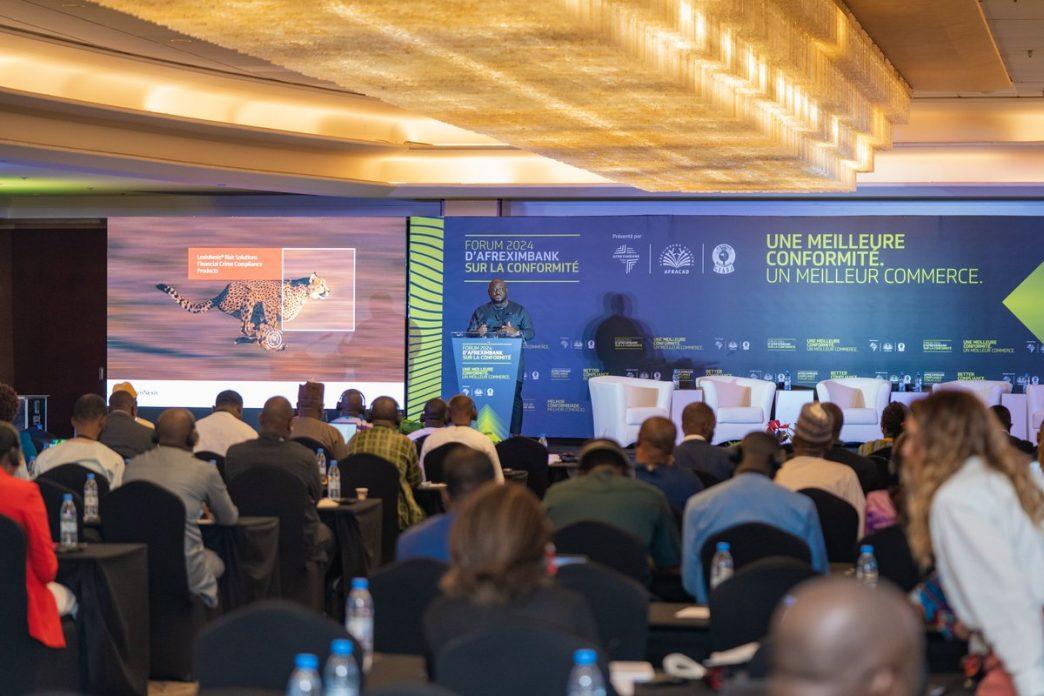
African Export-Import Bank (Afreximbank), in collaboration with the National Bank of Rwanda (BNR), will host the 2025 Afreximbank Compliance Forum (ACF2025) from 12 – 14 November 2025, in Kigali, Rwanda, under the theme “Better Compliance – Better Trade: Embracing AI to Promote and Secure Trade Through a Modern AML/CFT Compliance Framework.”
“Our partnership with the National Bank of Rwanda for ACF2025 reflects a shared commitment to advancing innovation in compliance, safeguarding financial integrity, and promoting the sustainable growth of African trade,” Dr. George Elombi, Executive Vice-President, Governance, Legal and Corporate Services and Incoming President, Afreximbank, said in a press statement. “Together, we are committed to equipping financial institutions and regulators with the knowledge, tools, and partnerships they need to balance innovation with strong governance—ensuring a secure, transparent, and competitive trading environment for Africa”
With artificial intelligence (AI) reshaping trade in Africa, curbing illicit financial flows, driving growth, and boosting market opportunities, the forum will focus on how AI is enabling faster risk assessments, advancing fraud detection, streamlining due diligence, and real-time monitoring of cross-border transactions. These innovations are tackling financial crime, enhancing transparency, and building secure compliance systems to expand trade across Africa and into global markets.
“At the National Bank of Rwanda, we consider compliance as the cornerstone of financial stability, trust, and sustainable growth. By aligning with international best practices and leveraging innovations such as artificial intelligence, we are reinforcing the integrity of our market, deepening investor confidence, and strengthening Rwanda’s standing as a trusted partner in global trade,” said Hon. Soraya M. Hakuziyaremye, Governor of the National Bank of Rwanda.
Hon. Soraya M. Hakuziyaremye further noted that hosting the Afreximbank Compliance Forum 2025 in Kigali is a testament to Rwanda’s leadership and Africa’s collective commitment to harnessing technology, safeguarding our financial systems, and unlocking the continent’s vast trade potential. “Our collaboration with Afreximbank reflects a shared vision to advance modern compliance standards that not only meet global benchmarks but also address Africa’s unique trade realities,” she concludes.
This year’s forum is expected to attract diverse participants ranging from central bankers, global and regional regulators, commercial bankers, legal advisers, compliance officers, trade-focused specialists, financial institutions, development partners, Fintechs and technology specialists, auditors, and financial intelligence agencies from across Africa and other parts of the world.
Key themes at ACF2025 will include:
- The integration of artificial intelligence in compliance and its impact on the effectiveness of Anti-Money Laundering and Combating the Financing of Terrorism measures.
- Insights from the Financial Action Task Force (FATF) on digital transformation.
- Lessons learned from African countries successfully exiting the FATF grey list.
- Strategies for detecting Trade-Based Money Laundering.
- Best practices in correspondent banking.
- Case studies showcasing the application of AI in customer onboarding and real-time monitoring.
ACF2025 builds on Afreximbank’s leadership in trade-related compliance and its investment in AI-powered platforms that streamline client onboarding, enable real-time risk monitoring, and ensure secure transaction processing.


