


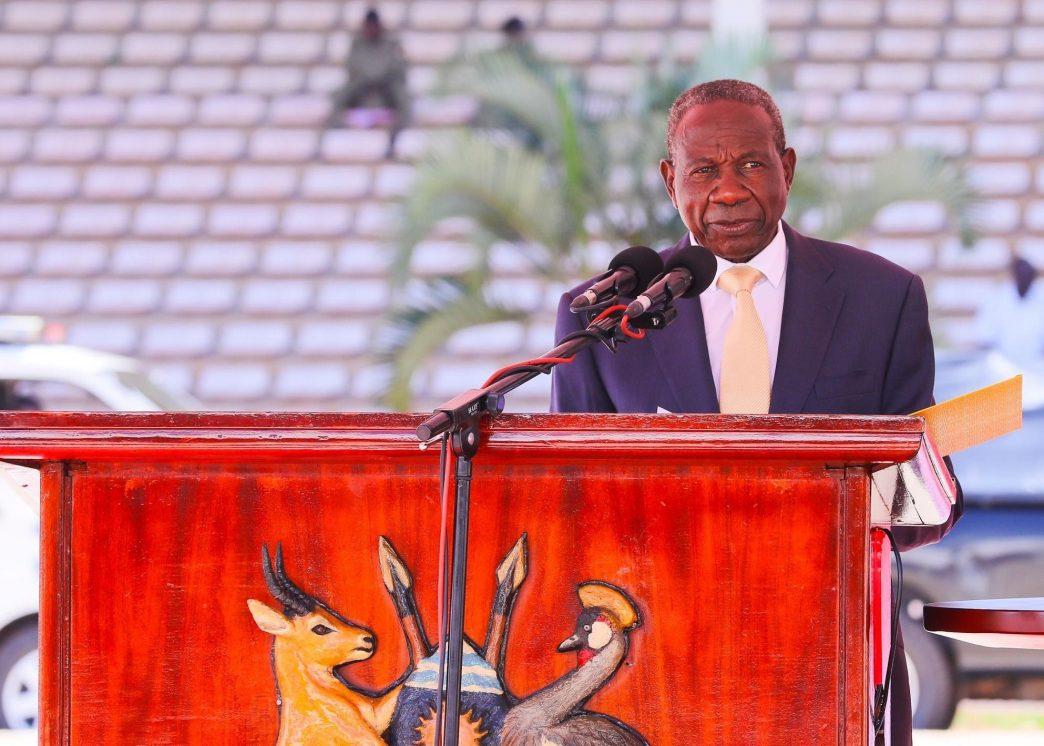
During the reading of the National Budget for Financial Year 2025/26 at the Kololo Independence Grounds, the government placed Science, Technology, and Innovation (STI) at the heart of Uganda’s economic growth agenda. Against the backdrop of a challenging global economy and the need to diversify revenue sources, the Minister of Finance, Planning, and Economic Development, Hon. Matia Kasaija, underscored STI, alongside agro‐industry, tourism, and extractive sectors, as key to broadening the tax base and powering the next wave of high‐value exports and job creation.
Minister Kasaija clearly stated that mobilizing domestic revenue remains a top priority, explicitly linking this goal to strategic investments in key sectors, including STI. “Government has stepped up efforts to mobilize domestic revenue; going forward, emphasis will be put on science, technology, and innovation,” the Minister affirmed, noting that strategic investment in STI will open new avenues for sustainable growth and shared prosperity. By integrating ICT into the core of fiscal planning, Uganda seeks to boost public coffers and nurture a dynamic knowledge economy.
Highlighting STI’s transformative potential, Kasaija noted, “STI, including ICT, provides an important avenue for the country to develop high-tech exports and add new resources of growth and jobs.” This statement underscores the government’s view of technology and innovation as primary engines for diversifying the economy beyond traditional sectors.
Demonstrating a clear financial commitment to realizing its STI ambitions, the government has allocated a substantial UGX835.98 billion specifically for Science, Technology, and Innovation, inclusive of ICT and the creative arts. A significant portion of this, UGX381.75 billion, is ring-fenced for ICT and Digitalization initiatives. Minister Kasaija outlined the strategic deployment of these funds:
- High‑Tech City Development: Establishing a purpose‑built technology hub to incubate startups, foster collaboration among researchers, and attract foreign investment.
- Commercialization of STI Products: Scaling up market uptake of homegrown innovations—starting with Kiira Motor vehicles—to reinforce the link between R&D and industry.
- R&D and Innovation Funding: Providing grants and incentives for cutting‑edge research in areas such as renewable energy, biotechnology, and advanced manufacturing.
- Enhanced Connectivity: Expanding broadband coverage, improving service reliability, and lowering costs to ensure equitable digital access nationwide.
- E‑Government and E‑Commerce: Deepening digitization of public services and creating a regulatory framework to stimulate online trade, payment, and digital entrepreneurship.
In outlining these priorities, Minister Kasaija emphasized that “taking STI products to the market” and “increasing coverage, reliability, and affordability of the Internet” are critical to unlocking Uganda’s competitive advantage in a rapidly evolving global economy.
Recounting achievements to date, Hon. Kasaija highlighted Uganda’s strides in automotive innovation. The Kira Vehicle Plant in Jinja, “now completed and operationalized,” boasts an annual capacity of 2,500 units. To date, it has produced 41 buses—29 of which are electric—each capable of running up to 500 km on a single charge. Even more ambitiously, the plant has signed a letter of intent to supply over 3,700 electric buses to West Africa.
Beyond vehicle assembly, Kiira Motors has generated 800 direct jobs and is poised to spur as many as 14,000 direct and indirect positions across the value chain. By leveraging domestic R&D and scaling up local manufacturing, Uganda is reducing import dependence and positioning itself as an exporter of green mobility solutions.
On the ICT front, the Ministry reported that broadband Internet now reaches 72% of Uganda’s territory, spanning 4,387 km of fiber cables. This infrastructure underpins a suite of 36 e‐services; among them, online systems for business registration, procurement, passports, and driving licenses, designed to “improve efficiency, promote transparency and reduce bureaucracy,” said the Minister.
Moreover, the government has licensed over 50 companies in the Business Process Outsourcing (BPO) sector, creating more than 10,000 jobs for Ugandan youth who provide digital services to international clients. This expansion illustrates how robust connectivity and supportive policy can catalyze private-sector-led growth in high‐skill, export‐oriented industries.
The FY 2025/26 budget firmly positions Science, Technology, and Innovation as non-negotiable pillars for Uganda’s economic future. By embedding STI into revenue mobilization and dedicating substantial resources to its growth, the government is betting big on STI to drive revenue growth, create thousands of jobs (especially for the youth), enhance service delivery, and propel the nation towards becoming a competitive player in high-tech exports and the regional digital economy.
The focus now shifts to the effective execution of these ambitious plans to transform potential into widespread, sustainable prosperity.


