
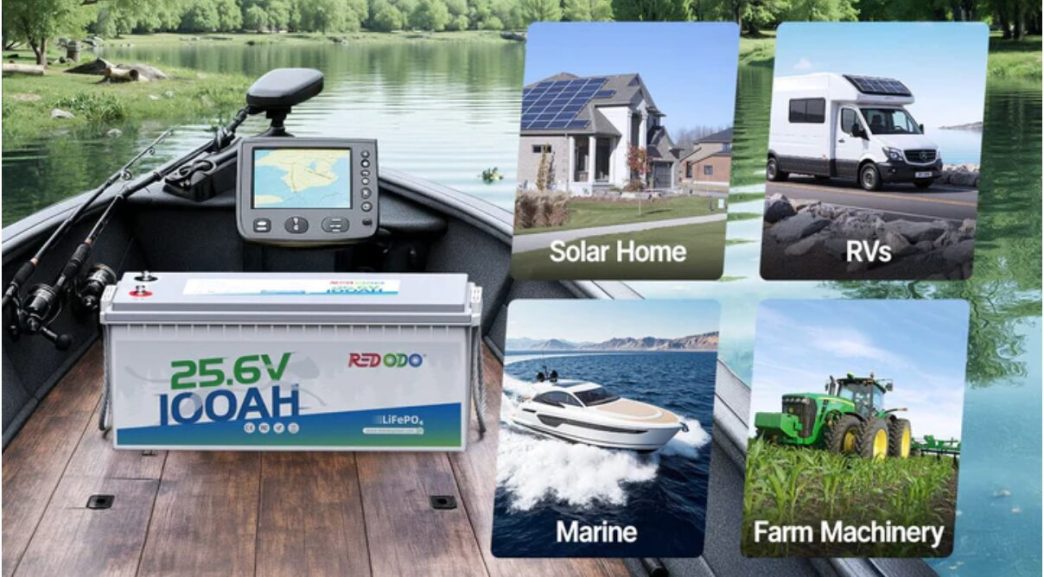
Modern energy use is becoming more flexible. People no longer need batteries only for cars, flashlights, or small backup devices. Today, battery systems are used in solar setups, RVs, boats, mobile work units, off-grid cabins, communication equipment, and emergency power systems.
This change has increased interest in lithium battery systems. A 12V system is the most common setups, still useful for small loads, and a 48V system is often preferred for larger power demands. Between these two options, 24V has become a practical middle-ground choice. It can offer better efficiency than many 12V systems while staying easier to design and manage than larger 48V setups.
For many modern energy applications, this balance is exactly what users need.
What Makes a 24V Lithium Battery System Different?
A 24V lithium battery system is more than just a battery with a higher voltage. It is a complete energy setup that should be designed around load demand, charging method, wiring, safety protection, and future expansion.
Voltage and Current Work Together
Power is measured in watts. In a DC system, power depends on voltage and current. When voltage increases, the system can often deliver the same wattage with less current.
This matters because current creates heat and places demand on cables, connectors, fuses, and switches. A 24V system can reduce current compared with a 12V system at the same wattage. When designed correctly, this can make the system more efficient and easier to manage for medium loads.
LiFePO4 Chemistry Adds Stability
Many modern 24V lithium systems use LiFePO4 chemistry, also called lithium iron phosphate. The chemistry of the 24V LiFePO4 battery is popular for deep-cycle use because it is known for stable performance, long cycle life, and strong safety characteristics compared with some other lithium chemistries.
LiFePO4 batteries are often used where steady energy storage matters more than a short burst of power. This makes them suitable for solar storage, RV power, marine auxiliary power, mobile equipment, and off-grid systems.
Built for Mid-Range Loads
A 24V system can support loads that may feel too demanding for a basic 12V system. These may include inverters, pumps, lights, small appliances, marine electronics, fans, communication devices, and solar storage systems.
At the same time, 24V can remain simpler than moving to a full 48V design. That is why it is useful for people who want more capability without building a large power system.
Common Applications of 24V Lithium Batteries
A 24V lithium system can serve many roles. Its value comes from being flexible enough for mobile, marine, solar, and off-grid applications.
Solar Energy Storage
Solar systems need batteries to store energy when sunlight is available and release it when needed. A 24V battery system can work well in small and mid-size solar setups.
Common solar uses include:
- Off-grid cabins
- Solar sheds and workshops
- Small home backup systems
- RV solar systems
- Remote lighting or monitoring equipment
A 24V solar battery system should be paired with a compatible solar charge controller. Many users choose MPPT charge controllers because they can improve solar charging efficiency when properly matched to the panels and battery.
Marine Power Systems
Boats often need battery power for lighting, pumps, electronics, navigation equipment, trolling motors, and auxiliary systems. A 24V lithium battery can support marine power setups when the equipment is designed for 24V use.
Marine users should pay attention to water protection, secure mounting, terminal safety, and cable quality. A battery should not be exposed to standing water even if it has a protected case. The installation location matters as much as the battery rating.
It is also important to remember that deep-cycle 24V batteries are not automatically made for engine starting. A marine starting battery has different demands. If starting power is needed, the battery must be designed for that purpose.
RV and Camper Energy Systems
RVs and campers often need power for lighting, fans, fridges, water pumps, small appliances, and charging devices. A 24V system may be a good upgrade when 12V feels too limited or when the owner wants to use a more efficient inverter setup.
In RV systems, every component needs to match the system voltage. The battery, charger, solar controller, inverter, DC distribution system, and monitoring equipment should be planned together.
Mobile Work and Field Equipment
Mobile professionals often need power in places where the grid is not available. This includes field service vehicles, mobile workshops, survey teams, communication units, food trucks, and remote job sites.
A 24V lithium system can support lighting, tools, laptops, radios, small pumps, testing equipment, and communication devices. It offers a balance between runtime and portability, which makes it useful for mobile work.
Off-Grid and Backup Power
Off-grid spaces need reliable energy storage. A 24V battery system can power essential loads in cabins, small homes, sheds, and backup power systems.
It can also work with solar panels and inverters to support lighting, phone charging, internet equipment, medical devices, fans, and small appliances. Larger homes or high-demand equipment may need a 48V system, but 24V is often enough for small to mid-size setups.
The Scalability Advantage of 24V LiFePO4 Systems
Scalability is one reason 24V LiFePO4 batteries are useful. A battery setup can sometimes be expanded to increase voltage, capacity, or runtime. However, expansion must follow the battery maker’s rules.
| Connection Type | What It Changes | Why It Matters |
| Series | Increases voltage | Can create higher-voltage systems such as 48V |
| Parallel | Increases capacity | Can increase Ah and runtime |
| Series and parallel | Increases both voltage and capacity | Used in larger energy systems |
For example, two 24V batteries connected in series can create a 48V system if the batteries are designed to allow it. Batteries connected in parallel can increase total amp-hour capacity and runtime.
Most 24V deep cycle batteries can be used in series and parallel configurations, but users should still follow the exact manufacturer instructions for model limits and connection rules.
A safe battery bank should use batteries of the same model, voltage, capacity, age, and state of charge. Mixing batteries incorrectly can reduce performance or create safety issues.
The Right Way to Charge a 24V LiFePO4 System
A 24V LiFePO4 battery charger should match the voltage and charging profile of the battery. It is important because a 24V lithium battery does not use the same charging voltage as its nominal battery voltage.
| Battery System | Common LiFePO4 Charger Voltage | Example Use |
| 12V LiFePO4 | 14.6V charger | Small battery systems |
| 24V LiFePO4 | 29.2V charger | 24V solar, RV, marine, and off-grid systems |
| 36V LiFePO4 | 43.8V charger | 36V specialty systems |
| 48V LiFePO4 | 58.4V charger | Higher-voltage battery systems |
Why Charger Compatibility Matters
A charger with the wrong voltage or charging profile can cause poor charging performance. It may also reduce battery life or create safety problems. Many older lead-acid chargers are not ideal for LiFePO4 batteries because the charging stages and voltage targets may be different.
A proper lithium charger helps the battery charge safely and efficiently.
Charging Speed and Battery Size
Charging time depends on battery capacity and charger amperage. A basic estimate is:
Charging time estimate = Battery Ah ÷ Charger amps
For example, a 100Ah battery charged by a 20A charger may take about 5 hours in a simple estimate. Real charging time can vary due to battery condition, charger behavior, temperature, and final charging stages.
Solar Charging Considerations
Solar charging needs a compatible charge controller. The controller should support LiFePO4 settings and match the battery voltage. It also needs to handle the solar panel voltage and current.
For better performance, many systems use MPPT solar charge controllers. These can help manage solar input more efficiently when the panels, controller, and battery are matched correctly.
Key Components in a 24V Off-Grid Energy System
A battery is only one part of the system. A reliable 24V energy setup depends on how all components work together.
Important components include:
Battery: Stores energy for later use. Capacity is measured in amp-hours and watt-hours.
Charger: Recharges the battery from AC power. It must match the battery voltage and chemistry.
Solar charge controller: Manages solar panel input and protects the battery during solar charging.
Inverter: Converts DC battery power into AC power for household-style devices.
Battery monitor: Shows voltage, current, state of charge, and usage data.
Fuses and breakers: Help protect the system from electrical faults.
Cables and busbars: Carry current safely between components. Cable size should match current draw and cable length.
Battery Management System: Helps protect the battery from overcharging, over-discharging, overheating, short circuits, and overcurrent.
A well-designed system is safer and easier to use than a setup made from mismatched parts.
24V vs 12V vs 48V: How to Choose the Right System
Choosing the right voltage starts with understanding the load. The system should be designed around the devices it will power, the inverter size, charging sources, and future expansion plans.
| Choose This Voltage | If Your Setup Looks Like This |
| 12V | Small loads, simple wiring, basic electronics, compact systems |
| 24V | Medium loads, solar storage, RV upgrades, marine auxiliary power, moderate inverter use |
| 48V | Larger inverters, higher power loads, bigger solar systems, advanced backup systems |
A 12V system is easy to find and simple for small loads. A 24V system is better for many medium applications because it can reduce current compared with 12V. A 48V system is often better for large inverters and high energy demands.
The right answer depends on energy use, cable distance, inverter power, cost, installation space, and future growth.
Common Mistakes in 24V Lithium Battery Systems
Even a good battery can perform poorly if the system is not designed correctly. These mistakes are common in DIY and small energy projects.
Mistake: Choosing a battery only by Ah rating
Better approach: Check watt-hours, discharge current, inverter load, and expected runtime.
Mistake: Using the wrong charger
Better approach: Use a charger made for the correct LiFePO4 voltage and charging profile.
Mistake: Ignoring cable size
Better approach: Match cable gauge to current draw and cable length.
Mistake: Mixing batteries incorrectly
Better approach: Follow the manufacturer’s rules for series and parallel connections.
Mistake: Treating 24V as suitable for every load
Better approach: Choose system voltage based on actual power demand.
Mistake: Forgetting environmental conditions
Better approach: Check moisture exposure, temperature range, mounting location, and ventilation needs.
These details may seem small, but they affect safety, efficiency, and battery life.
Final Thoughts
24V lithium battery systems matter because they offer a practical balance between power, efficiency, size, and scalability. They are useful in many modern energy applications, including solar storage, marine power, RV systems, mobile work setups, backup power, and off-grid living.
A good 24V system depends on more than the battery. It needs correct voltage planning, safe wiring, suitable charging, proper protection, and realistic energy calculations.
24V is not always the answer. Small systems may still work best with 12V, and larger systems may need 48V. But for many mid-range applications, 24V lithium power offers a smart path between basic battery setups and more complex high-voltage systems.