Choosing the right material during prototyping can make or break a product’s success. Many product teams lose valuable time and money testing materials that are not suited for the final application. When the wrong prototype material is used, it can lead to weak performance results, design changes, production delays, and rising development costs.
That’s why smart prototype material selection is such an important part of product development. The right materials help engineers test accurately, improve product performance, and move confidently toward manufacturing. Strong prototyping and testing processes also reduce risk, speed up decision-making, and create a smoother path from concept to full-scale production.
The Forces Behind Every Prototype Material Decision
Strong prototype material decision-making rarely comes down to a single variable. Usually, it’s four or five competing priorities pulling at once, and the team that maps those forces clearly before picking a material is the team that avoids expensive detours.
What the Prototype Actually Needs to Do
Not every prototype should survive a stress test. Some exist purely to show stakeholders what a product looks like. Others face real mechanical load. Form-fit, functional validation, and environmental testing all demand fundamentally different material characteristics, and mixing those objectives up early creates serious problems downstream.
Process Compatibility and Turnaround Speed
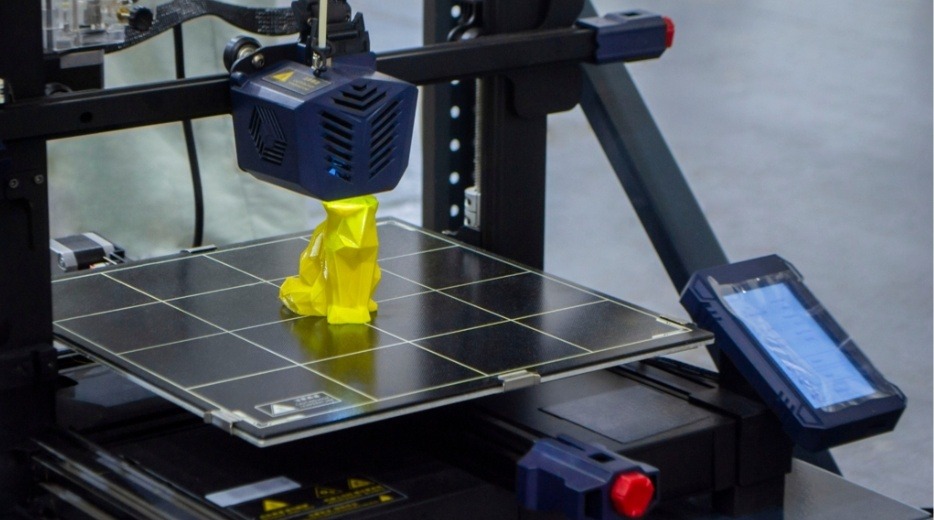
CNC machining, SLS, FDM, MJF, every process favors certain materials over others. Fast polymer prints win on early iteration speed, but they introduce anisotropic behavior that injection-molded production parts never exhibit. Speed matters. Process-material compatibility matters more.
Supply Chain Access and Sustainability Pressure
Seattle is a major hub for advanced manufacturing, where companies are increasingly focused on smarter and more sustainable production methods. Businesses working with local manufacturing partners benefit from strong supplier networks that provide recycled polymers, biodegradable composites, and other environmentally friendly materials.
This not only helps reduce environmental impact but also improves production speed and supply chain efficiency. Companies investing in rapid prototyping in Seattle can move from concept to production faster while testing sustainable material options more effectively. With access to modern technology, skilled engineering support, and reliable local resources, Seattle continues to be a strong location for innovation-driven plastic manufacturing and product development.
Material Categories Worth Knowing
Your prototype material choice is only as strong as your understanding of what’s actually available and how each category performs under your conditions.
Engineering Plastics for Fast, Lean Iteration
ABS, PLA, PC, Nylon, PEEK, these cover the vast majority of early-stage needs. PLA is cheap and fast. PEEK handles heat and chemical exposure but costs significantly more. Match the plastic to the prototype stage, and your iteration budget stays lean without throwing away useful data.
Metals for Structural Validation
Aluminum alloys are the workhorses here, lightweight, machinable, and realistic enough for meaningful load-bearing tests. Stainless steel and titanium enter the conversation when corrosion resistance or extreme strength requirements are non-negotiable, though both raise cost and lead time considerably.
Advanced Composites and Additive Materials
Carbon-fiber-reinforced plastics and glass-filled materials deliver structural performance that standard polymers simply can’t reach. High-strength SLA resins close some of that performance gap for aesthetics-forward prototypes, without committing to full composite costs.
Flexible, Smart, and Emerging Materials
TPU and silicone cover flexible, impact-absorbing applications well. Biodegradable composites are gaining real traction among sustainability-focused teams. Smart responsive materials, still emerging, are opening genuinely interesting doors for next-generation product validation work.
Hybrid Multi-Material Builds
A CNC-machined metal substructure with an overmolded elastomer skin gives a prototype both realistic mechanical behavior and tactile feedback simultaneously. PolyJet multi-material printing achieves comparable results digitally and considerably faster.
A Decision Framework That Actually Works
Gut-feel material selection wastes money and distorts results. Research shows an average 55% reduction in development cycle time when digital design frameworks are applied strategically early. Here’s a structured approach worth building into your process.
Step 1: Define Objectives Before Touching a Spec Sheet
Write down exactly what this prototype needs to prove. Form? Mechanical load? Aesthetic sign-off? That single answer controls every downstream material decision.
Step 2: Match Properties to Goals, Not Production Specs
Use “good enough” thinking deliberately here. The prototype needs to answer specific design questions, not replicate final production performance. Map material properties to those questions specifically.
Step 3: Evaluate Your Manufacturing Path
Local service relationships matter more than most teams admit. Proximity means faster revision cycles, shorter feedback loops, and fewer logistics surprises eating into your timeline.
Step 4: Cost-Benefit Comparison Tied to the Iteration Stage
PLA and ABS handle early concept rounds fine. Reserve PEEK and carbon-fiber composites for final validation stages where the data genuinely justifies the cost.
Step 5: Test, Learn, and Stay Flexible
Automotive prototyping teams switch materials between iterations routinely, not because the first choice failed, but because each round surfaces new requirements. Build that flexibility into your plan from the start.
Traps Even Experienced Teams Fall Into
Selecting production-grade material too early burns budget without improving early-stage test quality. Over-engineering surface aesthetics before functional fit is confirmed is a surprisingly common budget drain. Ignoring anisotropy in FDM-printed parts produces misleading structural test results. And neglecting post-processing effects, coatings, sealing, and surface finish, changes both performance and cost in ways teams consistently underestimate. Honest prototype material selection means staying grounded about what stage you’re actually in.
Common Questions Worth Answering Directly
- What four factors influence resistant material selection?
Chemical composition, texture, hardness, and structural integrity. Material strength, the limiting forces a material withstands before failure, connects all four in practical selection decisions.
- What shapes product design decisions most?
Customer requirements, functionality, cost ratio, material requirements, process capability, and operator usability all interact. No single factor drives design choices independently.
- How do you balance cost, speed, and realism across prototype stages?
Start cheap and fast with polymers for concept rounds. Graduate to higher-performance materials only when specific test objectives genuinely require it. Match material investment to prototype goals, not to ideal-world ambitions.
Getting This Right From Day One
The prototype material decision process isn’t inherently complicated, but it demands honest thinking at every stage. Match your early product design materials to actual prototype objectives, understand the mechanical and cost tradeoffs clearly, and build relationships with reliable manufacturing partners who know your local supply landscape.
Do that, and every subsequent stage of your product development cycle gets meaningfully easier. Get it wrong, and you’ll be revisiting this conversation after an expensive lesson you didn’t need to learn.