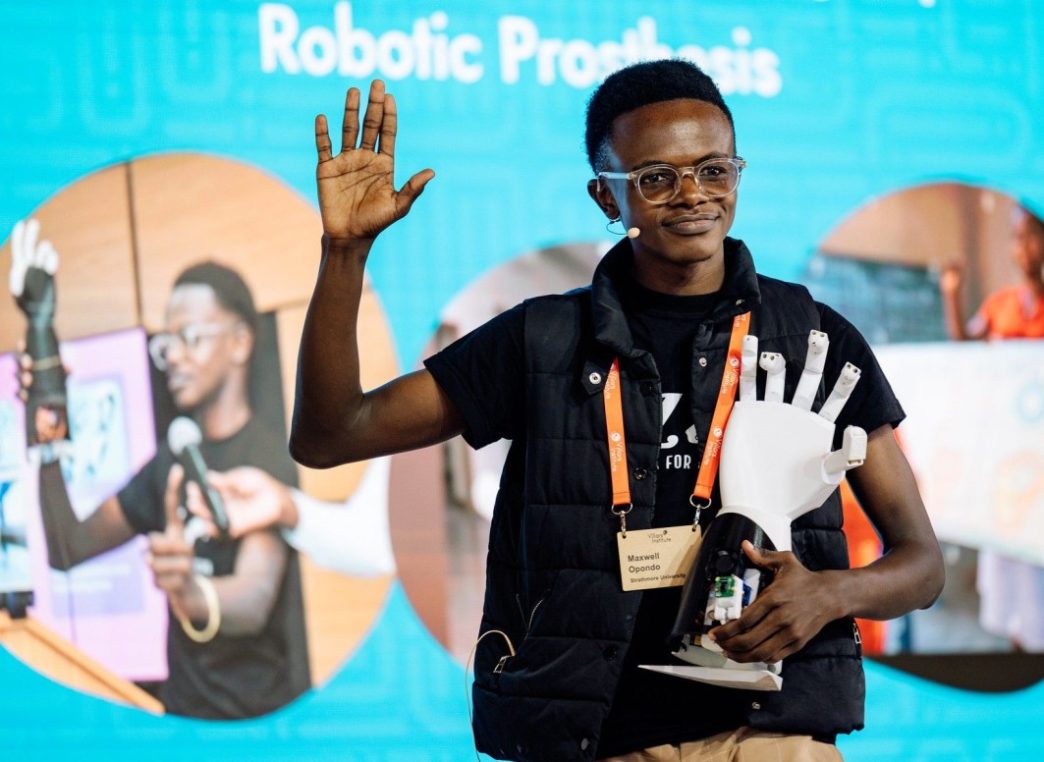
Nairobi-based startup Zerobionic has been named as one of the ten innovators selected for the 2026 cohort of the Qualcomm Make in Africa Mentorship Program. Chosen from a competitive pool of over 1,200 applications across 45 countries, Zerobionic is the sole Kenyan representative in this year’s deep-tech incubator.
Founded by 21-year-old innovator Maxwell Opondo, Zerobionic focuses on bridging the educational gap for students with hearing impairments. The startup develops 3D-printed humanoid robots—manufactured from recycled plastic waste—that utilize machine learning and computer vision to perform real-time translation between speech and sign language. This technology is specifically designed to sit in classrooms, acting as a live interpreter to help deaf students engage with STEM subjects that were previously inaccessible.
Now in its fourth year, the Qualcomm Make in Africa program is a cornerstone of the Qualcomm Africa Innovation Platform. It provides early-stage startups with equity-free support, including:
-
Technical Mentorship: 1-on-1 guidance from Qualcomm engineers to refine product design using Arduino AI platforms.
-
Intellectual Property Support: Specialized training and legal consultation to help startups protect their hardware and software innovations.
-
Financial Incentives: Participants receive a $5,000 stipend upon completion, with additional reimbursements available for patent filing fees.
-
Funding Opportunities: The program concludes with a virtual finale where one standout startup will receive a grant from the Qualcomm Wireless Reach Social Impact Fund.
Zerobionic’s selection highlights a growing trend in the East African tech ecosystem toward “deep tech”—solutions that combine hardware and sophisticated AI to solve localized societal challenges. Having already piloted its robots in schools across Machakos and Garissa counties, the startup plans to use the mentorship to scale its operations and enhance the 92% translation accuracy of its robotic systems.
By integrating assistive technology with environmental sustainability, Zerobionic exemplifies the “disability-led” innovation that Qualcomm aims to foster through this year’s diverse cohort, which also includes startups from Uganda, Nigeria, and Ghana focused on everything from smart EV charging to solar-powered aquaculture.