
Most startups spend their early years chasing visibility through paid ads, SEO, and social media. These channels work, but every competitor is using them too, bidding on the same keywords and fighting for the same feeds. The cost per result keeps climbing while organic reach keeps shrinking.
Podcast guesting is not the same as buying podcast ad slots. It requires no media budget, no CPM negotiation, and no creative production. A founder or marketing lead appears as a guest on relevant shows, earns a third-party endorsement, and walks away with content that stays permanently indexed. That distinction matters before anything else in this conversation.
Understanding how to build it as a repeatable team workflow is what most startups skip, and it is where the real operational advantage lives.
What Separates Podcast Guesting From Podcast Advertising
Buying a podcast ad slot is a media purchase. You pay for access to an audience, and that access ends when the campaign budget does. Podcast guesting is earned media. There is no placement fee, and the credibility comes from the host inviting you, not from paying to be heard.
The ROI model is also different. A guest appearance produces a permanent episode page, show notes with a backlink, and a conversation that gets referenced long after the publish date. A paid mid-roll disappears from rotation when the campaign ends.
For startups operating with constrained marketing budgets, that permanence is significant. Authority built through third-party recognition compounds in ways paid reach cannot replicate.
How to Find the Right Shows at Scale
The scale of the search is the operational problem most teams underestimate. There are over 2.8 million active podcasts indexed globally, spanning thousands of subcategories, languages, and audience sizes. Building a relevant shortlist manually through Apple Podcasts or Spotify takes days of work that compounds across every new campaign.
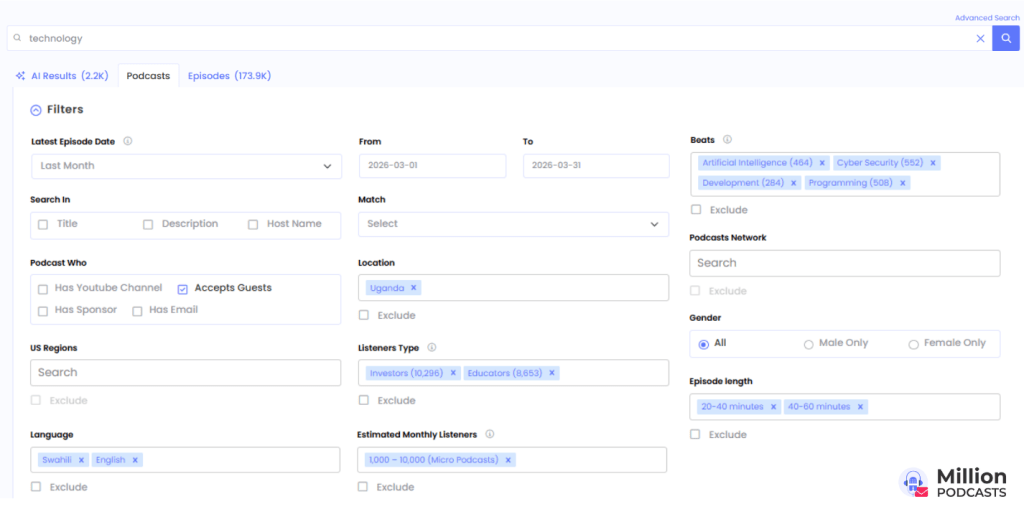
A podcast contact database solves this at the research level. Platforms such as MillionPodcasts give PR teams access to more than 346,000 shows specifically marked as accepting guests, with filters across niche podcast categories, episode frequency, and verified host contact details for over 1.1 million podcasts. That compresses what is normally a multi-day research task into a focused, actionable list. Exporting in CSV or Excel format means the shortlist plugs directly into existing CRM and outreach tools without rebuilding the process.
One filter worth applying early: shows that are specifically marked as accepting guests and have published an episode within the last 30 days. Both signals together confirm you are pitching an active show with a live audience, not a dormant catalogue.
What to Check Before You Pitch Any Show
Finding a show and vetting a show are two separate steps, and most outreach teams collapse them into one, which is where the mistakes happen. A show can appear relevant on paper and still be a poor fit once you look at the episode feed directly.
Three things should be confirmed before any pitch is written:
- Has the show covered your specific topic in the last eight weeks?
- Does the episode format run long enough for a substantive conversation?
- And does the guest history show a pattern of booking people at a comparable level of expertise to what you are pitching?
A show that just covered your exact angle has no editorial reason to revisit it, and a show that only runs 15-minute slots cannot build the depth a considered buyer needs to act.
Episode length matters more than most teams account for. High-ticket or relationship-dependent offers require shows running 45 minutes or more. That is the minimum time needed to demonstrate depth of thinking in a way that moves a buyer who is carefully comparing options. Shorter formats introduce, but they rarely convert.
How to Pitch for a Brand, Not for Yourself
The pitch dynamic shifts when you are submitting a founder or client as a guest rather than yourself. The temptation is to lead with their credentials, their awards, or their company traction. Hosts recognize that structure before they finish the second sentence and it signals immediately that the pitch was not written for their audience.
The approach that earns a response opens with the episode idea: one sentence on what the host’s listeners will understand differently after this specific conversation, then the guest as the person who can deliver that outcome. Send the pitch without an attached media kit. The right close is offering to send background materials if there is interest, not arriving with a PDF that may never get opened on a mobile inbox.
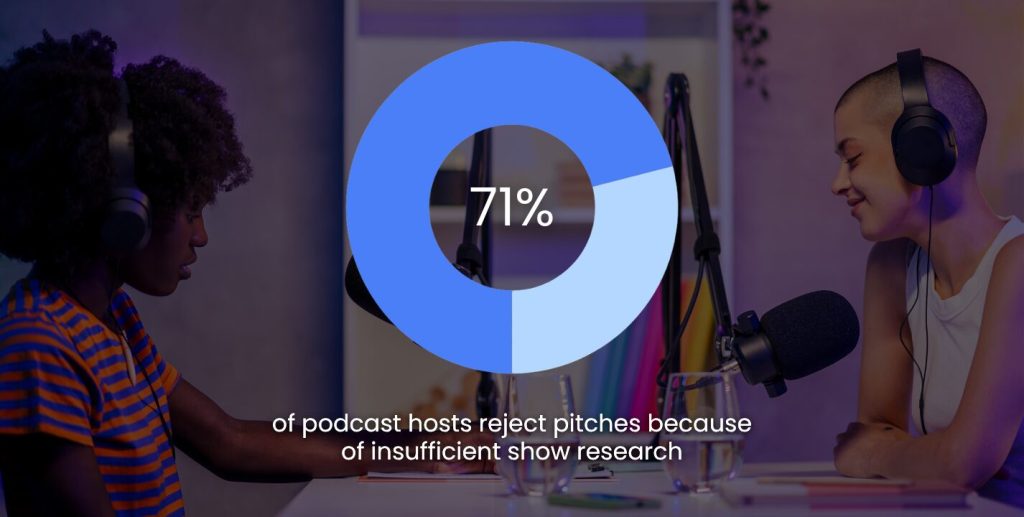
Research from the Content Marketing Institute found that personalized outreach referencing specific episodes consistently outperforms generic pitches. One specific reference to a recent episode, a guest the host booked, or a topic thread the show has been building toward changes how the entire pitch reads, and it is the single most effective edit any outreach team can make.
How to Build a Content System Around Each Appearance
Most teams share the episode link once and consider the work done. That recovers a fraction of the available value from a single well-executed appearance. The difference between those outcomes is a repurposing workflow, not more appearances.
One 45-minute conversation can produce a written blog post, three to five social clips, a newsletter section, a quote graphic, and a sales email the outreach team sends to warm prospects mid-conversation.
Research from the Content Marketing Institute found that repurposed content consistently outperforms content created from scratch while costing less to produce. That math changes how a single guest booking should be scoped and resourced.
Act Before This Channel Gets Crowded
Podcast advertising spend crossed $2 billion globally in 2024 according to the Interactive Advertising Bureau, and it is projected to grow steadily through 2027. As more brands recognize the channel’s value, show hosts are receiving more pitches, becoming more selective, and raising the bar on who gets booked. Response rates to unprepared outreach are already declining.
The startups building a structured podcast guesting practice now, before it becomes a standard item on every marketing plan, are accumulating placements and third-party credibility that competitors cannot replicate on a shortened timeline. Three to four targeted appearances per quarter, sustained over 18 months, builds a body of authority that takes years to match from scratch.
The pattern holds across digital channels. Brands that build channel presence methodically before it feels obvious consistently outperform those who wait. Podcast guesting is still at that stage. The infrastructure is in place, the hosts are accessible, and the window is open but it will not stay that way for long.
Most tech companies in this region have not yet organized their podcast outreach into a repeatable system. That gap is both a challenge and a real opportunity. What would it take for your brand to show up in the conversations your buyers are already having?
About MillionPodcasts
MillionPodcasts is a podcast discovery and contact database built for PR teams, startup founders, and marketing leads pursuing earned media through podcast guesting and paid sponsorship. The platform indexes 2.8 million+ active shows across 11,400+ niche categories, with 346,000+ shows specifically marked as accepting guests and verified host contact information for over 1.1 million podcasts, all searchable in one place. For teams managing outreach at volume, shortlists export to CSV or Excel and plug directly into existing CRM and email workflows. The same database surfaces 56,000+ shows with confirmed sponsor relationships for brands exploring paid placements alongside earned media. Where building a qualified podcast shortlist manually can take days, MillionPodcasts compresses that research into a single session, making it the core tool for podcast guest outreach, host-read advertising research, and repeatable media placement strategy.