
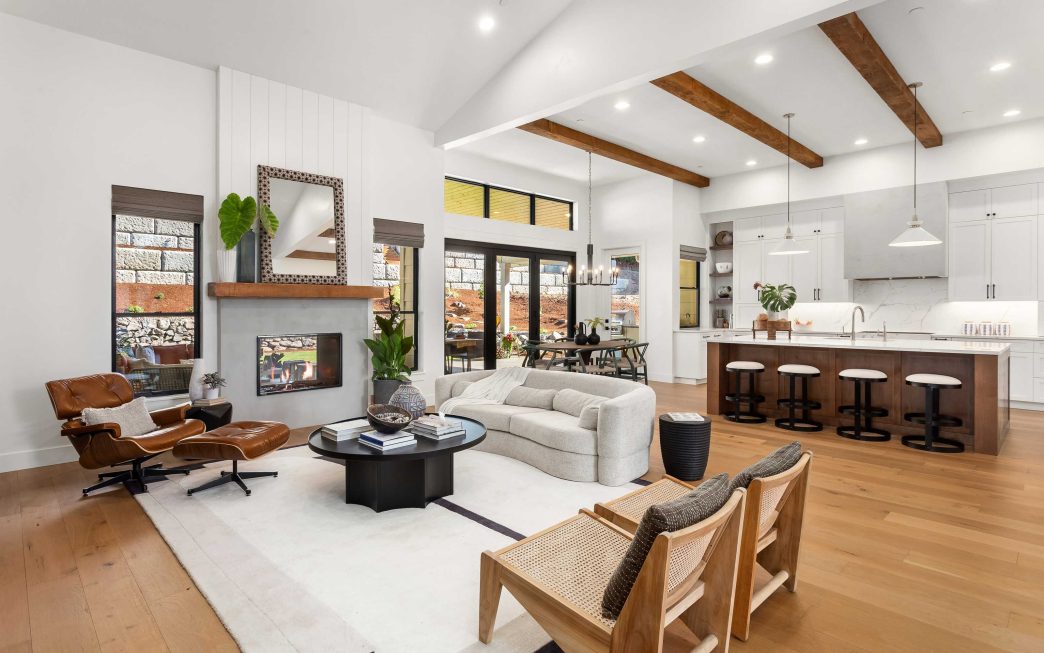
A home is never just a building. It is an argument about who a person is, made in fabric and furniture and the arrangement of objects across a floor. Every decision that goes into a room, whether considered or instinctive, contributes to an environment that then acts back on the person who made it. This reciprocal relationship between the space and its occupant is the subject of a growing body of research in environmental psychology, and its findings consistently point to the same conclusion: the quality of a home, and the degree to which it reflects the values and comfort of the people living in it, has a direct and measurable effect on their well-being.
What Research Tells Us About Design and Wellbeing
According to a 2025 Nature scoping review on interior design and health, which synthesised evidence from dozens of studies conducted between 2005 and 2024, key interior design factors, including lighting, spatial layout, furniture, and the quality of materials, all show consistent associations with physical, physiological, and mental health outcomes. The research makes clear that the home is not a passive container but an active environment: it shapes the nervous system, influences mood and stress levels, and either supports or undermines the daily restoration that good living requires. These findings have practical implications for anyone making decisions about how to furnish and finish the spaces where they spend the majority of their time.
Why the Sofa Is the Room’s Most Important Decision
The sofa is one of the most significant of those decisions, though it is rarely treated as such. It is typically the largest piece of furniture in a living room, the most used, and the one around which almost all domestic social life organises itself. It is also, in most households, the first thing a person encounters when they enter the room and the last they leave when the day is done. The impression it makes and the comfort it provides are not incidental to the character of the space; they are central to it. A sofa that feels right in a room, that fits its scale, suits its palette, and invites the kind of physical ease that genuine rest requires, contributes something that is difficult to replace once it is present and difficult to ignore once it is absent.
The Problem With Sofas Over Time
The challenge for most households is not finding a sofa they like but living with it over time. Sofas age. Fabric fades, pills, and loses its structure. Children and pets accelerate this process. What begins as an investment in the character of a room gradually becomes the thing that undermines it. The conventional solution is replacement, but replacement is expensive, environmentally costly, and often unnecessary when the underlying frame and cushions remain sound. The more considered solution is to change what can be changed while retaining what still functions: to update the cover rather than discard the piece.
Updating the Cover and Restoring the Room
This is the principle behind custom slipcovers for IKEA sofas: a well-made, washable cover that transforms the appearance and feel of an existing IKEA sofa without requiring its replacement. The value of this approach goes beyond the economy. A cover chosen deliberately, in a fabric and colour that genuinely suits the room, does something a compromised or worn original cannot. It restores the sofa to its proper role as the room’s anchor, and with it restores the room itself to coherence. The living room that had begun to feel tired and unresolved becomes, with a change of cover, a room that looks considered and feels comfortable again.
Environmental Identity and the Home That Feels Right
The psychology of why this matters draws on what researchers call environmental identity: the way in which the physical spaces we inhabit come to reflect and reinforce our sense of who we are. A home whose surfaces and furnishings match the values and tastes of its occupants tends to feel settled and restorative. A home whose surfaces and furnishings have drifted away from those values, through wear, accumulation, or compromise, tends to feel subtly at odds with the person living in it. The mismatch is rarely articulate; people are more likely to describe it as a vague dissatisfaction with the room than to identify its specific cause. But the effect on mood and on the quality of rest is real.
Why Fabric Choice Is More Than an Aesthetic Decision
Fabric choice is particularly significant in this respect. The material that covers the primary seating in a room contributes to its acoustic quality, its thermal character, and the way it reads visually across different conditions of light. Natural fabrics, and linen in particular, have properties that synthetic alternatives do not replicate: they absorb sound rather than reflecting it, they regulate temperature by breathing rather than trapping heat, and they develop a visual character over time that becomes more rather than less appealing. A linen cover on an IKEA sofa does not simply update its appearance; it changes the quality of the room in ways that are felt rather than analysed, sensed rather than observed.
The Practical Value of a Washable Cover
There is also a practical dimension that matters for households where the sofa is in constant use. A cover that can be removed and washed is not a minor convenience; it is a fundamental feature of a functional family room. The anxiety about spillage, the inevitability of pet hair, and the gradual accumulation of the wear that daily use produces all become manageable rather than a source of ongoing low-level concern. A cover that can be laundered and returned to the sofa looking clean and fresh removes from the equation the slow deterioration that otherwise erodes the character of the room. This is what it means for a furnishing choice to support daily life rather than simply decorate it.
Personalising a Standard Piece for a Specific Room
The question of how to personalise a standard piece of furniture is one that many people who chose IKEA sofas for practical and budgetary reasons find themselves returning to over time. IKEA sofas are well-engineered and durable; their frames and cushion systems are designed to last. What they are not designed for is the expression of a specific aesthetic or the particular palette of a specific room. A custom cover addresses this gap directly. It takes a piece that was chosen for its function and gives it the character that makes it belong to the space rather than simply occupying it. This distinction, between a room that is furnished and a room that is composed, is the difference that good design psychology identifies as central to the experience of comfort.
Slipcovers and a Longer Relationship With Furniture
There is a broader cultural shift in how people relate to the furniture they own. The era of buying cheaply and replacing frequently is giving way to a more considered approach: choosing pieces built to last and then investing in their renewal. Slipcovers are one of the most direct expressions of this philosophy. They treat the sofa not as a disposable product but as a durable asset to be managed thoughtfully over time. The environmental case is significant: extending the life of a sofa by five or ten years through a change of cover represents a real reduction in material waste. The case from quality of life is equally compelling. A home whose furnishings are maintained and genuinely suited to the people using them is a better home to live in, and the difference is felt every single day.
Attention as the Foundation of a Good Home
Making a home that genuinely works is not a matter of expenditure or trend. It is a matter of attention: to the quality of the materials in a room, to the degree to which they reflect considered choices rather than accumulated compromises, and to the willingness to address what is not working. A worn sofa cover is a small thing. But the room it lives in is not, and the quality of daily life conducted there is not small either. Treating it as worth attention is what distinguishes a house from a home.