There’s a moment that happens to almost everyone at some point in their career. You get a job offer. You negotiate a salary. You agree on a number that feels good maybe even great. You sign the contract. You celebrate.
Then the first paycheck arrives. And you stare at it, confused.
The number on the pay stub is smaller than the number you agreed to. Sometimes much smaller. Tax came out. Social security came out. Maybe state tax, if you’re in the US. Maybe pension contributions. Maybe health insurance.
You knew deductions would happen. You just didn’t know how much.

Why Gross Salary Is Only Half the Story
When we talk about salaries, we almost always talk about gross figures. The big number. The one that sounds impressive in job interviews and offer letters. The one that fits neatly into headlines about “average tech salaries in Berlin” or “what developers make in Singapore.”
But nobody lives on gross salary. You live on net salary what’s left after everything is taken out.
The gap between these two numbers varies wildly depending on where you are. A €70,000 salary in Germany feels different from €70,000 in Switzerland. A $90,000 job in New York leaves you with less than the same salary in Texas. A £60,000 position in London goes further than you’d think once you account for the tax-free allowance and NI thresholds.
If you’re only looking at gross figures, you’re comparing apples to oranges. You don’t actually know what you’ll have to live on until you see the net.
The Geography of Take-Home Pay
Here’s what makes this complicated: tax systems are not the same everywhere.
Some countries have progressive tax rates that increase significantly as you earn more. Some have flat taxes. Some have no income tax at all but higher consumption taxes. Some have regional taxes that vary by state or province. Some have different rules for foreign workers, for remote workers, for contractors.
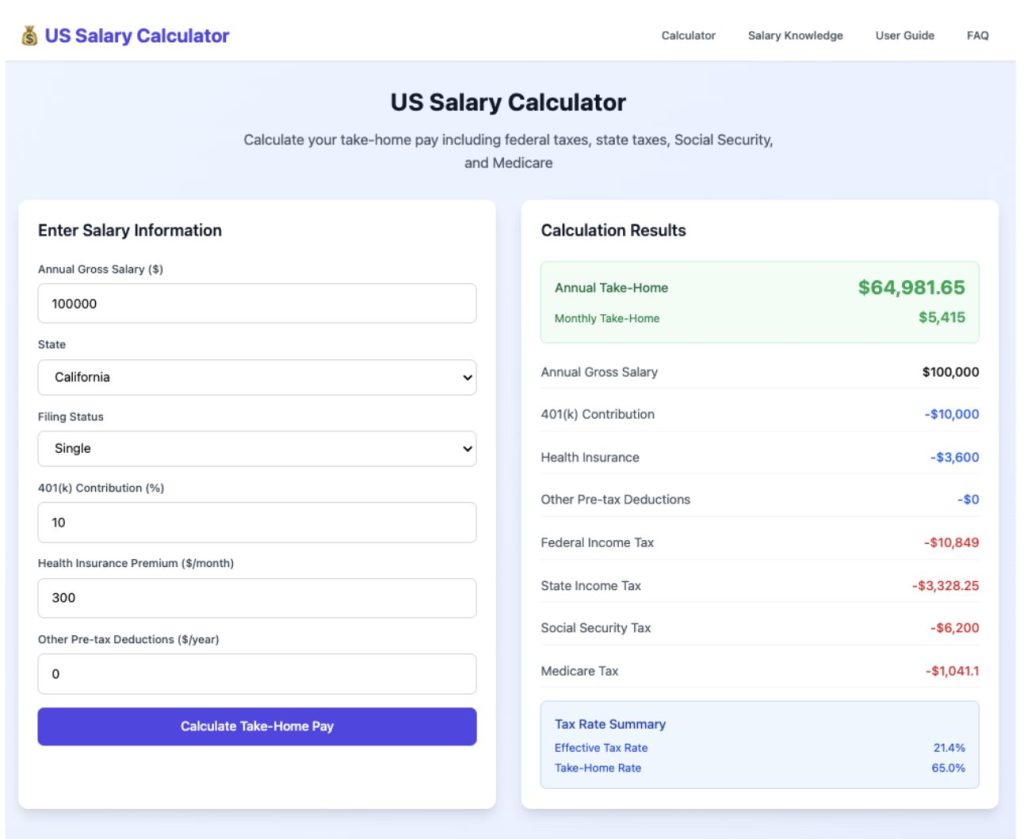
The US is its own special case. Federal income tax is just the beginning. Then you have FICA (Social Security and Medicare). Then state income tax, which ranges from 0% in places like Texas and Florida to over 13% in California. Then maybe city tax. Then deductions for health insurance, retirement contributions, and everything else.
A salary that sounds comfortable in one state might leave you stretching in another. A global salary calculator helps you see past the gross number and understand what a job actually pays where you’ll be living.
When You’re Looking at Multiple Options
This becomes even more important when you’re comparing opportunities in different places.
Maybe you’re a developer considering offers in Berlin, Amsterdam, and Dublin. The gross salaries are all in the same ballpark. But after tax, after social contributions, after cost of living, the actual picture looks very different.
Maybe you’re a remote worker for a US company, living in Europe. Your contract is in dollars, but you pay tax where you live. How much will you actually keep?
Maybe you’re planning to move for a job and trying to figure out whether the salary increase justifies the move. A 20% raise sounds great until you realize the new city has 30% higher taxes and rent is double.
These aren’t questions you can answer with quick estimates. You need real data, applied to your specific situation.
What Changes When You Know the Real Number
When you have a clear picture of your net salary, everything shifts.
You can budget accurately. Not based on guesswork, but on actual figures. You know what you’ll have for rent, for bills, for savings, for everything else.
You can compare offers intelligently. Not just “which job pays more” but “which job leaves me with more to live on.”
You can plan for the future. If you know what your take-home pay looks like, you can make decisions about retirement contributions, investments, major purchases.
You can negotiate from a position of knowledge. If you understand the tax implications, you can ask for adjustments a signing bonus to cover a tax shortfall, a relocation package that accounts for cost of living, a salary that actually makes sense for the location.
The Stuff Most People Don’t Think About
Here are some things that surprise people when they first dig into net salary calculations:
Tax brackets aren’t marginal in the way most people think. Earning a little more can push you into a higher bracket, but only the amount above the threshold is taxed at the higher rate. A good calculator handles this correctly.
Social contributions add up. In many countries, social security, healthcare, and pension contributions take a significant chunk out of your paycheck sometimes more than income tax.
State and local taxes vary wildly. In the US, this is the biggest variable. Two jobs with the same gross salary in different states can have take-home pay that differs by thousands.
Exchange rates matter. If you’re paid in one currency but live in another, fluctuations can change your effective salary month to month.
Tax treaties affect foreign workers. If you’re working in a country where you’re not a citizen, your tax situation might be different from locals.
Who Actually Uses This
The people who need clear salary information cut across every stage of career and life.
Recent graduates comparing first job offers in different cities.
Experienced professionals considering international moves.
Remote workers trying to understand their tax obligations.
Contractors figuring out their effective hourly rate after tax.
Couples planning moves together, needing to understand combined income.
Immigrants and expats navigating unfamiliar tax systems.
Anyone who’s ever looked at a pay stub and wondered where the money went.
The Part That’s Hard to Find Elsewhere
Most salary information online is either too generic or too localized. You can find calculators for specific countries, but comparing across borders is hard. You can find averages for “software engineer in Berlin” but not what you’ll actually take home at a specific salary level.
A tool that handles multiple countries, updates its data regularly, and accounts for the differences in tax systems fills a real gap. It turns guesswork into something closer to certainty.
What You Actually Need to Know
When you’re looking at a job offer or considering a move, you need answers to a few specific questions:
What will I actually deposit into my bank account each month?
How does this compare to what I’d keep in another location?
What deductions should I expect that I might not have thought about?
How will my salary change if I move, switch jobs, or go remote?
A good income tax calculator for your target location answers these. It takes the mystery out of the gap between what you’re offered and what you’ll live on.
When It Matters Most
Most of the time, you’re not thinking about salary calculations. You’re working, living, getting paid, moving on.
But then a moment comes when you have a decision to make. A job offer in a new city. A relocation opportunity. A remote contract with a company in another country. A chance to move abroad.
In that moment, you need real answers, not estimates. You need to know what your life will actually look like on that salary, in that place, after everything is taken out.
That’s when having the right tool matters. Not because it changes the numbers, but because it lets you see them clearly.