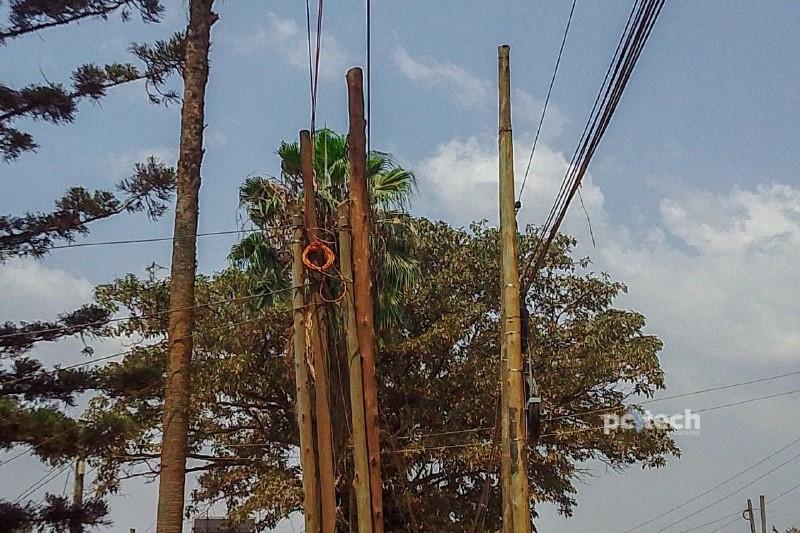
The Uganda Communications Commission (UCC) has officially moved to end the “chaotic” expansion of fiber optic networks in urban centers. In a directive issued, the regulator has ordered all telecommunications companies and internet service providers to halt the uncoordinated planting of poles and instead adopt a collaborative infrastructure-sharing model.
For years, Kampala’s skyline and residential streets have been cluttered with a “forest” of wooden and concrete poles. It is common to see three or four different companies planting separate poles along the same 100-meter stretch of road to carry their individual fiber cables. This “pole duplication” has been labeled as visual pollution and a wasteful expenditure that ultimately keeps the cost of internet high for the consumer.
The UCC’s new mandate requires operators to coordinate their deployment plans. Moving forward, companies will be expected to share existing physical infrastructure—poles, ducts, and towers—rather than building their own from scratch. This is part of a broader regulatory shift toward “Open Access” networks. By sharing the “passive” infrastructure, telecom companies can significantly reduce their Capital Expenditure (CAPEX), which the UCC hopes will lead to a reduction in data prices, which remain some of the highest in the East African region.
This directive marks a milestone in the maturity of Uganda’s telecom sector. As the country prepares for a wider 5G rollout and the implementation of the National Emerging Technologies Strategy, the government is signaling that the era of “every man for himself” in infrastructure is over. The focus is now on building a cleaner, more efficient, and more affordable digital backbone for the nation.