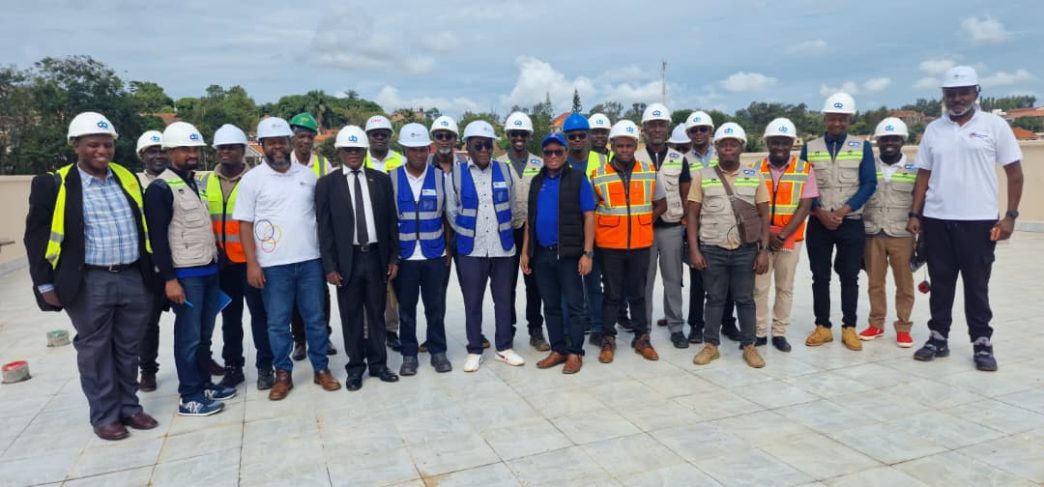
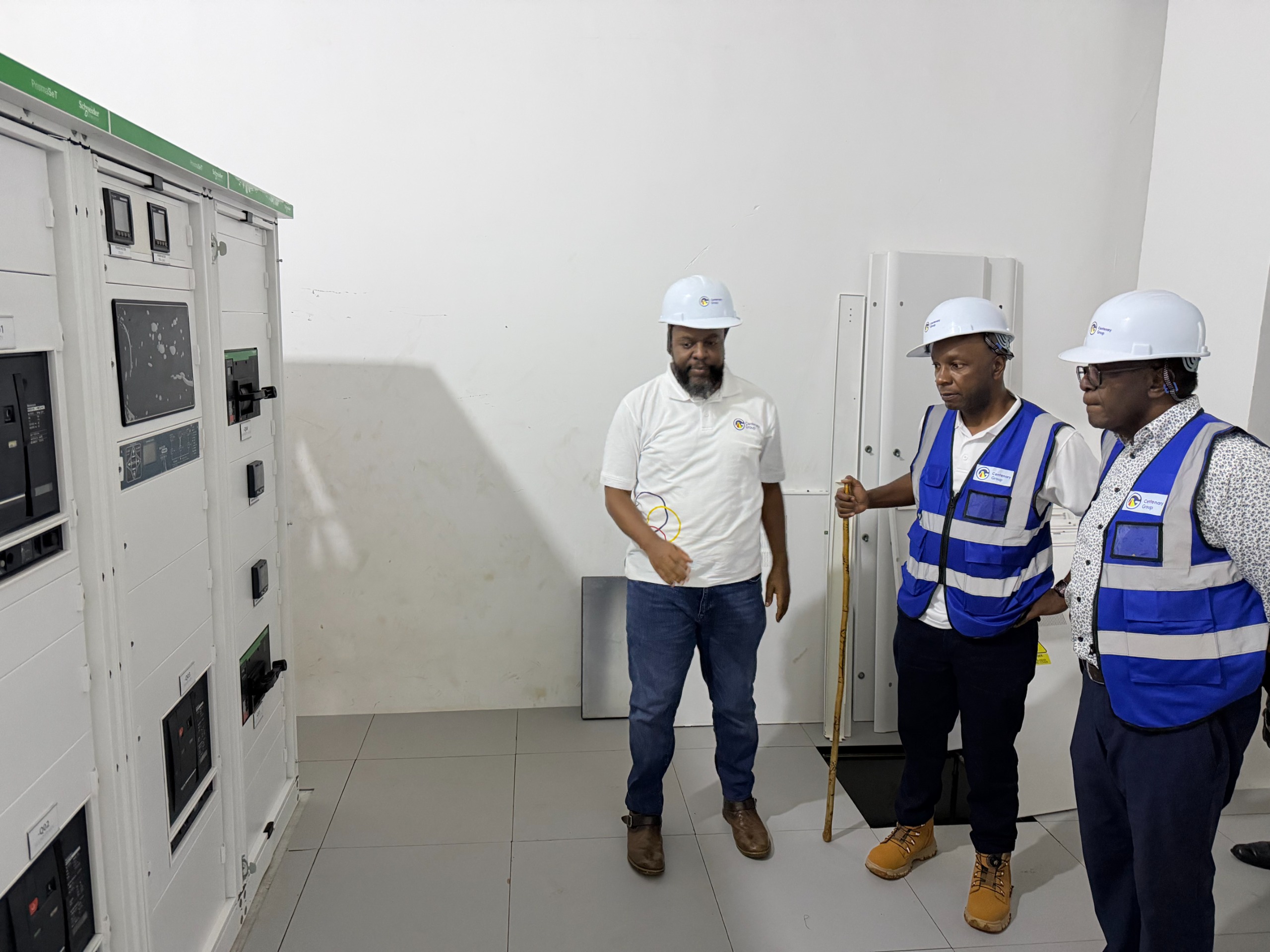
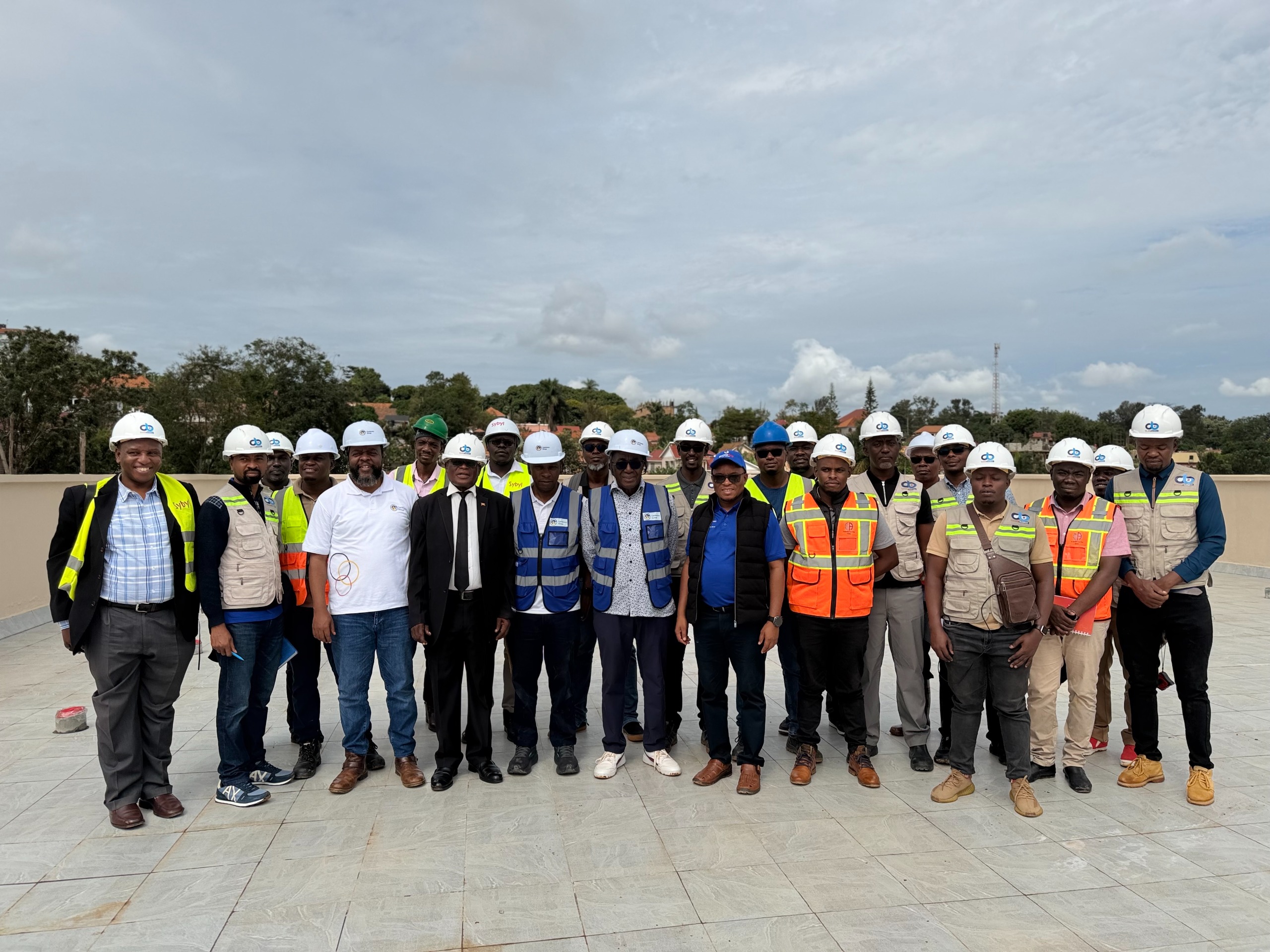
Today, the Centenary Group Executive Chairman, flanked by the Cente-Tech EXCO team and their construction partners, toured the near-completed floors of what is set to become Uganda’s most consequential piece of digital infrastructure: a Tier III-ready data centre scheduled to be officially launched in September 2026.
The site visit confirmed what engineers and project managers have long anticipated: the hard work is done. Civil construction is complete. The technical installation phase has concluded. What remains, by all accounts, are finishing touches; the final calibrations before a facility that has been 3 years in the making flips the switch and goes live.
For anyone who has tracked the arc of Uganda’s digital ambitions, from the National Development Plan iterations to the rollout of fibre-optic lines into rural districts to the proliferation of mobile money agents in sub-county trading centres, this moment carries outsized significance.
The story of this data centre begins in February 2022, when Cente-Tech, the technology arm of Centenary Group, dispatched its CEO, Dr. Grace Ssekakubo, and CTO, Peter Kahiigi, to inspect a plot of land in Masaka earmarked for what would become Uganda’s first Tier III data centre outside of Kampala.
The ambition was audacious. At the time, Uganda’s data centre landscape was thin: the available data centres all anchored to the greater Kampala corridor. Centenary’s bet was deliberate. Placing world-class data infrastructure in Masaka, 130 kilometres from the capital, was a philosophical statement.
“This data centre embodies our promise of equitable social and economic transformation for all Ugandans,” said Prof. John Ddumba-Ssentamu, Executive Chairman, Centenary Group.
Groundbreaking came in December 2023, aligned symbolically with Centenary Group’s 40th anniversary in Uganda. By January 2025, the Chairman led delegations; first of EXCO executives, later of the full Centenary Bank Board of Directors, onto the site in what were clearly not routine courtesy visits. There were inspections by a leadership team preparing to go live.

Now, in March 2026, the countdown is official: September is the target. The finishing line is visible.
What Tier III Means, and Why it Matters
Not all data centres are created equal. The Uptime Institute’s Tier Classification system, the global benchmark, grades facilities from Tier I (basic) to Tier IV (fault-tolerant). A Tier III designation is the inflection point where infrastructure crosses from aspirational to mission-critical.
Tier III facilities guarantee 99.982% uptime availability, translating to no more than 1.6 hours of downtime per year. They incorporate multiple power sources, N+1 redundant cooling systems, and multiple network connections. Crucially, they allow maintenance without taking systems offline.
The 99.982% availability guarantee is not marketing language. For Centenary Bank, Uganda’s second-largest commercial bank by assets, with a customer base skewed heavily toward the rural poor, any unplanned downtime is a livelihoods disruption.
For Uganda, a country that has historically exported its digital data sovereignty to data centres in Nairobi (Kenya), Johannesburg (South Africa), and Dubai (the UAE), a domestically-owned Tier III facility changes the calculus entirely. Sensitive banking data, government records, health information, and critical business operations can remain within national borders, under Ugandan law and Ugandan control.
“As a Tier 3 facility, we’ll provide telecommunications companies with a reliable Internet Point of Presence, while also being fully equipped to support critical national infrastructure projects like the East African Oil Pipeline,” said Dr. Grace Ssekakubo, CEO of Centenary Technology Services.
The Green Edge: Sustainability as Strategy
What separates the Masaka facility from a conventional data centre is not just its location or its certification tier; it is its environmental architecture. Centenary has designed a facility that consumes 40% less power than conventional data centres, integrating solar power generation, energy-efficient cooling systems, and sustainable water management practices.
In a region where unreliable power grids have historically made data centre operations a game of generator dependency and fuel bills, this is not idealism. It is sound business engineering. Lower power consumption translates directly to lower operational costs, which translates to more competitive pricing for clients, which translates to faster adoption.
The facility’s green credentials also align it with the global Environmental, Social and Governance (ESG) frameworks that increasingly govern international investment and donor decisions; a consideration not lost on a Group managing assets in excess of UGX6.2 trillion.
The NDP IV Connection: Infrastructure as National Policy
No infrastructure project of this scale exists in a policy vacuum. The Centenary Group Masaka Data Centre sits squarely at the intersection of three interconnected national frameworks: Uganda’s Vision 2040, the Digital Transformation Roadmap 2023/24–2027/28, and the newly launched Fourth National Development Plan (NDP IV), which covers the period 2025/26 to 2029/30.
NDP IV, which was officially launched by President Museveni in June 2025 at Kololo Ceremonial Grounds, is built around a singular ambition: to grow Uganda’s GDP tenfold, from US$50 billion to US$500 billion, within the next 15 years. The plan targets double-digit economic growth by 2029/30 and projects per capita income rising from US$1,146 to US$2,008 within the plan period.
To achieve those numbers, NDP IV identifies Science, Technology, and Innovation (STI) as a pillar investment theme, specifically flagging the need to build and maintain strategic sustainable infrastructure in ICT. Private sector investment in data centres is exactly the kind of co-investment the plan envisions.
The Digital Transformation Roadmap, which the Masaka facility directly supports, aims at three interlinked outcomes: enhanced digital infrastructure, data sovereignty, and integrated digital services. A Tier III data centre outside Kampala delivers on all three simultaneously.

Digital sovereignty, the idea that a nation’s data should reside and be governed within its own borders, has graduated from an academic talking point to a policy imperative for African governments. Uganda is not alone in recognising that infrastructure dependency on foreign-owned data centres carries political and economic risk. The Centenary facility represents concrete private-sector action on a concern that has too often remained at the level of ministerial speeches.
Local Content, Community Capital
There is an economic justice dimension to this project that its architects have been careful to amplify. Centenary Group has deliberately sourced construction materials and support services from Masaka-based enterprises. Contracts have flowed to local suppliers. Employment has been created in the community.
This is not incidental. Centenary Group was formed out of Centenary Rural Development Bank, an institution whose entire founding rationale was the use of financial services as an intervention against rural poverty. The placement of a Tier III data centre in Masaka is the most direct possible expression of that institutional DNA.
The facility is also designed with open-access connectivity: all internet service providers can offer services through it. This promotes competition, improves service quality, and prevents monopolistic lock-in —a framework that, if it works as designed, should compress the cost of internet access for businesses and consumers across the broader region.
The Regional Play: East Africa’s Digital Hub Race
Uganda’s data centre ambitions do not exist in isolation. The East African data centre market is intensifying. Nairobi has long been the region’s digital gateway; its fibre connectivity to the coast and its established cloud infrastructure put it ahead of most peers. Kigali has staked an aggressive position as a technology-friendly destination. Dar es Salaam is investing in submarine cable landing infrastructure.
For Uganda to compete, let alone to host data for regional clients, it needs certified Tier III facilities that international businesses and regional organisations can trust. The Masaka centre, positioned as open to telecommunications companies as an Internet Point of Presence, is a direct play for that regional value chain.
The East African Oil Pipeline connection cited by Cente-Tech is particularly notable. Critical national infrastructure, including the Uganda-Tanzania Crude Oil Pipeline, generates massive data management requirements. A domestically-owned, certified facility that can credibly bid for those contracts is a significant national asset.
When the Centenary Group Data Centre opens in September 2026, it will do so as something more than a technical facility. It will be a proof of concept; evidence that Uganda’s private sector can conceptualise, fund, build, and operate world-class digital infrastructure without waiting for donor funding or foreign direct investment.
The immediate commercial beneficiaries will be Centenary Bank’s own operations, which have long needed more resilient data infrastructure to support their over 3 million account holders across Uganda’s 134 districts. But the facility’s open-access design means the addressable market extends immediately to every bank, telecom, government agency, and enterprise organisation that needs reliable, sovereign data hosting.
Peter Kahiigi has been clear about the ambition, “We’re positioned to complete this facility targeting Tier 3 certification standards. The green technology integrated into this data centre establishes new regional benchmarks.”
That is not the language of a company building for internal use. That is the language of a company building a business.