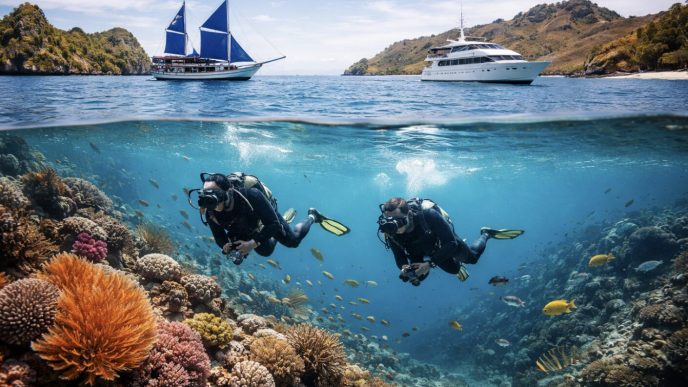
Komodo diving tours are among the most sought-after marine experiences in Southeast Asia. For many travelers, diving around Komodo Island is not just another activity; it is often the highlight of their entire trip to Indonesia.
However, the success of that experience rarely depends only on the dive operator. Resorts, hotels, and travel professionals play a crucial role in preparing guests, setting realistic expectations, and coordinating logistics that make these trips enjoyable rather than exhausting.
For hospitality businesses around Labuan Bajo and the Komodo region, understanding how diving tours actually unfold can significantly improve guest satisfaction. From pre-arrival communication to simple planning advice, small operational details often determine whether guests return excited and energized or overwhelmed after a long day at sea.
This article looks at Komodo diving tours from a business and hospitality perspective, helping resorts and B2B travel partners better support guests who are planning these world-class marine experiences and let them know what to expect on Komodo diving tours.
Why Komodo Diving Tourism Requires Better Guest Preparation
In many parts of Indonesia, a guest can show up, do a simple briefing, and enjoy calm reefs with minimal planning. Komodo is different. The marine life is world-class, but the environment can be dynamic. Currents can be strong, water temperature can change quickly, and the day’s pacing is often earlier and more structured than guests expect.
That doesn’t make it unsafe or “only for experts.” It simply means Komodo works best when guests choose the right trip type for their experience level and comfort preferences, especially if they’re new to diving on Komodo Island.
Day Trips vs Liveaboards: The First Choice That Shapes Everything
Most Komodo diving experiences fall into two categories:
Day Tours (based in Labuan Bajo or nearby)
Day trips are a good fit for guests who:
- Want to sleep on land and keep evenings flexible
- Prefer shorter commitments
- Are unsure how they’ll handle boat motion
Day tours can still be full days, early starts, multiple dives, and a return to port in the afternoon or early evening. From a resort perspective, day trips are easier to coordinate around check-in/check-out schedules and land-based activities.
Liveaboards (multi-day “floating hotel” experiences)
A liveaboard is ideal for guests who want immersion: waking up near dive sites, minimizing transit time, and maximizing underwater hours. This is where the conversation around Komodo liveaboard luxury often comes up not as a marketing phrase, but as a comfort expectation.
For many guests, “luxury” means:
- A quiet cabin with good ventilation
- Smooth logistics and attentive service
- Well-paced meals and hydration
- A calm, organized dive deck
The key is to help guests understand that liveaboards range widely in comfort level and pace. “Luxury” isn’t just décor; it’s space, crew coordination, and operational consistency.
Understanding the Operational Structure of Komodo Dive Tours
Even without getting technical, guests appreciate a realistic picture of the rhythm.
A common structure looks like this:
- Early start: Many boats aim to maximize calm morning conditions.
- Briefing and first dive: Guests get a plan, safety notes, and site-specific guidance.
- Breakfast and rest: Diving takes energy; rest is part of the schedule.
- Second dive: Often late morning or midday.
- Lunch and longer break: Hydration and recovery matter more than guests expect.
- Third dive or snorkel: Depending on itinerary and conditions.
- Evening wind-down: Dinner, logs/photos, and an early bedtime for those doing another early start.
For resorts, the most useful thing you can do is help guests plan their “energy budget.” Many visitors underestimate how physically demanding sea days can be, with sun exposure, salt, motion, and repetitive gearing up adding up.
The Conditions: How to Explain Komodo Without Scaring People
Komodo’s reputation is built partly on currents and dramatic underwater movement. Guests don’t need technical detail, but they do need honest framing:
- Currents can be present; this is why guides matter, and briefings should be followed closely.
- Water temperature can vary: Some guests are surprised by cooler pockets, especially when compared to Bali.
- Visibility changes: It can be excellent, but it’s not guaranteed every day.
- The reward is biodiversity: Bigger fish action, manta encounters, and thriving reefs are part of the appeal.
The objective message is simple: Komodo is stunning, and it’s more enjoyable when guests choose routes and sites that match their comfort level.
Marine Life Expectations: Inspiration With Realism
Guests arrive with wish lists: manta rays, sharks, turtles, big schools of fish. It’s important to keep excitement high while staying honest: nature does not perform on cue.
A helpful hospitality approach is to shift the focus:
- Instead of promising a specific sighting, talk about variety and likelihood.
- Encourage guests to enjoy the “whole reef,” not only the headline animals.
- Remind photographers and wildlife lovers that patience pays off.
When guests understand that sightings are a bonus, not an entitlement, they enjoy the trip more and complain less.
Comfort and Wellbeing: The Quiet Factors That Decide Satisfaction
If you want to reduce “post-tour fatigue complaints,” these are the three biggest issues to prepare guests for:
1) Seasickness and boat motion
This can affect even confident travelers. Encourage guests to:
- Prioritize rest the night before
- Keep hydration steady
- Avoid heavy alcohol the evening prior.
- Choose a trip style aligned with their tolerance (some do better on larger boats, others prefer day trips)
2) Sun and dehydration
Guests often focus on gear and forget basics. Komodo days involve exposure. Hydration, light layers, and sun protection are not optional if they want to feel good by day three.
3) Overpacked itineraries
The most common mistake I see is guests stacking:
- Late-night arrival + early dive departure
- Diving days back-to-back with no buffer
- A tight flight on disembarkation day
As a resort manager, I always recommend a buffer. Even a half-day of flexibility changes the whole feel of the trip.
Operational Advice Resorts Can Give Without Being “Salesy”
You can add real value without promoting any operator. Build a standard pre-departure briefing that your team can deliver in two minutes:
- Confirm departure time and meeting point
- Encourage guests to pack light and bring warm layers for breezy mornings.
- Remind them to hydrate and to go to bed early.
- Suggest they eat simply before departure.
- Recommend a realistic flight schedule (avoid tight connections)
- Encourage a refresher if they haven’t dived recently.y
This is B2B hospitality in action: proactive guidance reduces guest stress and reduces problems your staff must handle later.
The “Luxury” Conversation Done Right
When guests mention Komodo liveaboard luxury, they may be asking:
- Will I sleep well?
- Will the bathrooms be comfortable?
- Will meals suit my dietary needs?
- Will the crew manage the trip smoothly?
- Will I feel crowded?
You can stay objective by advising guests to evaluate comfort basics:
- Cabin layout and ventilation
- Space per guest and common area comfort
- Typical group size and daily pace
- How the boat handles non-divers or mixed-experience groups
- The clarity of pre-trip communication (a strong indicator of onboard organization)
Luxury, in a hospitality sense, is the absence of friction.
A Final Note for Hotel Owners: Why This Knowledge Builds Trust
Komodo attracts travelers who are willing to invest in experiences. They also have higher expectations because the trip is a highlight rather than an add-on. When your property explains Komodo clearly, you become part of the highlight. Guests remember the place that helped them plan wisely.
The best outcome of Komodo diving is not only the wildlife or the reefs. It’s the feeling guests carry back to your resort: that they were well cared for, well advised, and able to enjoy Komodo island diving with confidence.
Resorts that understand the realities of Komodo diving tours — from logistics and pacing to guest preparation — can significantly improve the overall travel experience. Clear communication, practical advice, and thoughtful scheduling allow guests to enjoy the destination with confidence.