


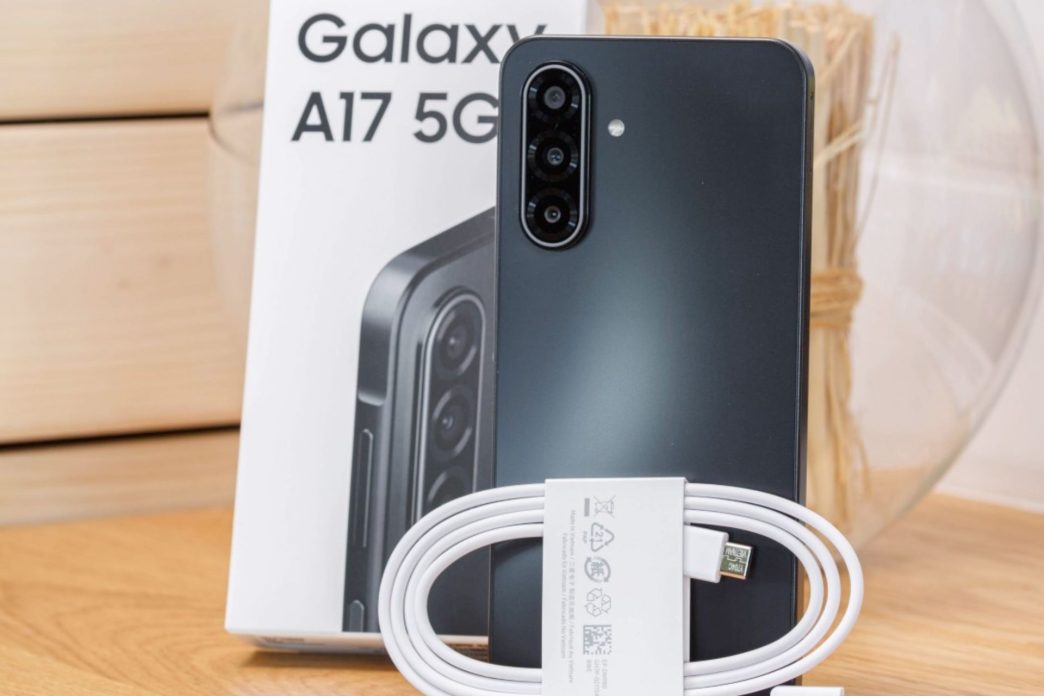
Samsung’s release of the Galaxy A17 5G in August 2025 marked another strategic step in its mission to strengthen its presence in the competitive mid-range segment. Arriving at a time when consumers are demanding more value without stretching their budgets, the A17 5G positions itself as a device that promises refinement, practicality, and solid everyday performance. It enters the market quietly confident, backed by Samsung’s growing emphasis on durability, longevity, and user-focused design.
From the outset, the A17 5G presents itself as a phone built for users who want reliability above all else. Samsung has packaged it in a modern, straightforward design that feels familiar to anyone who has engaged with the A-series before: clean lines, a comfortable footprint, and a build that leans more toward functionality than flair. It’s a device that doesn’t try too hard to impress at first glance, yet signals that there’s more to uncover once you start using it.
As with many recent mid-range releases, expectations for the A17 5G center on how well it balances performance, battery endurance, camera quality, and the software experience. Samsung’s approach with this model suggests an intention to refine the essentials rather than chase headline-grabbing specs.
In this review, we explore whether that approach pays off and whether the Samsung Galaxy A17 5G truly stands out in a crowded field of aggressively priced alternatives.
Design and Build Quality
The Galaxy A17 5G sticks to the A-series’ understated design philosophy, favouring practical choices over premium materials: flat edges, a lightweight profile, and a minimal layout, a neat rear camera array, and a clean, display-forward front make it comfortable for long-term use. Now finished in matte with a glass-fibre back (and a plastic frame), the revised build lets Samsung slim the phone down and shave off a few grams, resulting in a sleeker, lighter feel without abandoning the series’ restrained aesthetic.
The Galaxy A17 retains an IP54 rating from its predecessor, which provides basic protection against dust and light water splashes, useful for everyday mishaps but not designed for heavy water exposure.
The Samsung Galaxy A17 takes a subtle step forward in design refinement, particularly on the back, where it features a clean triple-camera setup accompanied by an LED flash. This marks a shift from last year’s A16, which used three individual camera bumps, giving the A17 a more streamlined and cohesive look. The matte finish and glass-fibre back further enhance this tidy aesthetic, while keeping the device lightweight and comfortable to hold.
Practicality continues along the frame with a dual-purpose SIM tray [on the left] that accommodates either two physical SIM cards or one SIM and a microSD card for storage expansion. On the opposite side [the right], the volume rocker sits above a power button that doubles as a fingerprint scanner—fast and accurate based on hands-on testing. At the bottom, Samsung includes a USB-C port and a single bottom-firing speaker. While the speaker can get reasonably loud, its placement makes it easy to block accidentally, and at high volumes, it tends to sound thin or distorted.
Overall, the A17’s build focuses on utility and user-friendly design, even if some elements remain modest. The design, on the other hand, plays it safe, prioritising function and everyday durability over flashy extras.
Display
The Galaxy A17’s display, which is protected by a Corning Gorilla Glass Victus [should be able to survive drops], remains technically identical to last year’s A16, but that’s far from a drawback; the previous model’s screen was a standout feature, and the same strengths carry over here. You get a bright and vibrant 6.7-inch Super AMOLED panel with a peak brightness of 800 nits [which provides average visibility in bright conditions], a smooth 90Hz refresh rate for fluid scrolling and animations compared to older or budget displays capped at 60 Hz, and all the usual AMOLED advantages—rich colours, deep blacks, wide viewing angles, and solid motion clarity, making it a reliably strong display by 2025 standards.
The Samsung Galaxy A17’s display is held back by two key drawbacks: its noticeably large bezels, especially the thick chin and dated notch, which give the phone a front design reminiscent of devices from older handsets, and its limited outdoor brightness, where visibility in sunlight is only average and further hindered by the screen’s reflective coating.
Performance
The Galaxy A17 comes in a range of memory and storage configurations from 4GB up to 8GB of RAM, and either 128GB or 256GB of storage. The chipset choice depends on whether you pick the 5G or 4G model. The 5G version [which we have and is available in the Ugandan market] ships with Samsung’s Exynos 1330, while the 4G model uses the MediaTek Helio G99; both are octa-core designs with two performance cores and six efficiency cores, and, in benchmarks, sit close to one another (the Exynos holding a modest lead).
In Geekbench 6, the A17 posts around 976 single-core and 2,229 multi-core, and the GPU has been stepped up to a Mali-G68, scoring about 1,321 on the GPU test versus roughly 1,256 from last year’s A16, so there’s an incremental graphics improvement rather than a generational leap.
In everyday use, that translates to a very capable budget experience: web browsing, video streaming, music, social apps, and light gaming all run smoothly, with only the occasional stutter.
Let’s talk a bit a little about gaming. The Galaxy A17 handles popular titles surprisingly well for its class: Minecraft runs smoothly and often pushes close to the full 90Hz refresh rate of the AMOLED display, with only the occasional stutter while moving through complex terrain; Call of Duty Mobile performs impressively too, delivering an experience that feels sharp, responsive and roughly 60fps; and while Asphalt Legends appears capped at 30fps making it less fluid than the other two [Minecraft and COD Mobile] it still runs reliably and remains enjoyable to play.
While it can run most popular game titles, graphics-intensive games will require lowered settings to maintain consistent performance.
Meanwhile, multitasking is pleasantly competent on the 6GB handset; the phone keeps a good number of apps resident in memory, and the upgraded GPU helps with casual gaming and UI animation.
In short, the A17 delivers reliable, no-nonsense performance for typical users; power users or mobile gamers who demand sustained high framerates and heavy multitasking will still want to consider more powerful alternatives.
Camera Performance
Samsung’s camera array on the A17 centers on a 50-megapixel main sensor paired with an f/1.8 lens [good for portrait shots] and crucially, optical image stabilization, a welcome addition that noticeably steadies handheld shots and video. In good light, the main shooter delivers the sort of punchy, high-contrast images Samsung is known for: vibrant colours, strong saturation, and a fair amount of sharpening. At the native 50MP setting, detail holds up well for cropping, but because there’s no telephoto module, zoomed-in shots rely on digital interpolation and fall short of true optical zoom quality.
The secondary lenses are where compromises show. The 5MP ultra-wide is usable in bright sunlight, but its tiny sensor struggles quickly in anything less than ideal lighting, producing soft, grainy images with edge distortion and colour fringing. The 2MP macro feels largely superfluous; fixed-focus, soft results, and awkward focusing [you must move the phone back and forth to find focus] make it more of a checklist feature than a practical tool.
On the front and in motion, the A17 makes sensible choices for its class: the 13MP selfie camera produces pleasing skin tones and a decent level of detail for social photos, while video benefits most from the addition of OIS; handheld clips are much smoother than before.
It’s a pity the video is capped at 1080p at 30fps rather than 4K, which isn’t a big deal, but may disappoint users hoping for 4K capabilities. Slow-motion footage can show artefacts, but portrait mode generally nails edge detection well enough for casual use.
Overall, the A17’s camera package is competent for everyday photography and smartphone video.
Battery Life
Battery endurance is one area where the Galaxy A17 5G shines. The Galaxy A17 is equipped with a sizable 5,000 mAh battery and supports 25W fast charging, allowing a full charge from 0–100% in roughly an hour and 20/5 minutes.
In real-world testing, its endurance [thanks to Samsung’s battery optimization] proves impressive. The battery comfortably delivers a full day of heavy use or up to two days for moderate or lighter users. Whether streaming, browsing, or taking calls, the phone holds up well without inducing battery anxiety.
Overall usage suggests between seven and eight hours of screen-on time, meaning the A17 comfortably delivers all-day battery life for most users.
Software and Updates
The Galaxy A17 ships with Android 15 coupled with One UI 7, and in some cases, you will be prompted to update to One UI 8, delivering Samsung’s latest software experience. One UI has evolved significantly over the years into a clean, fluid, feature-rich interface that, while not as minimal as stock Android, remains polished, stable, and pleasantly unobtrusive.
The biggest annoyance is the duplication of apps: two app stores, two gallery apps, two browsers, two fitness apps, and so on, creating unnecessary clutter across the interface. This isn’t unique to the A17, of course, but it’s a persistent quirk of Samsung’s ecosystem.
On the bright side, the A17 benefits from Samsung’s long-term update commitment, with the company promising up to six years of software support—a strong offering in the budget segment and a major reassurance for users planning to keep their device for several years.
Verdict
The Samsung Galaxy A17 5G is not a phone designed to dazzle at first glance — and that’s precisely its strength. Samsung has focused on delivering a balanced, durable, and dependable mid-range device that excels in the areas that matter most to everyday users: display quality, battery life, software longevity, and a stable camera experience.
While it doesn’t compete with flagship devices in terms of power or premium feel, and while video capability remains limited, the A17 5G succeeds as a practical smartphone that prioritises value over hype.


