


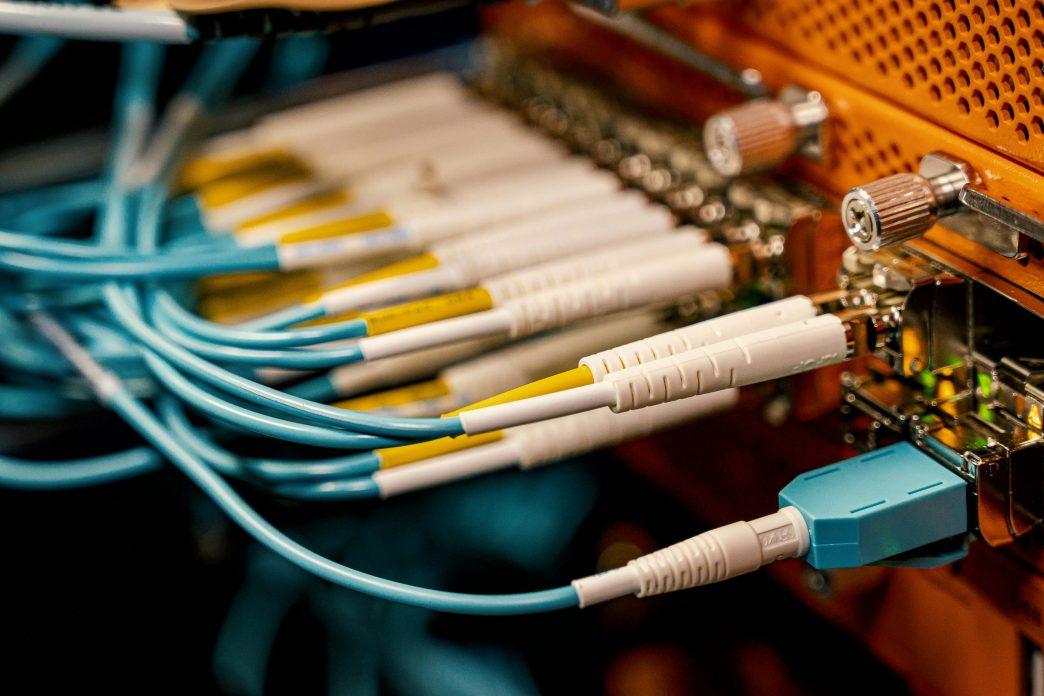
At its heart, fiber optic cable contractor expertise relies on a marvel of physics and engineering. Unlike traditional copper cables that transmit electrical signals, fiber optic cables carry data as pulses of light. This fundamental difference is what opens up their superior performance.
The core components of a fiber optic cable are deceptively simple yet highly effective:
- Core: This is the central strand, typically made of high-purity glass (silica) or plastic, through which light signals travel.
- Cladding: Surrounding the core, the cladding is a layer of glass or plastic with a lower refractive index. Its primary function is to reflect light into the core, a phenomenon known as total internal reflection. This ensures the light signal stays within the core and travels long distances with minimal loss.
- Buffer coating: An outer protective layer that shields the delicate core and cladding from physical damage and moisture.
These light pulses are generated by either lasers or light-emitting diodes (LEDs), depending on the type of fiber and application. The result is a medium with incredible bandwidth superiority, capable of transmitting vast amounts of data at lightning speed. Furthermore, because data travels as light, fiber optic cables are completely immune to electromagnetic interference (EMI), a common issue with copper cabling that can degrade signal quality.
Single-mode vs. Multi-mode fiber for commercial use
When planning a fiber optic network, a critical decision involves choosing between single-mode and multi-mode fiber. Each type serves different purposes and has distinct characteristics:
Feature Single-Mode Fiber Multi-Mode Fiber Core Diameter Very small (8-10 microns) Larger (50 or 62.5 microns) Light Source Laser LED or VCSEL Light Paths Single path Multiple paths Distance Very long (tens to hundreds of kilometers) Shorter (up to a few kilometers) Bandwidth Extremely high, virtually unlimited High, but limited by modal dispersion Applications Long-haul backbones, campus networks, telecommunications Data centers, LANs, building backbones, short-reach interconnects Single-mode fiber is characterized by its very small core, which allows only a single path for light to travel. This minimizes signal distortion and enables data transmission over incredibly long distances, making it the preferred choice for long-haul backbones, campus networks, and wide-area telecommunications. While the cable itself can be comparable in cost to multi-mode, the associated laser-based equipment tends to be more expensive.
Multi-mode fiber, with its larger core, permits multiple light paths. This makes it easier to connect and less expensive in terms of transceivers (often using LEDs or VCSELs). It’s ideal for shorter distances, commonly found in data centers, local area networks (LANs), and building backbones where high speeds are needed over a few hundred meters to a few kilometers.
How fiber compares to traditional copper cabling
The advantages of fiber optics become even clearer when we compare them to traditional copper cabling, such as CAT6 Ethernet or coaxial cables.
- Speed and data capacity: Fiber optic cables can transmit data at speeds far exceeding copper, often reaching gigabits and even terabits per second. Their immense bandwidth means they can carry significantly more data simultaneously.
- Distance limitations: Copper cables suffer from rapid signal degradation over distance, typically limited to 100 meters for Ethernet. Fiber, however, can transmit data over tens, if not hundreds, of kilometers without significant signal loss or the need for repeaters.
- Signal degradation and interference: As mentioned, fiber is immune to EMI, RFI, and crosstalk, ensuring a clean, stable signal. Copper, being electrical, is highly susceptible to these interferences, which can lead to data errors and slower speeds.
- Security: Tapping into a fiber optic cable without detection is extremely difficult, as it would cause a noticeable disruption in the light signal. Copper cables are more vulnerable to electronic eavesdropping.
- Size and weight: Fiber optic cables are significantly thinner and lighter than their copper counterparts, making them easier to install in confined spaces and reducing structural load.
While copper cabling remains prevalent for shorter distances and specific applications, for any modern business demanding high performance, reliability, and future-proofing, fiber optic cabling is the undisputed superior choice.
The strategic planning phase of fiber optic network construction
A successful fiber optic network installation hinges on meticulous planning. Before any cable is laid or equipment is connected, a comprehensive strategic phase must be undertaken. This stage is crucial for identifying potential challenges, optimizing routes, and ensuring compliance with all necessary regulations.
Our process begins with a thorough site survey. This involves a detailed assessment of the physical environment where the network will be deployed. We identify existing infrastructure, potential obstacles (both above and below ground), and optimal entry and exit points for the cabling. This information is then used for precise route planning, aiming for the most efficient and protected pathways for the fiber.
Obstacle identification is paramount. This could include existing utility lines, waterways, roadways, or even internal building structures that require careful navigation. We also handle permit acquisition, navigating the complex landscape of local, state, and federal regulations to secure all necessary approvals before construction begins. Adhering to industry standards, such as those set by The Fiber Optic Association (FOA), ensures that our installations are safe, reliable, and perform to the highest specifications.
Key considerations for fiber optic network construction
Several critical factors must be carefully evaluated during the planning and design of any fiber optic construction project:
- Bend radius: Fiber optic cables are delicate and have a minimum bend radius that must not be exceeded. Bending a fiber too sharply can cause signal loss or even permanent damage. Our planning accounts for this to ensure all cable runs maintain appropriate curvature.
- Pulling tension: Cables have specified maximum pulling tensions. Exceeding these limits during installation can stretch or damage the fibers. Proper planning involves calculating pulling forces and using appropriate equipment to stay within safe limits.
- Environmental factors: The operational environment plays a significant role. We consider factors like extreme temperature fluctuations, moisture exposure, and UV radiation, especially for outdoor installations. Selecting the right cable type (e.g., armored, gel-filled) and protection methods (e.g., conduits) is essential.
- Scalability: A well-designed fiber optic network is inherently scalable. We plan for future growth by considering potential increases in data demand, additional users, or new technologies. This might involve installing extra dark fibers or designing pathways that can easily accommodate future expansions. For robust and scalable fiber optic construction, leveraging VIA fiber optic construction expertise can provide a solid foundation for your network’s future.
- Budgeting: While we don’t discuss specific costs, effective budgeting involves understanding the scope of the project, material requirements, labor, and potential unforeseen expenses. A detailed plan helps manage resources efficiently.
Aerial vs. underground installation methods
The choice between aerial and underground installation is a significant decision, each with its own set of advantages and challenges.
Aerial installation involves suspending fiber optic cables from utility poles. This method is often chosen for its cost-effectiveness and relatively faster deployment, as it typically requires less excavation. However, aerial cables are more exposed to weather exposure (wind, ice, UV radiation) and physical damage from falling branches or vehicle impacts. They can also be less aesthetically pleasing in certain environments.
Underground installation places fiber optic cables beneath the earth’s surface. This method offers superior protection from environmental elements and physical damage, contributing to long-term reliability and a cleaner aesthetic. Common techniques include trenching (digging open channels), horizontal drilling (boring underground without disturbing the surface), and utilizing conduit protection (running cables through protective pipes). While initially more expensive and time-consuming due to the excavation and restoration work involved, underground installations generally offer a more robust and maintenance-friendly solution over time.
The installation process: From cable pulling to splicing
Once the planning is complete and the route is established, the physical installation of fiber optic cable begins. This phase requires precision, specialized tools, and adherence to best practices to ensure the integrity and performance of the network.
Cable handling is paramount throughout the process. Fiber optic cables, while robust, are sensitive to excessive bending and pulling forces. Our technicians are trained to unreel cables carefully, avoiding kinks or twists that could damage the internal fibers.
For deploying cables over distances, two primary methods are employed:
- Cable pulling: This involves physically pulling the fiber optic cable through conduits or along cable trays within buildings. Specialized pulling grips and lubricants are used to minimize stress on the cable, and pulling tension is constantly monitored to stay within manufacturer specifications.
- Cable blowing: For longer outdoor runs, especially through pre-installed conduits, cable blowing is often the preferred method. Compressed air is used to propel the fiber optic cable through the conduit, significantly reducing stress on the cable and allowing for much longer continuous runs than traditional pulling.
Throughout installation, we adhere to strict best practices, including proper cable management, labeling, and ensuring adequate slack is left at connection points for future maintenance or repairs.
Fiber optic splicing and termination
Connecting fiber optic cables is a critical step that requires exceptional precision to minimize signal loss. This is achieved through two main methods: splicing and termination.
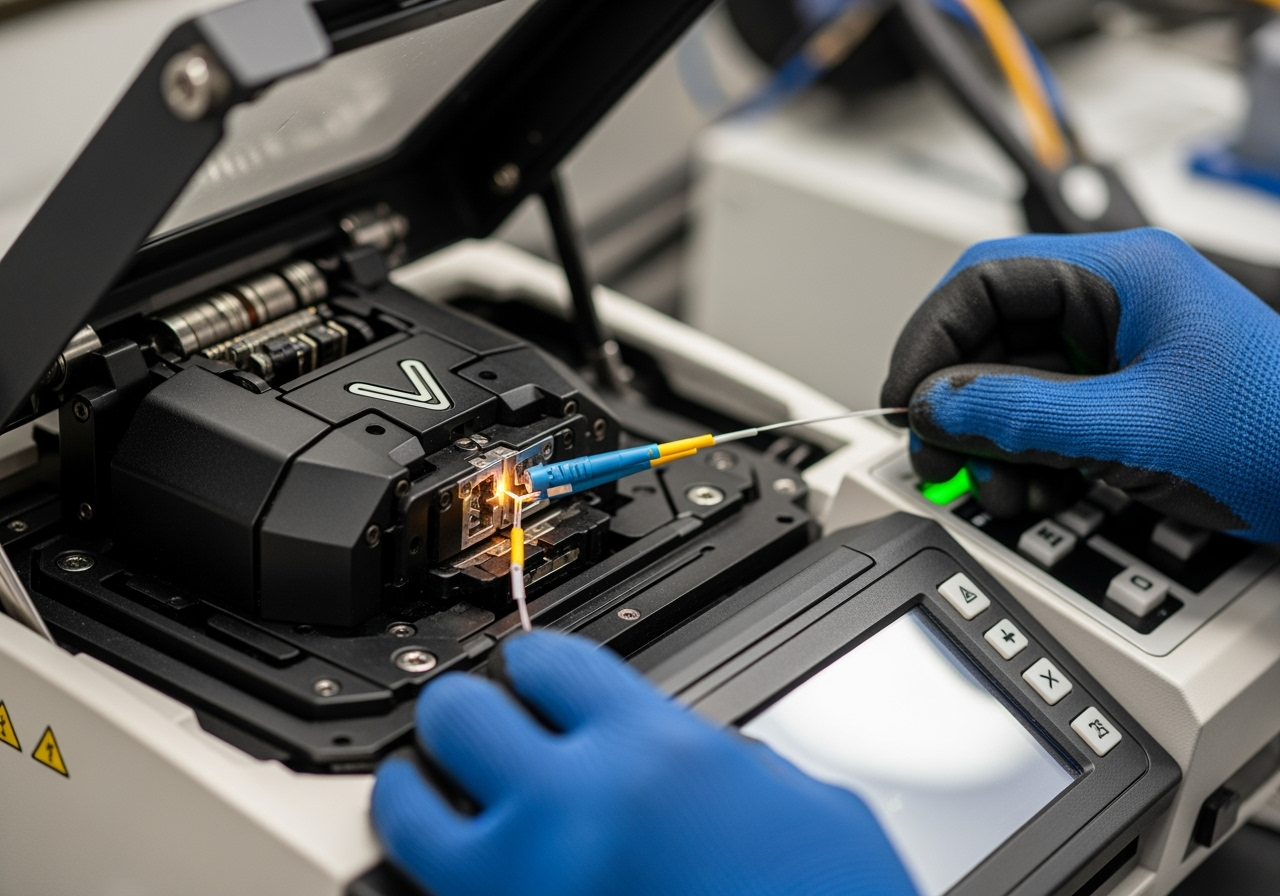
Fiber optic splicing is the process of permanently joining two fiber optic cables together.
- Fusion splicing: This is the most common and preferred method for achieving the lowest possible signal loss. A fusion splicing machine precisely aligns the ends of two fibers and then uses an electric arc to melt and fuse them, creating a seamless, low-loss connection. This method is highly reliable and permanent.
- Mechanical splicing: This technique uses a mechanical connector to align and hold the fiber ends together. It’s quicker and doesn’t require specialized fusion equipment, but generally results in higher signal loss than fusion splicing and is often considered a temporary or less permanent solution.
Termination involves attaching connectors to the ends of fiber optic cables. These connectors allow the fiber to be plugged into network equipment, patch panels, or other devices. Common connector types include LC, SC, and ST. The termination process involves stripping the cable, cleaving the fiber end to a precise angle, and then attaching the connector, often with adhesive or crimping. For optimal performance, the connector’s end face is then polished to ensure a smooth, clean surface for light transmission. Pre-terminated pigtails (short fiber segments with a connector on one end) are often fusion-spliced to bulk cable to achieve high-quality, factory-polished connections.
The role of testing and certification
No fiber optic installation is complete without rigorous testing and certification. This crucial step verifies the integrity and performance of the newly installed network, ensuring it meets industry standards and operational requirements.
Key testing tools and procedures include:
- Optical Time-Domain Reflectometer (OTDR): An OTDR is an indispensable tool that sends light pulses down the fiber and measures the reflected light. This allows technicians to pinpoint fault locations, measure signal loss along the cable, identify splices, connectors, and breaks, and determine the overall length of the fiber. It’s like radar for fiber optics, providing a visual signature of the entire cable run.
- Insertion loss testing (Power Meter and Light Source): This test measures the total optical power loss across a fiber link. A calibrated light source injects light into one end of the fiber, and a power meter measures the light received at the other end. The difference indicates the insertion loss, a critical parameter for network performance.
- Network certification involves performing a series of standardized tests and documenting the results. This provides a performance guarantee and ensures that the network will support the intended applications reliably. It’s a vital step for performance verification and troubleshooting down the line.
Applications and advantages in the commercial and industrial Sectors
Fiber optic networks are not just about speed; they are about building a resilient, secure, and future-proof infrastructure that can adapt to the evolving demands of modern business. Their inherent qualities make them uniquely suited for commercial and industrial environments.
One of the most significant advantages is improved network security. Because fiber optics transmits light, they do not emit electromagnetic signals that can be easily intercepted. Any attempt to tap into a fiber line would cause a detectable disruption in the light signal, making it much more secure than copper cabling. This contributes directly to data integrity, ensuring that information travels across the network without corruption or loss due to external interference.
The reliability of fiber optic networks is also a major draw. Their immunity to EMI, resistance to environmental factors (when properly installed), and ability to transmit data over long distances without repeaters mean fewer points of failure and more consistent performance. Furthermore, fiber optic networks offer exceptional scalability. As data demands grow, the existing fiber infrastructure can often be upgraded simply by changing the electronics at either end, rather than replacing the entire cabling system.
Primary benefits for modern businesses
For businesses looking to gain a competitive edge and prepare for the future, fiber optic installation offers a compelling list of benefits:
- Best bandwidth: Fiber provides the highest available bandwidth, supporting massive data transfers, cloud computing, and high-definition video conferencing without bottlenecks.
- Symmetrical speeds: Many fiber optic services offer symmetrical download and upload speeds, which is crucial for businesses that frequently upload large files, host servers, or rely heavily on video communications.
- Lower latency: The speed of light transmission results in significantly lower latency, meaning faster response times for critical applications, real-time data processing, and seamless user experiences.
- Increased reliability: Immunity to electromagnetic interference and superior signal integrity lead to a more stable and reliable network, reducing downtime and operational disruptions.
- Future-proofing networks: Investing in fiber optics today means building an infrastructure that can easily accommodate future technological advancements, ensuring your network remains relevant and capable for decades to come.
Common industry applications
Fiber optic cables are the backbone of countless modern industries, enabling critical operations and driving innovation:
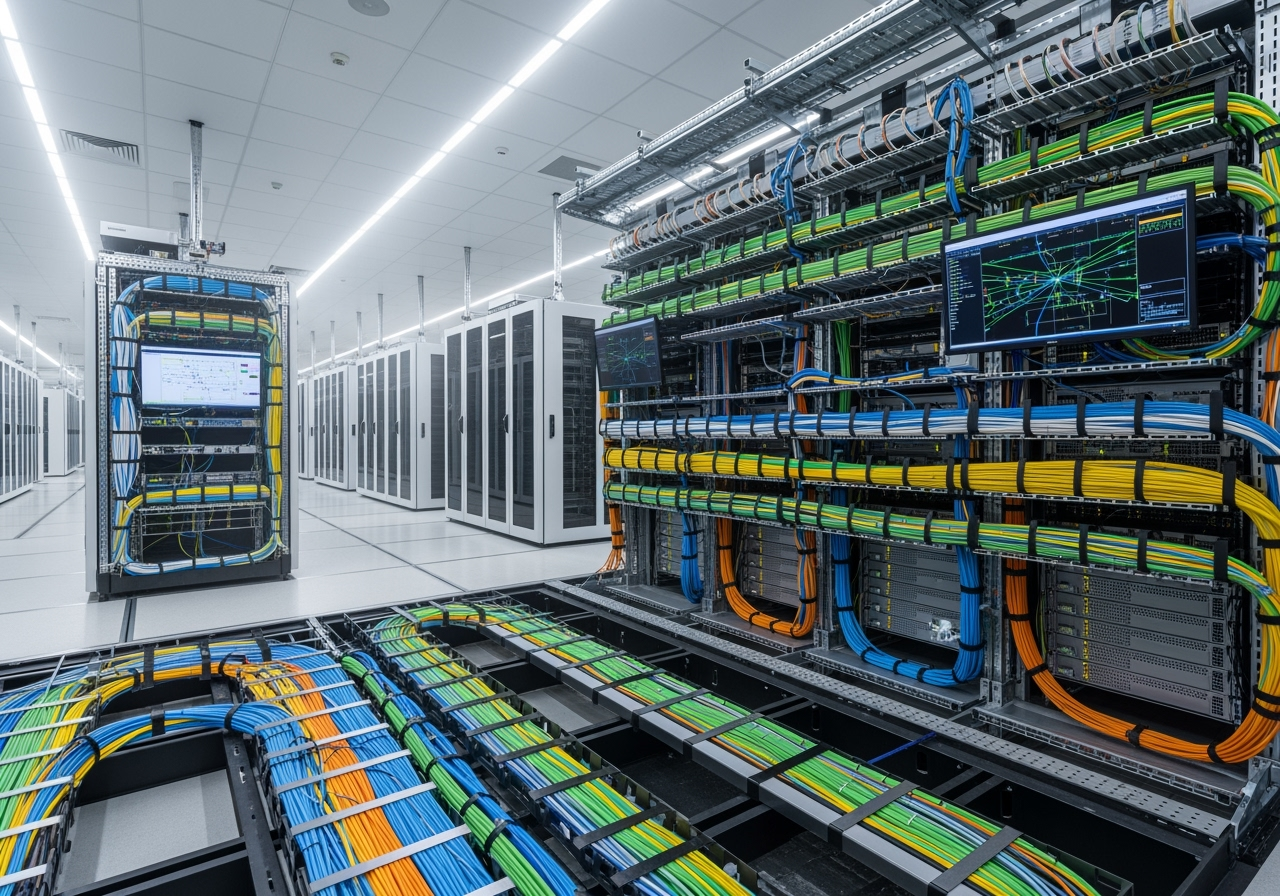
- Data centers: Fiber is essential for high-speed interconnects between servers, storage arrays, and networking equipment, supporting the massive data flows required for cloud services and big data analytics.
- Telecommunications: It forms the global backbone of the internet, carrying voice, video, and data traffic across continents and connecting communities.
- Manufacturing facilities: In environments prone to electrical noise, fiber provides reliable communication for industrial automation, robotics, and process control systems.
- Healthcare imaging: High-bandwidth fiber is crucial for transmitting large medical images (MRI, CT scans) quickly and accurately, supporting remote diagnostics and telemedicine.
- Government infrastructure: Secure and high-capacity fiber networks are vital for government agencies, military operations, and public safety communications.
- Enterprise networks: Businesses of all sizes use fiber for their internal networks, connecting buildings on a campus, floors within a high-rise, or critical departments for seamless data exchange.
- Smart buildings: Fiber provides the high-speed connectivity required for integrated building management systems, IoT devices, security cameras, and intelligent automation.
We’ve explored the intricate world of fiber optic network installation, from the fundamental science of light transmission to the meticulous planning and execution required for a successful deployment. The benefits are clear: unparalleled speed, massive bandwidth, unwavering reliability, robust security, and inherent scalability.
Investing in a fiber optic network is more than just an upgrade; it’s a long-term investment in the future of your business. It lays the foundation for future technology, enabling seamless integration of IoT devices, supporting the demands of 5G connectivity, and powering the advanced analytics of artificial intelligence.
For these reasons, the importance of professional planning and execution cannot be overstated. Entrusting your fiber optic network construction to experienced professionals ensures that your infrastructure is built to the highest standards, delivering optimal performance and longevity. Accept the power of fiber optics and wire your business for unprecedented growth and connectivity.


